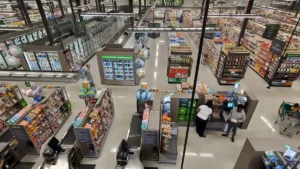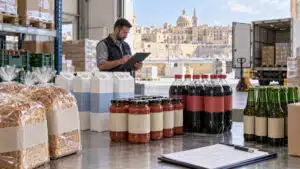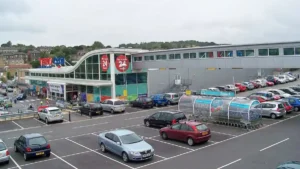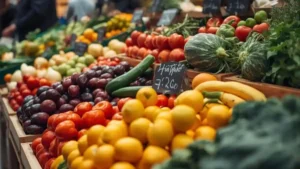

Malta’s supermarket sector has become one of the most concentrated grocery markets in Southern Europe.
Several factors have created a retail environment where scale matters more than store count alone:
- a small population
- limited land availability
- heavy food import dependence
- year-round tourism
The market is increasingly shaped by foreign discount chains and large Maltese retail groups. They are competing for control of grocery spending across the island.
International operators like Lidl Malta and Eurospin are expanding aggressively. Meanwhile, local supermarket groups continue consolidating around larger retail formats, stronger logistics systems and centralised food distribution operations.
The market is now increasingly controlled by a handful of operators. These operators have strong supply-chain scale, property assets, purchasing leverage and import sourcing power.
At a Glance: Malta’s Largest Grocery Retailers
| Rank | Company | Estimated FY Revenue | Strategic Role |
|---|---|---|---|
| 1 | Lidl Malta | €260M+ | National discount leader |
| 2 | Welbee’s | €120M–€140M | Consolidated premium supermarket group |
| 3 | PAMA & PAVI (PG plc) | €100M–€115M | Destination hypermarket operator |
| 4 | Greens Supermarket | €60M–€70M | Premium grocery and food retail |
| 5 | The Convenience Shop | €45M–€55M | National proximity retail network |
| 6 | Smart Supermarket | €30M–€35M | Large-format standalone retail complex |
| 7 | SPAR Malta | €25M–€30M | Franchise and convenience supermarket network |
| 8 | Arkadia Foodstore | €20M–€25M | Gozo-focused premium retail operator |
| 9 | Chain Supermarket | €15M–€20M | Regional supermarket operator |
| 10 | Eurospin Malta | €8M–€15M | Fast-growing discount challenger |
1. Lidl Malta
Founded: 2008 Malta launch
Headquarters: Malta operations linked to Lidl international network
Estimated Revenue: €260M+
Lidl has become the defining force inside Malta’s grocery market.
The retailer operates around 10 discount supermarkets across the island. It now controls a major share of Malta’s value-focused grocery spending.
Its mix of aggressive pricing, private label strength, and logistics efficiency has reshaped what shoppers expect from weekly grocery purchasing.
Why scale matters
The company’s importance goes beyond store count.
Malta’s high import dependence favours retailers that can run centralised procurement systems and large-scale international sourcing networks. Lidl’s European supply-chain scale gives it pricing advantages many local operators struggle to match consistently.
Private label and market impact
Private label remains one of Lidl’s strongest competitive tools in Malta. The retailer has steadily expanded these categories while keeping relatively aggressive pricing against local supermarket groups:
- chilled foods
- frozen categories
- bakery products
- household essentials
Its dominance has also increased pressure across the wider Maltese retail ecosystem. This is especially true for mid-market operators competing on everyday grocery value.
2. Welbee’s
Founded: Modern group formed through consolidation
Headquarters: Malta
Estimated Revenue: €120M–€140M
Welbee’s represents one of the biggest structural shifts Malta’s grocery industry has seen in years.
How the group was formed
The brand emerged from the consolidation of several major supermarket identities:
- Park Towers
- Tower Supermarket
- Valyou
- Tigné Mall operations
That merger created one of the island’s largest integrated grocery retail platforms.
Market positioning
Welbee’s does not operate as a discount player. Instead, it positions itself closer to premium and upper mid-market grocery retail.
Fresh departments, imported specialty products, prepared foods and higher-end supermarket environments remain central to its positioning.
The operator also benefits from strong urban location density. It also has established customer loyalty built before the consolidation phase.
Operationally, the merger created purchasing and logistics efficiencies. Smaller independents increasingly struggle to compete against these.
The company now operates as one of Malta’s most influential locally controlled supermarket groups.
3. PG plc – PAMA Shopping Village & PAVI Supermarket
Founded: PAVI 2006, PAMA later expansion
Headquarters: Malta
Estimated Revenue: €100M–€115M
PAVI and PAMA operate differently from most Maltese supermarket operators.
The group did not focus on dense neighbourhood retail coverage. Instead, it built large destination-style hypermarket environments linked to wider shopping complexes.
Its Qormi and Mosta sites act almost like retail anchors for broader commercial zones.
Where it performs strongly
The scale of these locations allows stronger performance across:
- bulk grocery purchasing,
- non-food retail,
- household categories,
- seasonal promotions,
- and large-basket family shopping.
The group also benefits from strong property positioning and high vehicle accessibility. This matters in Malta’s increasingly congested urban environment.
PG plc’s retail structure gives it one of the strongest food-distribution positions in the country outside Lidl.
4. Greens Supermarket
Headquarters: Malta
Estimated Revenue: €60M–€70M
Greens has gradually evolved into one of Malta’s strongest premium-oriented supermarket operators.
Its Swieqi flagship store helped redefine large-format modern grocery retail on the island. The company later strengthened its presence through expansion into Gozo and growing online grocery operations.
How it competes
Greens competes heavily through:
- fresh food presentation,
- imported assortment depth,
- premium grocery categories,
- prepared meals,
- and customer shopping experience.
The retailer’s positioning reflects wider demographic changes across Malta. These are seen especially among higher-income households, expatriates and tourism-linked residential zones.
Unlike pure discount operators, Greens relies more on basket quality and customer retention than on volume-driven price competition.
5. The Convenience Shop
Estimated Revenue: €45M–€55M
Store Network: 90+ locations
The Convenience Shop has quietly become one of the most strategically important grocery operators in Malta.
Business model
Its business model is built around dense village-level proximity retail rather than hypermarket scale.
That structure fits closely with Malta’s urban geography. There, convenience purchasing often outweighs large weekly shopping trips.
The company’s long-term leasing of former Scott’s supermarket locations significantly sped up its national footprint.
Average revenue per store is lower than at major hypermarkets. However, the total network scale gives the operator one of the largest grocery retail presences on the island.
Its strength comes from frequency, accessibility and neighbourhood penetration.
6. Smart Supermarket
Headquarters: Birkirkara, Malta
Estimated Revenue: €30M–€35M
Smart Supermarket remains one of Malta’s largest standalone grocery retail complexes.
Unlike chain-heavy operators, Smart built its position around a single massive retail destination. This is supported by strong assortment breadth and large-format shopping capacity.
Where it performs strongly
The operator competes particularly well in:
- fresh produce,
- imported packaged foods,
- bakery,
- frozen categories,
- and household goods.
Its scale allows broader product depth than many neighbourhood supermarkets. It still keeps relatively strong local customer loyalty.
Despite growing competition from discount retail, Smart continues to hold a strong position inside Malta’s mid-market grocery sector.
7. SPAR Malta
Parent Group: Azzopardi Group
Estimated Revenue: €25M–€30M
SPAR Malta combines international retail branding with localised operational management.
The chain operates through a mix of supermarket and convenience-oriented formats. This helps it stay flexible across Malta’s dense urban retail environment.
Strengths and challenges
SPAR’s international sourcing structure gives it advantages in selected imported grocery categories. These include packaged foods and European private label products.
The company also benefits from strong brand familiarity among both residents and international visitors.
Its challenge remains scale. Compared with Lidl, Welbee’s or PG plc, SPAR Malta operates with a smaller physical footprint and lower purchasing leverage.
8. Arkadia Foodstore
Parent Group: Mizzi Organisation
Estimated Revenue: €20M–€25M
Arkadia remains one of Gozo’s most recognisable food retail brands.
The company’s Victoria operations play a central role in grocery distribution across Malta’s sister island. An additional premium retail presence in Portomaso supports higher-income and tourism-linked demand.
Market positioning
Arkadia’s positioning leans toward:
- imported products,
- premium grocery,
- deli categories,
- wine,
- and specialty foods.
Its importance within Gozo’s retail economy gives it influence beyond what its national revenue ranking alone might suggest.
9. Chain Supermarket
Estimated Revenue: €15M–€20M
Chain Supermarket operates as a regional grocery retailer with strong local recognition in parts of southern Malta.
The company keeps a more traditional supermarket structure than some of the island’s newer consolidated retail groups.
Its strength comes from local familiarity, repeat customers and regional accessibility.
Pressures it faces
However, operators of this size increasingly face pressure from:
- discount expansion,
- larger consolidated supermarket groups,
- and rising import and logistics costs.
That pressure is becoming a defining challenge for Malta’s mid-sized independent grocery operators.
10. Eurospin
Estimated Revenue: €8M–€15M
Status: Rapid expansion phase
Eurospin is still small in Malta by revenue. But it is probably the most closely watched supermarket operator on the island right now.
Expansion plans
Its Mosta flagship opening was strategically significant. It placed the Italian discount chain directly into Lidl’s competitive territory.
The company is progressing on a broader multi-store expansion strategy. This is expected to reshape Malta’s discount segment further over the next several years.
Eurospin’s pricing model, private label structure and Italian sourcing network fit Malta’s import-driven grocery economy extremely well.
If expansion continues successfully, the retailer could move much higher in Malta’s supermarket rankings within a relatively short period.
Industry Outlook
Malta’s grocery market is becoming more polarised.
Large-scale operators with strong logistics systems, centralised procurement and integrated property assets are gaining structural advantages.
At the same time, smaller independent supermarket groups face rising operational pressure linked to:
- import costs,
- labor shortages,
- energy expenses,
- and discount competition.
Private label expansion is also becoming more important.
As price sensitivity increases, retailers are relying more heavily on own-brand grocery categories. These help protect margins while keeping prices affordable for customers.
Tourism growth remains another major factor shaping demand across Malta’s retail economy. This is especially true in premium grocery, prepared foods and convenience retail.
Frequently Asked Questions
Which is the largest supermarket operator in Malta?
Lidl Malta leads the ranking with estimated revenue of €260M+. It operates around 10 discount supermarkets across the island.
What is Welbee’s?
Welbee’s is a Maltese supermarket group formed through the consolidation of Park Towers, Tower Supermarket, Valyou and Tigné Mall operations. Its estimated revenue is €120M–€140M.
Which discount chain is challenging Lidl in Malta?
Eurospin is the fast-growing discount challenger. Its Mosta flagship placed the Italian chain directly into Lidl’s competitive territory.
What Happens Next
Several long-term trends are expected to shape Malta’s supermarket sector during the rest of 2026 and beyond.
Discount competition will likely intensify further as Eurospin continues expanding its store pipeline against Lidl Malta.
Large consolidated operators are also expected to invest more heavily in:
- logistics efficiency,
- centralized procurement,
- e-commerce grocery systems,
- and prepared food categories.
Convenience retail is likely to remain highly important. Malta’s dense urban structure favours proximity shopping over long-distance hypermarket travel.
Import dependency will continue shaping the sector. Retailers will compete on sourcing efficiency, supplier relationships and pricing control.
The structure of Malta’s grocery market is becoming increasingly clear now.
A small number of highly scaled retail groups are steadily consolidating control over one of Europe’s most space-constrained supermarket economies.
Editor’s Note: Revenue estimates are based on industry reporting, market analysis, public company information, retail footprint assessment, and estimated grocery turnover ranges across Malta’s supermarket sector during 2025–2026.