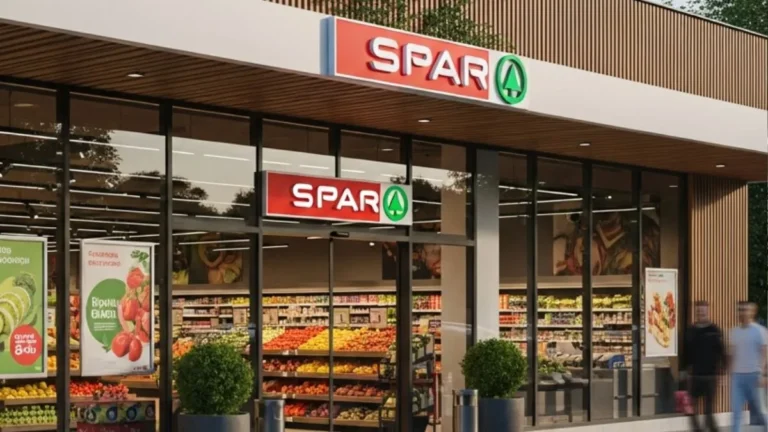

SPAR Hungary has removed cage eggs from its own-operated stores after a multi-year shift in sourcing that kept its domestic supplier base intact.
The retailer said cage eggs accounted for 63% of its egg assortment in December 2023. That share has now fallen to zero.
SPAR sold more than 122 million eggs in 2025, making the change significant across one of the largest everyday food categories in its network.
The transition was completed without replacing the six Hungarian suppliers that already served the business.
That supplier continuity is one of the most important parts of the story.
Rather than switching to a new sourcing base, SPAR worked with existing producers as the assortment moved towards barn and other non-cage systems.
Barn eggs now account for around 76% of the range.
The retailer said its egg category remains fully sourced from Hungarian suppliers.
That keeps local production at the centre of the offer while changing the production standards attached to the category.
The move reflects a wider shift across European grocery, where animal-welfare commitments increasingly affect procurement, supplier investment and shelf assortment.
Eggs are particularly sensitive because changes in production systems can require capital spending at farm level, as well as changes to packaging, grading and supply planning.
For suppliers, that makes transition speed important.
A retailer can change its standards quickly on paper, but farms need enough time and commercial certainty to adapt production capacity.
SPAR Hungary’s approach suggests a phased model rather than an abrupt supplier reset.
The company has progressively reduced cage-egg exposure while retaining the same six Hungarian partners.
That also gives the category a strong domestic-sourcing angle.
SPAR Hungary competes in a market where local origin remains important across fresh and everyday food categories, alongside strong price competition from Lidl, Aldi, Tesco and other chains.
The retailer is already one of the major operators in the Hungarian supermarket market, with a nationwide network and a significant role in domestic food sourcing.
The latest egg transition adds another point of differentiation around sourcing standards rather than price alone.
It also shows how animal-welfare commitments are moving from corporate targets into large-volume category management.
With more than 122 million eggs sold in a year, even a relatively narrow sourcing change can have meaningful consequences for producers.
The next question is whether the mix continues to move beyond barn eggs towards free-range and other higher-welfare formats as production capacity develops.
For now, SPAR Hungary has completed the biggest part of the transition: removing cage eggs while preserving its domestic supplier relationships.
Editor note: Based on SPAR Hungary’s official announcement dated 5 October 2026. GTN added analysis of the sourcing transition, supplier continuity and the wider implications for Hungary’s grocery egg category.