
NCR Voyix has expanded access to TruAge digital age checks across its US convenience and fuel retail point-of-sale portfolio, with a certified integration available to more than 20,000 RPOS stores.
The company and convenience retail association NACS announced the development on 6 October. Existing RPOS customers can connect through Cullinan Group, while the newer Voyix POS for CFR includes native support.
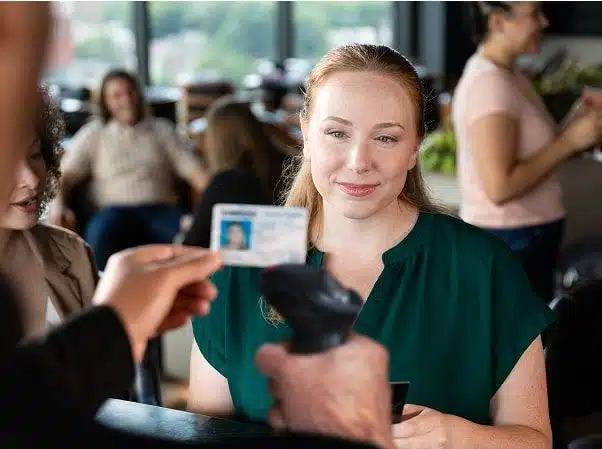
TruAge scans physical or digital driving licences to check age, flag fake or expired identification and apply purchase limits. It uses anonymised tokens to confirm eligibility while limiting the personal information retained.
NACS says around 75% of the convenience market can now access TruAge through existing till systems. That describes potential access across participating technology providers, rather than the proportion of stores already using it.
The distinction is commercially important. Availability across a large installed base does not establish how many retailers have activated the service, how reliably it works during busy periods or what implementation will cost an individual chain.
NCR Voyix’s position among US supermarket technology suppliers makes the expansion relevant to grocery operators with convenience formats. However, this announcement concerns US convenience and fuel retail systems; it does not establish equivalent availability for every supermarket platform or overseas market.
TruAge says the service is free for convenience stores, without per-scan or per-store fees. Operators should still confirm any integration, support and staff-training costs with their technology partners.
For store teams, digital checking still involves a human judgement. TruAge’s own guidance says employees must confirm that the customer matches the photograph when a shopper uses its app or a mobile driving licence.
Buyers assessing self-checkout and hybrid checkout systems should therefore examine the complete age-check process, including staff intervention, rejected scans and the procedure used when connectivity fails.
Compatibility should be checked against the retailer’s exact POS version, scanner setup and supported identity documents. Procurement teams should also establish who provides support and which verification records can be retrieved when an incident is reviewed.
The practical benchmark is the cost and reliability of a completed transaction, not the speed of a successful demonstration. A store pilot should measure failed checks, colleague call-outs and queue times alongside any time saved.
As more retailers gain access, the next useful evidence will be activation numbers and results from live trading. Those measures will show whether broader integration translates into a more consistent checkout experience.
Editor’s note: Based on NCR Voyix and NACS’ 6 October 2026 announcement and TruAge’s published guidance, with GTN’s analysis of checkout operations and procurement.