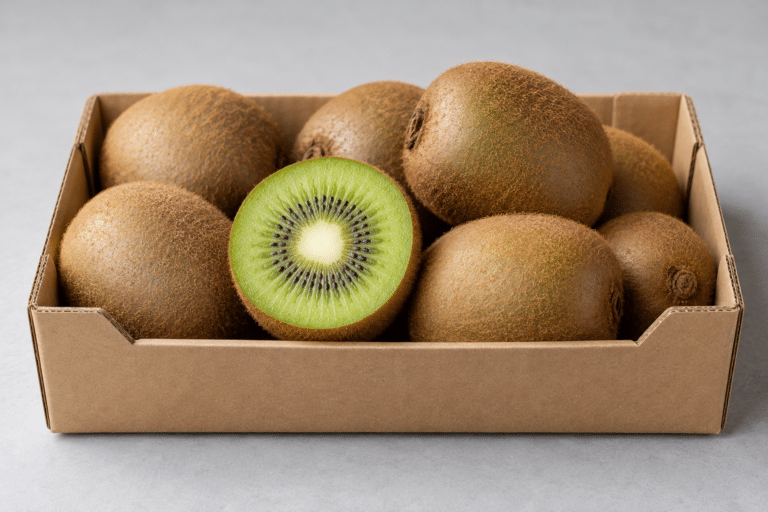

Zespri is preparing to expand its Indian kiwifruit business from the 2027 season after the New Zealand–India free trade agreement took effect on 20 October. The company’s announcement opens a sourcing opportunity for importers and supermarket buyers, although the duty-free allowance will build gradually.
The New Zealand government confirmed that exporters can begin using the agreement from today. Zespri said its current New Zealand sales season is nearing completion, making next year the practical focus for developing demand and strengthening distributor relationships.
“We have strong confidence in India as a future market,” said Zespri chief executive Jason Te Brake.
The headline figure of 15,000 tonnes needs context. That is the annual kiwifruit quota from the sixth year onwards, rather than the quantity available immediately.
India’s DGFT Public Notice 33/2026-27 sets no kiwifruit quota for the remainder of 2026. The allowance is 8,000 tonnes in 2027, with annual increases before reaching 15,000 tonnes. Quota imports must arrive within the 1 April–15 October window and meet the applicable value and authorisation conditions.
For procurement teams, those dates matter more than a simple promise of cheaper imports. Buyers need to match the named importer, export certificate, approved quantity and arrival window before pricing a duty-free programme. Unused quota cannot simply be carried into the following year.
Zespri, already part of the European fresh produce supplier landscape, is using the opening to develop another market for its fruit. Its announcement does not quantify additional Indian sales or commit a particular volume to individual retail customers.
GTN’s analysis is that the commercial opportunity depends on how much of the lower import cost reaches the shelf, and whether availability supports repeat purchases. Freight, currency movements, distribution charges and fruit losses still affect the final margin. A lower tariff alone does not establish a viable retail price.
Importers and category managers should agree pack sizes, delivery frequency, ripeness at arrival and promotional volumes together. Better fresh produce supply-chain coordination helps translate those buying decisions into handling and stock plans.
Alongside its export ambitions, Zespri said a five-year programme funded by New Zealand growers will support Indian green kiwifruit production. The Bioeconomy Science Institute is delivering the work, with the first demonstration orchards being established in Nagaland and Uttarakhand. The company describes the two countries’ supply seasons as complementary.
The next commercial test will come with the 2027 season: converting improved access into approved import programmes, dependable deliveries and sustained supermarket demand.
Editor’s note: Based on Zespri’s announcement and New Zealand’s government release dated 20 October 2026, plus DGFT Public Notice 33/2026-27 as reproduced by TaxGuru. GTN added analysis of quota timing, sourcing costs and retail execution.