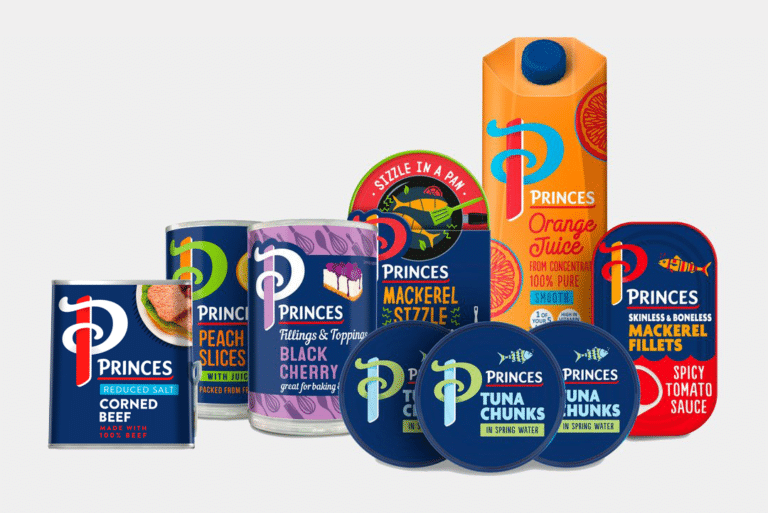

Princes Group reported a 10% increase in revenue to £1.52 billion for the nine months ended 30 September 2026, with acquisitions and growth in European operations outweighing weaker sales in its UK home market.
The food and drinks manufacturer said on 10 November that adjusted earnings before interest, tax, depreciation and amortisation (EBITDA) rose 6.4% to £116.2 million. Its adjusted EBITDA margin was 7.7%, compared with 7.9% a year earlier, as energy, fuel and other costs continued to weigh on profitability.
The figures matter to supermarket buyers because Princes is both a major branded supplier and an important participant in UK private-label food manufacturing. Its update points to new retail contracts, rising tomato-processing output and further price discussions with customers.
Revenue through large food retailers reached £1.25 billion, up 11.8% from £1.12 billion. That was substantially stronger than the group’s 10% overall revenue growth. B2B partner revenue slipped 1.7% to £157.8 million, while foodservice sales rose 8.7% to £105.3 million.
The group’s largest national market, the UK, recorded revenue of £996.0 million, down 1.3%. Italy increased 131.7% to £155.2 million and Germany grew 55.7% to £87.5 million. Those changes reflect the enlarged business following acquisitions; they should not be read as wholly organic growth.
Business-unit performance was similarly mixed. Foods generated £450.8 million, up 0.8%. Fish advanced 3% to £280.6 million and oils increased 9% to £222.1 million. Italian products rose 56.5% to £341.9 million, while drinks revenue fell 6.4% to £220.0 million.
The contrast between headline growth and more modest UK performance is important. The manufacturer is becoming more geographically diversified, but British supermarket trading remains central to its revenue and its ability to recover costs.
Princes said like-for-like revenue increased 3.3% during the third quarter. Approximately 70% of that growth came from price increases introduced in July, illustrating how much of the improvement was driven by selling prices rather than additional volume.
New agreements include baked beans and soup business, a UK retailer tuna contract and soft drinks contracts. Several are due to commence in 2027. For supermarket category managers, the timing matters: these awards may influence future sourcing and promotional arrangements but do not yet represent a full year of realised sales.
In Italy, the Foggia tomato facility processed more than 200,000 tonnes during the latest production campaign, more than twice the previous year’s volume. Princes expects approximately £130 million in additional revenue from secured tomato sales, predominantly in 2027 rather than the final quarter of 2026.
The company has also introduced Princes Tuna through GS, formerly Carrefour Italia. The range was in 880 stores by the end of October, above the original 700-store target, and consumer sales exceeded €2 million.
Demand for ambient foods has received a separate boost since the UK government’s October preparedness campaign encouraged households to keep essential supplies. Princes said its canned fish, meat, fruit and vegetable ranges benefited. That development sits alongside the group’s existing relationships with retailers, including its involvement in supermarket baked-bean production.
However, stronger canned-food demand does not remove cost pressures. The manufacturer is continuing discussions with customers over input-cost increases, including energy, transport and ingredients. For retailers, the immediate question is how suppliers’ requested price changes compare with household demand and competitors’ prices.
Underlying free cash flow was £88.4 million, with 77% cash conversion. Net cash increased to £368.7 million at the end of September. Princes maintained its full-year expectations and its medium-term goal of a 9% adjusted EBITDA margin.
Interim chief executive Giuseppe Mastrolia said trading momentum remained positive heading into the fourth quarter despite difficult conditions. The next test will be whether its new supermarket contracts and larger tomato operation translate into profitable sales during 2027, rather than revenue growth alone.
Editor’s Note: Figures are taken from Princes Group’s 10 November 2026 nine-month trading update. GTN’s analysis separates acquisition-led sales growth, retail-channel performance and prospective 2027 contracts to clarify their significance for food retailers and suppliers.