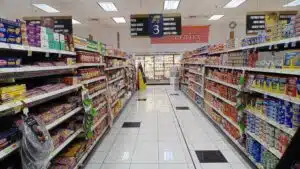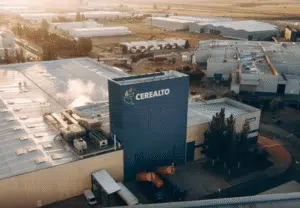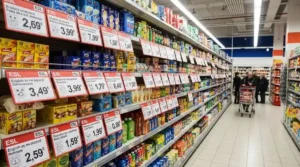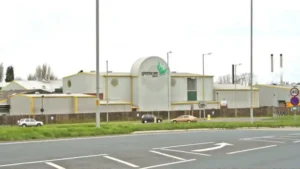

Spain’s packaging sector closed FY2024 with stable turnover across fibre, glass, pulp and rigid plastics. Three factors supported it:
- Resilient food production
- Agricultural exports
- Supermarket supply chain recovery
Corrugated board remains the structural backbone of Spain’s retail logistics system. Glass continues to anchor beverage categories, while pulp and recycled fibre underpin cartonboard production.
Multinational plastic and metal packaging groups keep significant operational footprints across the Iberian market.
The following ranking reflects the Top 10 Packaging Companies in Spain by Revenue, based on FY2024 publicly available financial disclosures. Where companies are multinational groups, global revenue is stated and their Spanish operational footprint is clarified.
Top 10 Packaging Companies in Spain by Revenue
| Rank | Company | FY2024 Revenue | Core Segment | HQ in Spain |
|---|---|---|---|---|
| 1 | SAICA Group | €3.662 billion | Corrugated & recycled paper | Yes |
| 2 | Smurfit Westrock | $21.1 billion (Global) | Corrugated & paper | No |
| 3 | Vidrala | €1.619 billion | Glass packaging | Yes |
| 4 | Ence (Pulp/Bio) | €876.2 million | Pulp & raw materials | Yes |
| 5 | Hinojosa Packaging Group | €795 million | Corrugated & cartonboard | Yes |
| 6 | Verallia (Spain operations) | Global €3bn+ | Glass packaging | No |
| 7 | Alpla (Spain operations) | Global €4bn+ | Rigid plastics | No |
| 8 | Amcor (Spain operations) | $13.6 billion (Global) | Flexible & rigid plastics | No |
| 9 | Ball Corporation (Spain ops) | $14.0 billion (Global) | Beverage cans | No |
| 10 | International Paper (Spain ops) | $18.6 billion (Global) | Corrugated & fibre | No |
FY2024 revenues reflect official disclosures. Global turnover is shown for multinational groups operating in Spain.
1. SAICA Group
Key facts
Founded in 1943 in Zaragoza, SAICA remains Spain’s largest domestically headquartered packaging group. FY2024 revenue reached €3.662 billion.
Core segments:
- Recycled paper production
- Corrugated packaging
- Industrial packaging
- Circular waste management
Why it matters to supermarket buyers
SAICA operates a vertically integrated model. It links recovered fibre collection, paper manufacturing and corrugated conversion.
This integration provides supply stability for supermarket-ready packaging, fresh produce logistics and private label distribution.
Investment continues in circularity and energy efficiency, in line with European packaging regulation.
2. Smurfit Westrock (Spain Operations)
Key facts
Smurfit Westrock reported about $21.1 billion in global revenue in FY2024. This followed the Smurfit Kappa–WestRock merger.
Spain is a significant European production base within its corrugated network.
Core segments:
- Containerboard
- Shelf-ready packaging
- Industrial fibre systems
The group plays a structural role in supermarket secondary packaging and export produce cartons.
3. Vidrala
Key facts
Founded in 1965, Vidrala is Spain’s leading glass packaging producer. FY2024 revenue reached €1.619 billion.
Core segments:
- Beverage bottles
- Food jars
- Premium glass containers
Spain’s wine, beer and olive oil industries underpin glass demand. Furnace modernisation and energy optimisation have supported operating stability.
4. Ence (Pulp/Bio)
Key facts
Ence reported FY2024 net sales of €876.2 million.
Its pulp division supplies raw material for cartonboard and fibre packaging manufacturers across Spain and Europe.
Core segments:
- Bleached eucalyptus pulp
- Renewable biomass energy
Ence is not a converter. Even so, it is structurally important to fibre-based packaging supply chains.
5. Hinojosa Packaging Group
Key facts
Founded in 1947 in Valencia, Hinojosa reported FY2024 revenue of €795 million.
Core segments:
- Corrugated packaging
- Folding carton
- Fresh produce packaging
International operations now account for roughly one quarter of revenue. This strengthens its cross-border position.
Hinojosa is closely integrated into Spain’s agricultural export system.
6. Verallia (Spain Operations)
Key facts
Verallia was founded in 2015 as an independent entity after its separation from Saint-Gobain. It has become one of Europe’s largest glass packaging producers.
It is headquartered in France, but Spain is one of its key manufacturing markets.
FY2024 global revenue: €3 billion+.
Core segments:
- Glass bottles for wine and spirits
- Beer and beverage containers
- Food jars
Why it matters to supermarket buyers
Verallia operates several production facilities in Spain. They supply domestic beverage producers and export-focused wine and olive oil sectors.
The country’s strong wine and beer industries provide structural demand stability.
Within the Spain FMCG ecosystem, Verallia plays a critical upstream role in beverage packaging supply. Its output feeds directly into Spain supermarket private label and branded beverage categories.
The company continues investing in furnace efficiency and recycled glass (cullet) integration. This aligns with European decarbonisation targets and packaging regulation.
7. Alpla (Spain Operations)
Alpla maintains rigid plastic production facilities in Spain.
Core segments:
- PET bottles
- HDPE containers
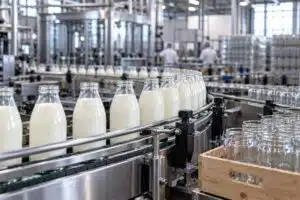
- Dairy and beverage packaging
Rigid plastics remain dominant in dairy, water and household FMCG categories.
8. Amcor (Spain Operations)
Key facts
Founded in 1860 and headquartered in Switzerland, Amcor is one of the world’s largest packaging companies. The group reported $13.6 billion in global revenue in FY2024.
Spain forms part of its European flexible packaging network. It supports food and FMCG manufacturing across Iberia.
Core segments:
- Flexible plastic films
- Barrier packaging for processed foods
- Packaging for snacks and ambient grocery
- Rigid plastic solutions for selected categories
Why it matters to supermarket buyers
Amcor’s Spanish operations are closely integrated into processed food, dairy, confectionery and private label supply chains.
Flexible packaging remains dominant in these categories. It offers barrier protection, longer shelf life and lightweight transport advantages.
Within the Spain FMCG landscape, Amcor plays a significant upstream role in supermarket private label development. This is especially true in high-volume snack and ready-meal segments.
The group continues investing in recyclable mono-material films and recycled content integration. This aligns with European sustainability targets and retailer procurement standards.
9. Ball Corporation (Spain Operations)
Key facts
Founded in 1880 and headquartered in the United States, Ball Corporation is one of the world’s largest aluminium packaging manufacturers. The company generated about $14.0 billion in global revenue in FY2024.
Spain forms part of Ball’s European beverage can production network. It supplies domestic producers and multinational beverage brands operating across Iberia.
Core segments:
- Aluminium beverage cans
- Sleek and standard can formats
- Lightweight metal packaging solutions
Why it matters to supermarket buyers
Ball’s Spanish operations are closely linked to beer, carbonated soft drinks and energy drink categories.
Metal cans remain structurally important within the Spain FMCG ecosystem. Strong beverage exports and tourism-driven seasonal demand support this.
In Spain supermarket distribution, aluminium cans dominate shelf space in beer and soft drink aisles. Recyclability performance and lightweight transport advantages support them.
Ball continues investing in lightweighting and recycled aluminium content. This aligns with European circular economy targets and decarbonisation pathways.
10. International Paper (Spain Operations)
Key facts
Founded in 1898 and headquartered in the United States, International Paper is one of the world’s largest fibre-based packaging producers. The company reported $18.6 billion in global revenue in FY2024.
Spain forms part of its European containerboard and corrugated production network. It supports industrial and retail packaging demand across Iberia.
Core segments:
- Containerboard
- Corrugated packaging
- Industrial transport packaging
- Fibre-based shipping solutions
Why it matters to supermarket buyers
International Paper’s Spanish operations are integrated into food manufacturing, fresh produce logistics and industrial distribution systems.
Corrugated packaging remains structurally important for Spain supermarket supply chains. This applies especially to shelf-ready formats and transport packaging for high-volume FMCG categories.
Within the wider Spain FMCG landscape, the company adds fibre availability and corrugated conversion capacity. This strengthens competition alongside domestic leaders.
International Paper continues focusing on operational efficiency, fibre optimisation and decarbonisation initiatives across its European footprint.
Market Structure Impact
Spain’s packaging market is shaped by three structural forces:
- Strong domestic fibre-based leaders
- Multinational corrugated and metal operators
- Upstream pulp and recycled fibre supply
Corrugated board remains the dominant supermarket-linked segment. Fresh produce exports and retail-ready transport formats drive this.
Glass maintains strategic importance in beverage-heavy categories.
Rigid plastics remain volume-heavy in private label dairy and beverages.
Category Dominance Trends
- Fibre: Fibre-based packaging continues to expand under sustainability and recyclability pressure.
- Glass: Glass benefits from premiumisation and export strength.
- Metal: Metal beverage cans remain stable, supported by tourism and out-of-home consumption.
- Flexible plastics: Flexible plastics continue to dominate processed FMCG categories but face increasing recyclability investment requirements.
Industry Direction
Capital allocation across the sector is concentrated in:
- Energy efficiency upgrades
- Decarbonisation of furnaces and mills
- Lightweighting
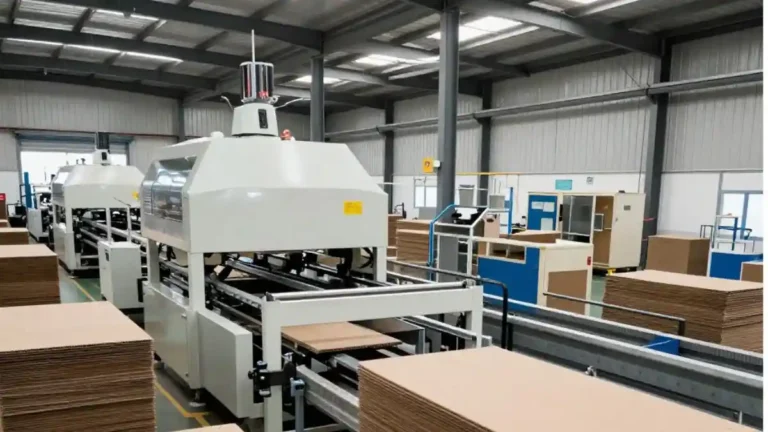
- Automation in corrugated plants
Spain’s agricultural export scale ensures structural demand for fibre-based transport packaging remains strong.
Frequently Asked Questions
Which is the largest packaging company in Spain?
SAICA Group is Spain’s largest domestically headquartered packaging group. It reported FY2024 revenue of €3.662 billion.
Which company leads glass packaging in Spain?
Vidrala, founded in 1965, is Spain’s leading glass packaging producer. Its FY2024 revenue reached €1.619 billion.
Why is corrugated packaging so important in Spain?
Corrugated board is the structural backbone of Spain’s retail logistics. Fresh produce exports and retail-ready transport formats make it the dominant supermarket-linked segment.
Conclusion
In FY2024, Spain’s packaging leaders showed resilience across fibre, glass and pulp. This strengthened their structural role within the wider Spain FMCG production base.
Key results for the domestic leaders:
- SAICA kept its dominant position at €3.662 billion in revenue.
- Vidrala strengthened its position in glass at €1.619 billion, closely linked to beverage and food demand.
- Hinojosa consolidated mid-market scale at €795 million.
Hinojosa also has growing international exposure tied to fresh produce exports and Spain supermarket distribution networks.
Through 2026, competitive position will continue to depend on vertical fibre integration, energy efficiency and regulatory alignment across Spain’s packaging ecosystem. Compliance requirements increasingly shape procurement decisions across Spain FMCG and retail supply chains.
Editor’s Note: This ranking is based on publicly available FY2024 company financial reports and official disclosures.
Global revenues are shown for multinational groups operating in Spain.
Currency references reflect reported figures in company filings.