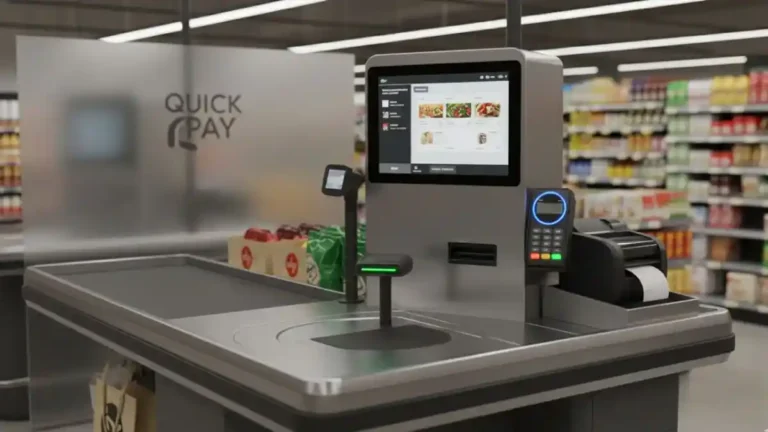

Canada’s retail technology sector is led by a small group of scaled infrastructure platforms supported by specialist operators solving operational friction inside stores and supply chains. This ranking is based on a hybrid methodology combining verified FY2024–FY2025 revenue with structural relevance to retail execution. The ten companies included are Shopify, Nuvei, Lightspeed Commerce, Kinaxis, Descartes Systems Group, Coveo, Pivotree, Givex, Tulip and Multidev Technologies. Only Canadian-headquartered companies are considered. Fiscal data reflects the latest officially published results available as of 2026.
Ranking Overview
| Rank | Company | Headquarters | FY Revenue (Latest Published) | Structural Role | Supermarket Relevance |
|---|---|---|---|---|---|
| 1 | Shopify | Ottawa, ON | US$8.88B (FY2024) | Commerce platform | Unified commerce |
| 2 | Nuvei | Montréal, QC | ~US$1.3B (FY2024 trend) | Payments infrastructure | Transaction backbone |
| 3 | Lightspeed Commerce | Montréal, QC | US$909M (FY2024) | POS + Payments | Store operations |
| 4 | Kinaxis | Ottawa, ON | US$694.6M (FY2024) | Supply chain planning | Forecasting + replenishment |
| 5 | Descartes Systems Group | Waterloo, ON | US$651M (FY2025) | Logistics network | Transport visibility |
| 6 | Coveo | Québec City, QC | US$133.3M (FY2025) | AI search | E-commerce optimisation |
| 7 | Pivotree | Toronto, ON | C$78.2M (FY2024) | Product data + integrations | Item setup discipline |
| 8 | Givex | Toronto, ON | C$83.8M TTM (2024) | Loyalty + stored value | Retention mechanics |
| 9 | Tulip | Kitchener, ON | Private | Clienteling platform | Assisted selling |
| 10 | Multidev Technologies | Montréal, QC | Private | Retail ERP | Operational control |
1. Shopify
Founded: 2006
Headquarters: Ottawa, Ontario
FY Revenue: US$8.88B (FY2024)
Employees: ~8,000+
Core Segments
Online commerce platform
Shopify Payments
POS systems
Merchant services
Enterprise commerce (Plus)
Operational Relevance
Shopify has evolved beyond an e-commerce builder into unified commerce infrastructure. Retailers use it to manage digital storefronts, payments, inventory, and increasingly physical POS environments under a single operating layer. That integration reduces system fragmentation and speeds feature deployment across channels.
Market Position
By revenue scale, Shopify is Canada’s largest retail technology company and one of the largest globally. Its ecosystem of developers and integrations creates structural stickiness within merchant operations.
Strategic Direction
FY2024 confirmed platform efficiency improvements and continued expansion into AI-driven commerce tools. The company is positioning itself as foundational infrastructure for “everywhere commerce” rather than just digital storefront software.
2. Nuvei
Founded: 2003
Headquarters: Montréal, Québec
FY Revenue: ~US$1.3B (FY2024 trend; last full public audit FY2023)
Employees: ~1,500+
Core Segments
Global payment processing
Cross-border transaction routing
Risk and fraud management
Merchant acquiring
Platform payments
Operational Relevance
Payments determine margin control. Interchange efficiency, fraud management and settlement timing directly affect retailer cash flow. Nuvei provides the transaction infrastructure layer that supports digital and omnichannel commerce.
Market Position
Nuvei was taken private in late 2024 but remains structurally significant in global payments. Its Canadian headquarters and international processing capabilities place it among the most scaled fintech operators linked to retail.
Strategic Direction
The company continues focusing on international expansion and vertical payment specialisation while operating under private equity ownership.
3. Lightspeed Commerce
Founded: 2005
Headquarters: Montréal, Québec
FY Revenue: US$909M (FY2024, fiscal year ended March 31, 2024)
Core Segments
Retail POS
Payments services
Inventory management
Multi-location reporting
Hardware integration
Operational Relevance
Lightspeed operates at checkout level. POS stability, payments integration and inventory synchronisation directly influence store performance. For retailers, POS is not optional technology — it is the heartbeat of revenue capture.
Market Position
Lightspeed remains one of Canada’s most recognised retail software providers. Its vertical approach across retail categories gives it operational depth beyond basic checkout functionality.
Strategic Direction
Recent cycles emphasise profitability discipline and expanding transaction-based revenue through payments.
4. Kinaxis
Founded: 1984
Headquarters: Ottawa, Ontario
FY Revenue: US$694.6M (FY2024, calendar year ended Dec 31, 2024)
Core Segments
Supply chain planning SaaS
Demand forecasting
Inventory optimisation
Scenario modelling
Enterprise planning systems
Operational Relevance
Forecast accuracy impacts shrink, stockouts and working capital. Kinaxis supports complex supply chains with scenario-based planning systems that respond to volatility faster than traditional ERP-based models.
Market Position
Kinaxis is recognised globally for supply chain planning. In retail, it supports large network operators where planning complexity scales rapidly.
Strategic Direction
FY2024 showed strong SaaS subscription growth, reinforcing its enterprise positioning.
5. Descartes Systems Group
Founded: 1981
Headquarters: Waterloo, Ontario
FY Revenue: US$651M (FY2025, year ended Jan 31, 2025)
Core Segments
Logistics network connectivity
Transport management systems
Customs compliance
Route optimisation
Track and trace visibility
Operational Relevance
Retail logistics failures directly impact shelf availability. Descartes provides data connectivity and compliance tools that reduce inbound delays and transport inefficiencies.
Market Position
Descartes is a scaled Canadian enterprise software export with strong positioning in global trade networks.
Strategic Direction
The company continues to expand through acquisition and SaaS model consolidation.
6. Coveo
Founded: 2005
Headquarters: Québec City, Québec
FY Revenue: US$133.3M (FY2025)
Core Segments
AI-powered search
Product recommendations
Personalisation engines
Enterprise indexing
Commerce analytics
Operational Relevance
Search performance influences digital conversion rates. Poor search increases bounce rates and promotional waste. Coveo’s AI relevance engine improves product discovery.
Market Position
Coveo operates in a specialist segment but holds strong enterprise credibility in search and AI relevance.
Strategic Direction
FY2025 reflects continued focus on subscription revenue and AI-led platform consolidation.
7. Pivotree
Founded: 1998
Headquarters: Toronto, Ontario
FY Revenue: C$78.2M (FY2024)
Core Segments
Product information management
Marketplace integrations
Commerce data operations
Managed services
Channel syndication
Operational Relevance
Product data accuracy determines listing reliability and pricing integrity. Pivotree supports retailers in reducing onboarding errors and integration breakdowns.
Market Position
A mid-tier specialist with strong positioning in data-heavy retail environments.
Strategic Direction
FY2024 showed restructuring focus and operational discipline.
8. Givex
Founded: 1999
Headquarters: Toronto, Ontario
Revenue: C$83.8M (TTM mid-2024)
Status: Acquired by Shift4 (2024)
Core Segments
Gift card systems
Loyalty programs
POS-linked engagement
Stored value processing
Transaction reporting
Operational Relevance
Loyalty and stored value systems affect repeat purchase frequency and financial reconciliation accuracy.
Market Position
Though now part of Shift4, Givex remains structurally embedded in Canadian retail engagement infrastructure.
Strategic Direction
Post-acquisition integration into broader payments ecosystem.
9. Tulip
Founded: 2013
Headquarters: Kitchener, Ontario
Revenue: Private
Core Segments
Clienteling software
Associate task management
Omnichannel service tools
POS integrations
Customer engagement
Operational Relevance
Tulip enhances in-store associate productivity and service-driven sales conversion.
Market Position
Strong presence in service-heavy retail categories.
Strategic Direction
Continues focusing on store modernisation and digital-associate enablement.
10. Multidev Technologies
Founded: 1997
Headquarters: Montréal, Québec
Revenue: Private
Core Segments
Retail ERP
Inventory control
Order management
Purchasing systems
Multi-store administration
Operational Relevance
ERP discipline underpins inventory integrity and financial reporting accuracy.
Market Position
Long-standing Canadian retail software provider focused on operational stability.
Strategic Direction
Product continuity and integration upgrades for omnichannel retail.
Structural Analysis: Canada’s Retail Tech Architecture
Canada’s retail technology landscape is infrastructure-led. The largest firms focus on transaction plumbing, logistics networks and planning engines rather than consumer-facing apps. This reflects Canada’s historical strength in enterprise software and payments processing.
The ecosystem splits into two layers:
- Layer 1: Infrastructure: Commerce platforms, payments, planning and logistics.
- Layer 2: Operational Specialists: Search relevance, product data, loyalty and associate tooling.
Retail transformation increasingly depends on integration across both layers. Systems must communicate cleanly to reduce margin leakage and operational friction.
Canadian firms dominate backend enablement. Payments, supply chain planning and logistics visibility represent structural strengths compared with consumer-facing retail apps.
Conclusion
The Top 10 Retail Technology Companies in Canada (FY2024–2025) illustrate a market defined by operational infrastructure rather than trend-driven consumer technology. Revenue leadership remains concentrated in commerce platforms and payments networks, while specialist firms solve execution gaps inside stores and supply chains.
For grocery stores Canada-wide, that distinction matters. Margin pressure, labour costs and inventory volatility have pushed operators to focus less on experimental front-end tools and more on reliable transaction systems, forecasting accuracy and logistics visibility. Whether operating national banners or regional chains, grocery stores Canada rely on stable POS environments, disciplined product data and integrated planning systems to protect availability and reduce shrink.
Canadian supermarkets are also operating in a higher-compliance and higher-cost environment than a decade ago. That makes backend systems—payments routing, customs documentation, replenishment planning and loyalty reconciliation—more than technical upgrades. They are structural controls tied directly to profitability.
As supermarkets and multi-banner retailers prioritise resilience and cost control, Canadian-headquartered technology providers remain embedded in the systems that keep transactions flowing, distribution centres coordinated and shelves stocked across grocery stores Canada.
Editor’s Note: This article is based on publicly available fiscal reports and official company disclosures as of 2026. Revenue figures are presented according to the latest published fiscal year available and labelled accordingly. Private company revenues are not disclosed. Currency references follow the reporting currency used by each company.