
Amcor is expanding its refillable and refill packaging range for beauty and personal care products, combining rigid bottles, pumps and closures with flexible refill pouches as brands and retailers increase their focus on lower-material packaging systems.
The packaging group announced the expansion on 8 September 2026. Its current offer allows customers to source both the original reusable container and the refill pack through one supplier, covering products including liquid soap, shower and bath products, haircare and other personal care categories.
The move is commercially relevant because refill packaging is moving beyond small sustainability pilots. Amcor’s own research across six European countries found that 66% of 2,749 consumers surveyed had bought a refill pouch during the previous 12 months.
What has Amcor added to its refill packaging range?
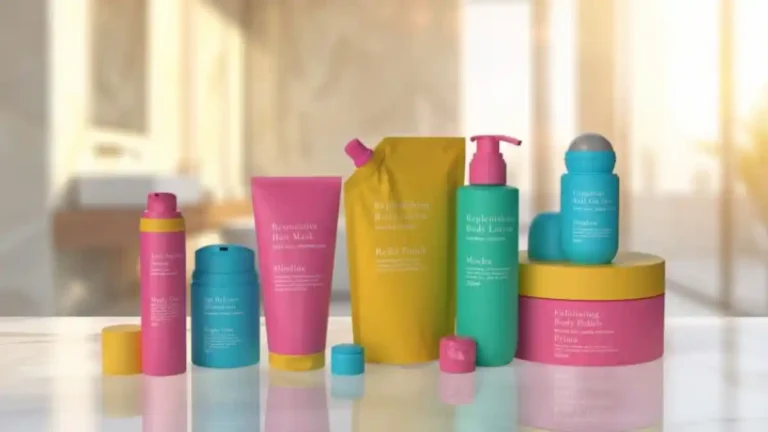
Amcor’s system combines different rigid and flexible formats rather than treating the refill pouch as a standalone pack.
The rigid side includes reusable containers such as the customisable Mocha bottle, which can be paired with different closures and dispensers including the mono-material Wave 2cc pump.
For the refill cycle, Amcor offers AmPrima recycle-ready spouted stand-up pouches in sizes from 30ml to 2 litres. The company says the pouches are designed to provide leak resistance while remaining suitable for e-commerce delivery as well as physical retail.
Post-consumer recycled material can also be incorporated into refillable and refill components, depending on the pack specification.
The important point for packaging procurement teams is integration. A refill system has to work as one pack architecture. Bottle neck, closure, pump, pouch spout, filling line, transport performance and the consumer refill process all need to be considered together.
European refill demand is becoming measurable
Amcor’s April 2026 study surveyed 2,749 consumers in France, Germany, Italy, Poland, Spain and the UK. It covered shower and bath products, haircare and handwash liquid soap.
The results show that price and convenience remain as important as the sustainability claim.
- 66% had purchased a refill pouch in the previous 12 months.
- 86% expected a refill product to cost less than the original packaged product.
- 69% said they would buy more refills if prices were lower.
- 81% were more likely to buy a refill pouch if it was recyclable.
- 74% were more likely to purchase refills made using recycled plastic.
- 45% said they would buy more if refill options were easier to find in stores or add to online orders.
Availability remains a clear barrier. Nearly half of respondents who did not buy refill products said they could not find their preferred product or brand in a refill format.
That creates a direct retail issue. A manufacturer can redesign the packaging, but adoption still depends on where the refill sits on shelf, whether it appears beside the original bottle and how easily it can be added to an online grocery or health-and-beauty basket.
Why refill packaging matters to supermarkets and FMCG brands
For retailers, refill is partly a packaging decision and partly a category-management decision.
The original pack normally carries more material and a higher upfront cost. The refill has to offer a clear value reason to return while remaining easy to recognise, store and use. If the price gap is too small or the refill is difficult to find, repeat purchasing can weaken.
For FMCG brands, the equation is wider. A refill pouch can reduce packaging material and transport weight, but the system still has to protect the product, prevent leakage, run efficiently on filling equipment and preserve brand presentation.
Ease of use is another operational factor. Amcor’s research found that 35% of respondents identified product waste from spills as a frustration, while 29% mentioned messiness during refilling. That helps explain why the company is positioning the bottle, pump and pouch as one engineered system.
The refill expansion follows other changes across Amcor’s European packaging portfolio. Earlier this year, the group presented new beauty and personal care formats ahead of Cosmoprof Bologna, while its food-packaging work has included a recycle-ready cheese pack developed with French dairy cooperative Laïta.
PPWR is adding another reason to redesign packaging
Amcor said European packaging regulation is increasing interest in circular packaging systems. The EU Packaging and Packaging Waste Regulation is pushing manufacturers and retailers to reduce packaging waste and improve recyclability and reuse where applicable.
That does not make every refill system commercially viable. Brands still need to prove that the format works across manufacturing, logistics, shelf presentation and repeat use.
For supermarket and drugstore buyers, this means refill products increasingly need to be assessed alongside normal range economics: selling price, margin, rate of sale, shelf space, packaging weight, leakage risk, online fulfilment and consumer repeat purchase.
Amcor’s scale gives the refill strategy wider reach
Amcor is one of the world’s largest packaging groups. The company currently employs around 75,000 people and reports approximately $23 billion in annual sales, with operations spanning around 400 locations in more than 40 countries.
That scale matters because refill adoption will require more than one successful pack. Large FMCG groups often want consistent systems that can be adapted across brands, product viscosities, markets and filling operations.
Amcor’s combination of rigid packaging, flexible packaging, cartons and closures gives it the ability to approach refill development across several components rather than supplying only the pouch.
What happens next?
Amcor will continue presenting its refill and reusable packaging offer to beauty, personal care and wider FMCG customers as European demand and regulation increase pressure on single-use formats.
The company is due to exhibit at London Packaging Week on 16–17 September 2026, where refill systems are expected to form part of its wider packaging portfolio.
The bigger test will happen at retail level. Consumer interest is already measurable, but wider adoption will depend on whether brands can make refills cheaper, easier to find and simple enough to use repeatedly.
For supermarkets and FMCG buyers, refill packaging is therefore becoming less of a sustainability side project and more of a normal procurement question: can the system reduce material without adding cost, complexity or friction elsewhere in the supply chain?
Editor’s Note: This article is based primarily on Amcor’s official 8 September 2026 refill-packaging announcement and its European consumer research published on 16 June 2026. The survey covered 2,749 consumers in France, Germany, Italy, Poland, Spain and the UK. Company scale figures are taken from Amcor’s current corporate disclosures. Grocery Trade News added retail, procurement and supply-chain context; no company financial or survey figures were estimated.