
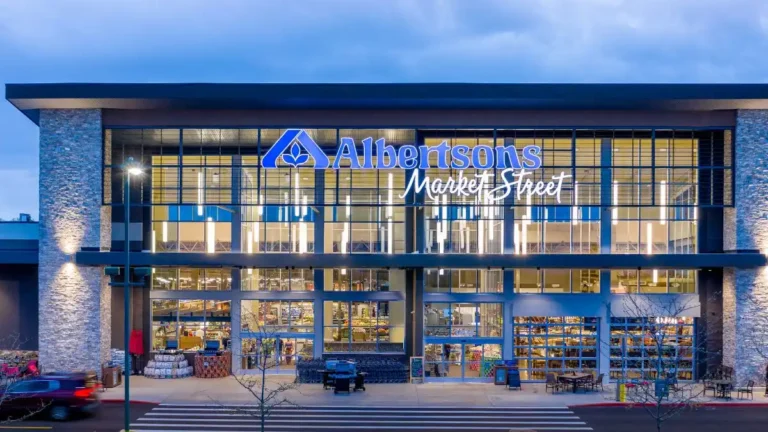

Albertsons Companies reported its fourth quarter and full year fiscal 2025 results on April 14, 2026, in Boise, Idaho, showing modest sales growth but a net loss driven by a major opioid settlement charge. The company also raised its dividend, expanded its share buyback program, and issued a cautious fiscal 2026 outlook, reflecting ongoing pressure from pharmacy pricing and rising digital fulfilment costs.
What are Albertsons Q4 2025 results?
Albertsons Companies Q4 2025 results reflect trading performance across its core supermarket and pharmacy operations for the period ended February 28, 2026, within a 53-week fiscal year. The update highlights modest identical sales growth, continued digital expansion, margin pressure linked to fulfilment costs, and a significant one-off legal charge, alongside forward guidance that signals a low-growth operating environment for 2026.
At a glance
- Identical sales increased 0.7% in Q4
- Digital sales rose 16% in Q4 and 21% for the full year
- Net loss of $481 million in Q4 due to opioid settlement charge
- Adjusted net income reached $252 million in Q4
- Full-year net sales totaled $83.2 billion
- Dividend increased 13% to $0.17 per share
- Share repurchase authorization expanded to $2 billion
Why did Albertsons report a net loss?
Albertsons reported a net loss of $480.8 million in the fourth quarter mainly due to a $773.8 million charge linked to an opioid settlement framework. Excluding this, adjusted earnings remained positive. This highlights how legal and regulatory costs can significantly impact reported profitability in the retail pharmacy segment.
How did sales and digital performance evolve?
Total revenue reached $20.3 billion in Q4, supported by an extra trading week. Identical sales rose slightly, while digital sales continued strong double-digit growth. However, this growth came with higher delivery and handling costs, showing the ongoing trade-off between e-commerce expansion and margin pressure in grocery retail.
What is impacting margins and costs?
Gross margin declined slightly to 27.2%, with pressure coming from fulfilment costs tied to digital growth. Selling and administrative expenses increased significantly due to the opioid-related charge. Excluding one-off items, cost control remained relatively stable, reflecting continued productivity efforts across the business.
How is the pharmacy business affecting performance?
Pharmacy operations faced headwinds from pricing changes linked to the Inflation Reduction Act. These changes affected reimbursement rates and sales mix, reducing expected pharmacy revenue. This trend reflects broader pressure across U.S. grocery chains with integrated pharmacy services.
What is Albertsons’ capital and investment strategy?
The company increased its quarterly dividend by 13% and expanded its share repurchase authorization to $2 billion. It also invested $1.84 billion in capital expenditures, including store remodels, new store openings, and digital infrastructure, signalling a continued focus on long-term competitiveness and shareholder returns.
What is the outlook for fiscal 2026?
Albertsons expects identical sales growth between 0% and 1% in fiscal 2026, indicating a cautious view of consumer demand. Adjusted EBITDA is projected between $3.85 billion and $3.93 billion, with continued investment in operations and technology expected to support gradual earnings growth.
What does this mean for the grocery industry?
Albertsons’ results reflect wider industry dynamics where digital growth is strong but costly, and pharmacy margins are under pressure from regulation. Other major retailers are facing similar challenges, balancing price competitiveness, operational efficiency, and investment in omnichannel capabilities.