
Fresh food inflation across the euro area accelerated in August, creating a renewed pricing challenge for supermarket produce buyers even as inflation across processed grocery categories continued to ease.
Eurostat’s August 2026 flash estimate shows unprocessed food prices rising 2.7% year on year, up from 2.4% in July. By contrast, processed food inflation slowed to 0.6% from 0.7% a month earlier. The split matters for supermarkets because it points to a grocery market where fresh categories are becoming more inflationary while many packaged-food lines remain comparatively stable.
At a Glance
- Euro area unprocessed food inflation: 2.7% in August.
- July unprocessed food inflation: 2.4%.
- Processed food inflation: 0.6% in August.
- July processed food inflation: 0.7%.
- Unprocessed food prices fell 0.1% month on month despite the faster annual rate.
- Processed food prices were broadly flat month on month.
Fresh Food Is Now the Bigger Supermarket Pressure
The most important signal for grocery retailers is the widening gap between fresh and processed food inflation.
Unprocessed food includes many of the categories most exposed to weather, harvest conditions, livestock costs and short shelf lives. When inflation in these categories accelerates, supermarket buyers have less room to delay sourcing decisions or rely on long inventory cycles.
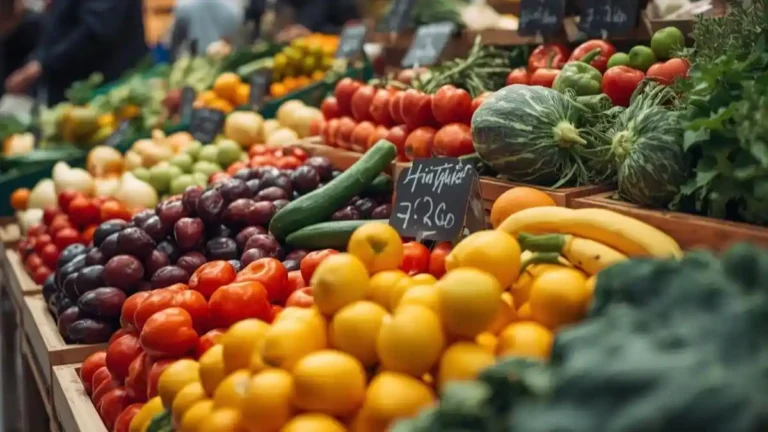
For fresh produce teams, the August data suggests renewed pressure on procurement costs after several months of easing. That can feed directly into shelf prices, promotional planning and supplier negotiations, particularly where retailers are trying to protect price perception on high-frequency purchases such as fruit, vegetables and other fresh lines.
Weather remains one reason fresh categories can move differently from packaged grocery. ECB analysis estimates that the 2025 summer heatwave lifted euro-area unprocessed food prices by around 0.4 to 0.7 percentage points over 12 months. That makes crop exposure, import origins and seasonal sourcing especially important for produce buyers when fresh-food inflation starts to climb.
The supply concentration is important. Spain produces more than a quarter of the EU’s fruit and vegetables, with close to half of Spanish output destined for export. The EU remains the main destination for that trade, making Spanish growing regions central to supermarket availability across the continent.
Murcia and Almería are particularly important fresh-produce belts. Murcia accounted for about 20% of Spain’s fresh fruit-and-vegetable export volume in the first quarter of 2026, while the Murcia–Almería corridor is heavily tied to peppers, tomatoes, lettuces, cucumbers, melons and other supermarket staples. Heat, water stress, crop disease or logistics disruption in southern Spain can therefore move quickly through European retail supply chains.
Other Mediterranean sourcing zones in Italy, Greece and southern France matter for the same reason, while Morocco and other nearby origins increasingly provide balancing supply when European harvests tighten. For buyers, the issue is not only the inflation rate itself, but how concentrated exposure to a handful of major fresh-food regions can amplify price movements.
Processed Grocery Inflation Continues to Ease
The picture is different in packaged and processed food.
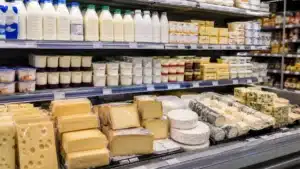
Processed food inflation slowed to 0.6% in August from 0.7% in July and remains well below levels seen earlier in 2026. That gives supermarkets more flexibility across ambient, packaged and private-label categories where contracts, production cycles and promotional planning can be managed over longer periods.
For private-label buyers, slower processed-food inflation may support stronger value positioning and more aggressive promotions, especially where retailers are trying to offset higher fresh-food prices elsewhere in the basket.
What It Means for Supermarket Buyers
The August figures point to a more uneven grocery inflation environment rather than a broad-based rise across every food aisle.
Supermarket teams are likely to focus on:
- tighter sourcing and forecasting in fresh produce;
- more frequent supplier negotiations on short-life categories;
- stronger promotional activity in processed and packaged food;
- using private label to protect value perception;
- balancing higher fresh-food costs against stable ambient categories.
This type of divergence can make basket-price management more difficult. Retailers may be able to hold or reduce prices in some packaged categories while still facing upward pressure in fresh food, creating a mixed pricing message for shoppers.
What It Means for Food and FMCG Suppliers
Fresh-food suppliers are operating in a firmer pricing environment than many packaged-food manufacturers.
For produce growers, importers and wholesalers, higher annual inflation can strengthen selling prices, but it can also increase pressure from retailers looking to maintain competitive shelf prices. Suppliers may therefore face tougher discussions around promotions, specifications and sourcing alternatives.
Processed-food manufacturers face the opposite challenge. With inflation easing to 0.6%, broad price increases may be harder to justify, particularly in categories where retailers have strong private-label alternatives.
That increases the importance of efficiency, pack architecture, promotional support and differentiated products rather than relying on inflation-led price rises.
Private-label competition also changes the economics of co-packing. As retailers expand own-brand ranges and centralise more sourcing, manufacturers may need to dedicate line time to retailer-specific recipes, pack sizes, labels and promotional formats while keeping changeover costs under control. The strongest co-packers will be those that can switch efficiently between retailer programmes, protect service levels and offer enough scale to absorb shorter runs or more complex assortment demands.
That can influence capacity strategy as well. A manufacturer with flexible filling, packing and labelling lines is better placed to compete for multi-market private-label contracts than one built mainly around long branded runs. With private label now accounting for around 40% of grocery value across major European markets, that flexibility is becoming a commercial advantage rather than a niche capability.
Why This Matters More Than the Headline Inflation Rate
Most coverage of Eurostat’s August release focuses on the wider euro-area inflation rate. For grocery retailers, however, the more useful signal is the movement inside food categories.
Fresh food accelerated while processed grocery inflation softened. That distinction is more relevant to supermarket margin management than the headline consumer inflation figure because it shows exactly where shelf-price pressure is building and where it is easing.
It also reinforces the need to treat food inflation as a category-level issue rather than a single number.
What Happens Next?
Eurostat is due to publish the full August inflation dataset on 17 September. That release should provide more detailed country-level and food-category data and will show whether the fresh-food acceleration seen in the flash estimate is broad-based across the euro area.
For supermarket buyers, the immediate focus remains on whether fresh-food inflation continues to rise into the autumn while processed grocery prices stay relatively stable.
Grocery Trade News has previously tracked euro area food inflation as fresh-food and supermarket pricing pressures shifted earlier in 2026.
Editor’s Note: This report is based on Eurostat’s August 2026 flash estimate and focuses specifically on food, grocery and supermarket-relevant data. It does not treat the wider consumer price release as a general inflation story.