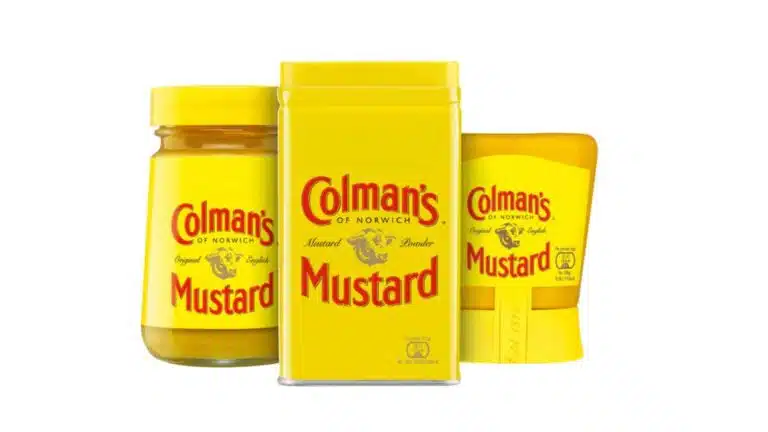

McCormick has offered to sell Colman’s to address UK competition concerns over its proposed acquisition of Unilever Foods, the Competition and Markets Authority said on 25 November.
The regulator believes the proposal could resolve its concerns. It will examine the offer in detail and seek feedback before deciding whether to clear the deal conditionally. The transaction has not received UK approval.
The proposed disposal brings the future ownership of a familiar supermarket brand into focus. Colman’s sells dry cooking mixes and sauces as well as mustard, making the scope of the business being sold relevant across several grocery categories.
The CMA’s concerns centre on dry ingredient mixes and dry sauces supplied to UK retailers. These include products used to prepare meals such as chilli con carne and packet sauces served alongside food.
McCormick supplies Schwartz, while Unilever Foods owns Knorr and Colman’s. The regulator found that the proposed combination of the food businesses would unite the two largest branded suppliers in the two dry categories.
The CMA put annual UK sales across those categories at around £140 million. That figure describes the markets under review, rather than Colman’s turnover or the value of the proposed disposal.
Maggi, Bisto and supermarket own label provide alternatives. However, the regulator found that the competitive pressure they exert on the merging businesses was limited. It also identified restricted supermarket shelf space and established supplier positions as barriers to expansion.
Mustard requires a separate reading. The CMA did not identify a competition concern there, finding that French’s American-style mustard and the English and French styles sold under Colman’s and Maille were generally not regarded as substitutes.
The proposed Colman’s sale therefore addresses concerns about cooking mixes and sauces. Describing it simply as a mustard remedy would miss the categories at the centre of the investigation.
The development follows the CMA’s initial competition findings on 11 November. That decision required the companies to offer an acceptable remedy or face a more detailed investigation.
For supermarket category teams, the next practical question is what an approved Colman’s buyer would acquire. Brand ownership, manufacturing arrangements and responsibility for supplying individual lines will matter when assessing continuity and future competition.
Retailers comparing private-label sauce suppliers also need to distinguish dry blends from wet sauces. Capability in one format does not establish capacity, technical approval or competitive strength in the other.
The announcement does not itself change current listings, product specifications or trading terms. Procurement teams should seek product-specific confirmation before changing supplier records or assuming that a disposal will create additional supply capacity.
The CMA must now assess the proposed undertakings and the suitability of a purchaser. Acceptance would allow conditional clearance; if the remedy proves insufficient, an in-depth investigation remains possible.
Editor’s Note: This article is based on information published by the Competition and Markets Authority on 25 November 2026 and company announcements regarding McCormick’s proposed Colman’s divestment. Additional industry context and analysis have been added by Grocery Trade News to explain the implications for supermarket buyers and supplier competition.