
Royal Unibrew’s third-quarter operating profit rose 5.5% to DKK 820 million, but the Danish drinks group lowered the top end of its full-year growth outlook. In its 11 November trading statement, it forecast organic operating profit growth of 6–8% for 2026, down from a range of 6–10%.
Quarterly net revenue rose 1% to DKK 4.35 billion. On a comparable basis that excludes the exit from lower-margin activities, revenue grew 4%. Organic volumes increased 1.4%, and the operating margin rose to 18.9% from 18.1% a year earlier.
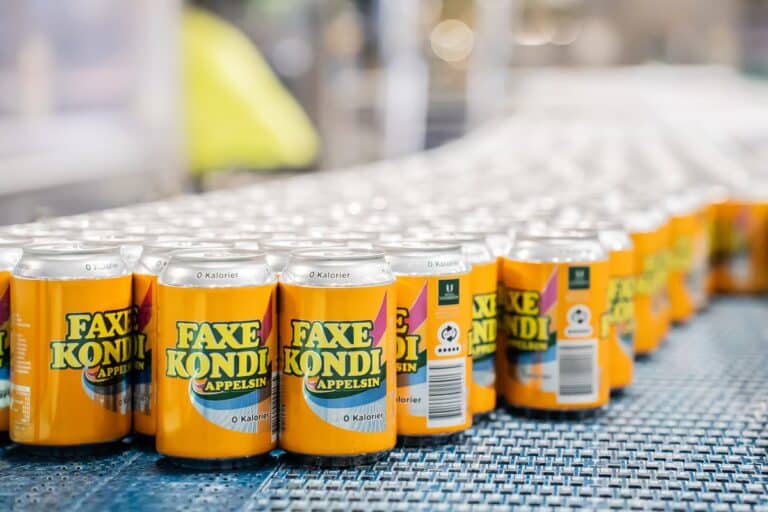
Italy and the international business led growth. Royal Unibrew reported high single-digit growth in Italy, where Ceres and Faxe performed well and Crodo gained share. In Denmark, where Royal Unibrew is among the largest FMCG groups, Faxe Kondi helped drive growth in carbonated soft drinks. In Finland, colder weather weighed on demand and the company said market volumes fell by more than 5%.
For grocery buyers in the Benelux, the key detail was a new canning line in the Netherlands that had yet to reach its expected productivity. The company said the resulting supply problems weighed on regional performance. Belgium and Luxembourg still grew, while Dutch volumes and revenue remained below last year. The statement gave no timetable for the line to reach target output.
Royal Unibrew raised prices in selected markets in the quarter as energy, materials and distribution costs increased. It plans further measures in the fourth quarter and into 2027, without specifying which products or markets will be affected. Buyers planning canned drinks promotions in the Benelux can use the update to check volumes and delivery dates by pack size before committing shelf space.
The group also recorded DKK 12 million in accelerated amortisation related to its PepsiCo partnership. The transfer of Nordic and Baltic PepsiCo bottling to Carlsberg is due in 2029. The more immediate question for buyers is how quickly the Dutch line reaches its expected output and whether further price measures affect spring range negotiations.
Editor’s note: The figures are from Royal Unibrew’s Q3 2026 trading statement, published on 11 November 2026. The implications for promotion planning are GTN analysis.