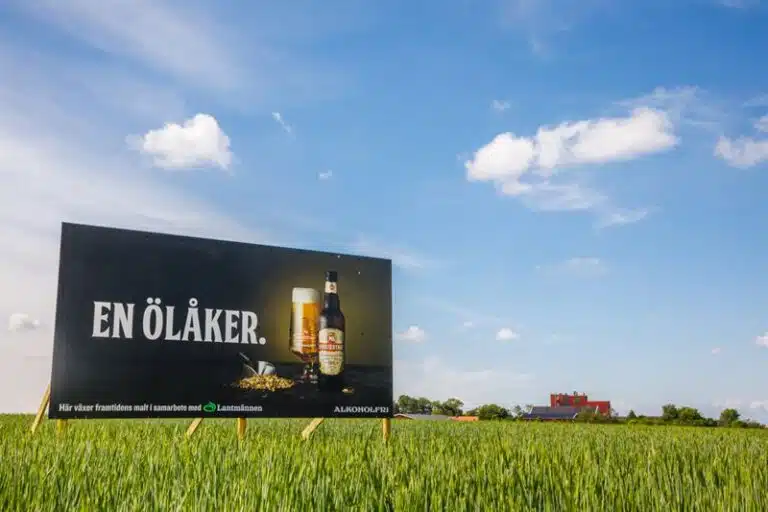

Spendrups’ entire annual requirement for conventionally grown malting barley will be covered by Lantmännen’s Climate & Nature programme in 2026, extending a sourcing commitment that began with 10% coverage in 2022.
The Swedish brewer and agricultural cooperative announced the milestone on 12 October. They estimate annual emissions savings of about 5,000 tonnes of CO₂ equivalent and cumulative savings of roughly 12,600 tonnes including the 2026 harvest.
For supermarket beverage buyers, the material change is the breadth of raw-material sourcing covered. It moves the programme beyond selected volumes, giving procurement teams a clearer basis for asking how the arrangement feeds through to the beers they buy.
Spendrups is an established participant in the Swedish branded food and drink market. The company reports around SEK 5 billion in annual turnover and 1,100 employees, with brands including Mariestads and Norrlands Guld.
The announcement concerns conventional malting barley specifically. Buyers should keep that scope separate from organic sourcing and from the footprint of a finished beer, which also reflects processing, packaging and distribution.
Lantmännen says its wider farming programme has reduced crop-related climate footprints by up to 45% since 2015. That programme-level figure should not be presented as a 45% reduction for every Spendrups product.
The practical procurement questions now concern evidence and allocation. Retailers need to know which harvest and production batches support a claim, what comparison baseline is used, and how the benefits are assigned to purchased volumes. An aggregate annual saving alone cannot establish the footprint of an individual SKU.
Those questions matter in negotiations with Sweden’s supermarket groups, where a supplier’s sustainability data must be usable alongside price, availability and product specifications.
The announcement does not disclose a barley price premium, total contracted tonnage or changes to retail supply terms. It therefore provides evidence of wider programme coverage, but no basis for assuming cheaper inputs or an immediate change in shelf prices.
The next test will be how the 2026 harvest is reflected in product-level reporting and customer documentation as the barley moves through malting, brewing and retail supply.
Editor’s note: Based on Spendrups and Lantmännen announcements dated 12 October 2026, with GTN analysis of sourcing scope and the evidence buyers need.