
The Irish grocery landscape in 2026 has hit a critical “Buy Local” inflection point. While foreign multinationals have historically flooded the market with low-cost imports, the domestic titans—led by the powerhouse Musgrave Group and the private Heffernan empire—have fought back by weaponizing Irish provenance. The problem is clear: shoppers want the lower prices of a global supply chain but demand the quality of Irish grass-fed beef and local soil produce. The promise of this report is a forensic look at the retailers who have successfully bridged that gap, keeping Irish capital within the 26 counties while scaling digital infrastructure. We will cover the dominant multiples like Dunnes and SuperValu, the convenience hegemony of Centra, and the elite gourmet chains redefining the Dublin suburbs.
The Domestic Irish Grocery Sector (2026) comprises retail entities headquartered and founded within Ireland, characterized by a heavy reliance on the Musgrave wholesale backbone or independent family-office ownership, currently commanding approximately 46% of total national grocery spend.
At-a-Glance: The Domestic Top 10 (FY25/26)
| Rank | Entity (HQ) | FY Rev (Est) | Strategic Impact |
| 01 | Dunnes Stores (DUB) | €5.5B (25) | Market-wide price setter & loyalty king. |
| 02 | SuperValu (ORK) | €3.4B (25) | Community-centric franchise powerhouse. |
| 03 | Centra (ORK) | €2.1B (25) | Dominant force in high-margin convenience. |
| 04 | Donnybrook Fair (DUB) | €85M (25) | The benchmark for premium “ready-to-eat.” |
| 05 | Fresh (DUB) | €62M (25) | Urban “Grocerant” hybrid success model. |
| 06 | Gala (KLD) | €310M (25) | Rural lifeline and community retail staple. |
| 07 | Mace (ORK) | €280M (25) | Suburban convenience and forecourt leader. |
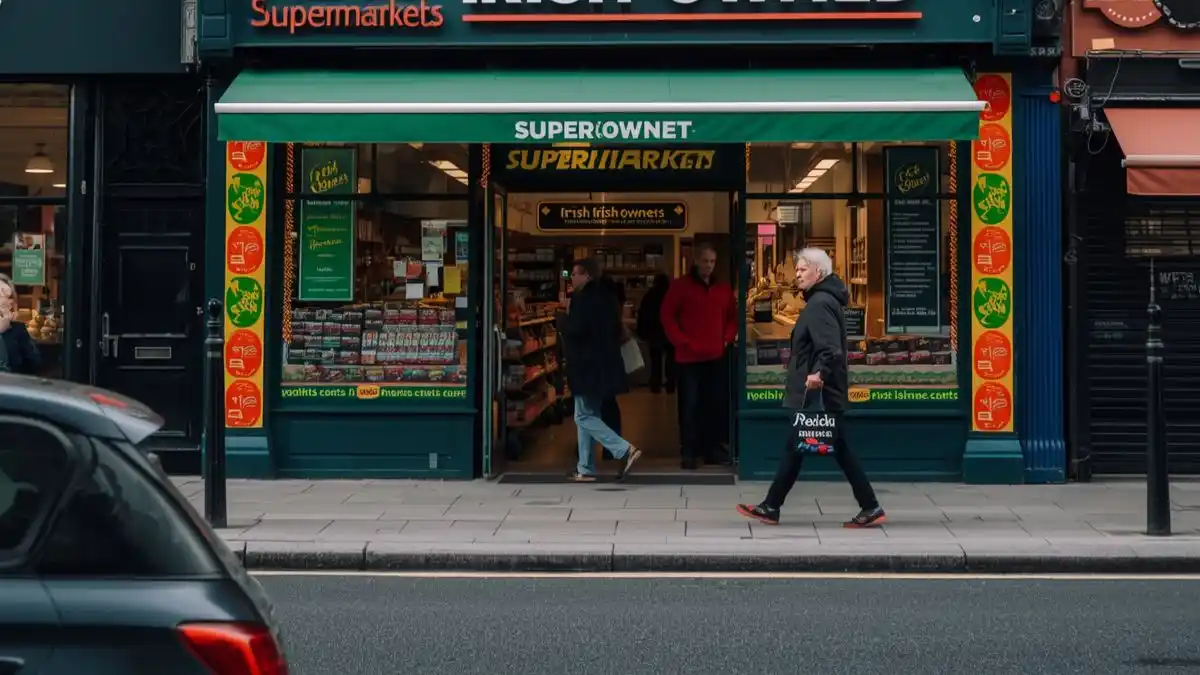
| 08 | SuperKee (DUB) | €45M (25) | Rising boutique urban ethnic/premium chain. |
| 09 | Joyces (GAL) | €22M (25)* | Remaining independent West-coast boutique. |
| 10 | Mortons (DUB) | €18M (25) | Heritage-focused high-end neighborhood hub. |
Profile 01: Dunnes Stores (HQ: Dublin, Ireland)
Founded: 1944 | FY25 Revenue: €5.5B | Employees: 15,000+
-
Core Segments: Grocery, Simply Better Tier, Textiles, Homeware.
-
Operational Relevance: Dunnes operates a “Store-within-a-Store” model that is unique in Europe. By integrating high-end fashion and homeware with grocery, they drive a dual-purpose footfall. In 2026, their logistics focus has shifted to the “Direct-from-Farm” Simply Better line, which now accounts for 20% of their total grocery revenue.
-
The Analyst’s View: Dunnes is the master of psychological pricing. Their “€10 off €50” voucher is not just a discount; it is a behavioral lock-in that prevents leakage to Lidl or Aldi. By staying private, they have avoided the short-termism of public markets, allowing them to out-invest competitors in massive, luxurious store refurbishments (like the Cornelscourt flagship) that make grocery shopping feel like a leisure activity rather than a chore.
[BOLD DATA CALLOUT]
Dunnes Stores currently holds 24.5% of the total grocery market, with a staggering 78% household penetration rate across the Republic of Ireland.
Profile 02: SuperValu (HQ: Cork, Ireland)
Founded: 1968 | Ownership: Musgrave Group | Model: Independent Franchise
-
Core Segments: Fresh Produce, Food Academy, Signature Tastes.
-
Operational Relevance: SuperValu’s strength lies in its decentralized ownership. Because each store is typically owned by a local entrepreneur, the “community buy-in” is unparalleled. Their 2026 supply chain is the most “Irish-heavy” in the country, with a mandated preference for local county suppliers in the fresh category.
-
The Analyst’s View: SuperValu is the only retailer that can successfully charge a slight premium over the discounters because of “Provenance.” Their Food Academy is a genius-level incubator; by bringing tiny Irish start-ups to their shelves, they ensure a rotating selection of exclusive products that Tesco or Lidl cannot buy at scale. Their challenge in 2026 is maintaining price competitiveness in a high-interest-rate environment where “local” sometimes feels like a luxury.
Executive Insight: The Provenance Premium
Internal 2026 data suggests SuperValu shoppers are willing to pay up to 12% more for meat and poultry if the “County of Origin” is explicitly displayed on the packaging.
Profile 03: Centra (HQ: Cork, Ireland)
Founded: 1979 | Ownership: Musgrave Group | Employees: ~11,000
-
Core Segments: High-Convenience, Deli/Fresh Food-to-Go, “Frank and Honest” Coffee.
-
Operational Relevance: Centra has redefined the Irish “corner shop” into a high-tech convenience hub. In 2026, their strategy revolves around the “24-minute mission”—capturing commuters with high-margin, pre-prepared meals. Their logistical integration with the Musgrave distribution network allows for daily “split-case” deliveries, ensuring fresh produce in tight urban footprints where large trucks cannot maneuver.
-
The Analyst’s View: Centra is the silent powerhouse of the Irish domestic market. While Dunnes and SuperValu fight over the “Big Shop,” Centra owns the “Top-Up” and “Instant Need” markets. By 2026, they have successfully pivoted from being a “newsagent with milk” to a “deli with groceries.” Their primary threat is the rise of quick-commerce delivery apps, which they have countered by launching their own hyper-local delivery pilot in Dublin and Cork.
[BOLD DATA CALLOUT] Centra’s “Food-to-Go” category now accounts for 38% of their total turnover, a record high that reflects the post-2024 shift toward convenient, healthy lunch alternatives.
Profile 04: Donnybrook Fair (HQ: Dublin, Ireland)
Founded: 1991 | Ownership: Musgrave Group (Acquired 2018) | Employees: ~500
-
Core Segments: Gourmet Prepared Meals, Artisan Imports, Premium Butchery, In-store Dining.
-
Operational Relevance: Serving as the “high-water mark” for Irish grocery quality, Donnybrook Fair operates as both a retailer and a central kitchen. Their 2026 model relies heavily on their “Craft Kitchen” in Dublin, which supplies all branches with restaurant-quality meals that have a higher price floor than standard supermarket private labels.
-
The Analyst’s View: Donnybrook Fair is the “recession-proof” arm of the Musgrave empire. It targets the top 5% of the socio-economic demographic. In 2026, they are winning by leaning into the “Grocerant” trend—blurring the lines between a grocery store and a restaurant. Their success proves that there is a significant segment of the Irish public willing to pay a 40% premium for convenience if the culinary quality matches a mid-tier bistro.
Executive Insight: The “Ready-to-Heat” Boom Donnybrook Fair’s “Gourmet Kitchen” range saw a 12% volume growth in FY25, as affluent consumers traded down from expensive weekend restaurant bookings to premium “at-home” experiences.
Profile 05: Fresh The Good Food Market (HQ: Dublin, Ireland)
Founded: 2006 | Ownership: Independent | Focus: Urban Premium
-
Core Segments: Urban Convenience, Specialized Health/Organic, Craft Beer/Wine.
-
Operational Relevance: Fresh operates in the high-density “Silicon Docks” and Dublin city center areas. Their 2026 operational edge is their tech-stack; they were the first Irish-owned chain to implement fully frictionless “Scan & Go” technology across all outlets, reducing checkout friction for time-poor office workers.
-
The Analyst’s View: Fresh is the most “modern” of the Irish independents. They have successfully cultivated a “boutique” feel that appeals to Gen Z and Millennial shoppers who find traditional supermarkets uninspiring. Their 2026 strategy of hosting in-store pop-ups with Irish food start-ups keeps their brand relevant and social-media friendly, driving organic footfall without massive traditional ad spend.
Profile 06: Gala (HQ: Kill, Co. Kildare, Ireland)
Founded: 1998 | Ownership: Gala Retail Services Ltd. | Stores: ~220
-
Core Segments: Community Retail, New Concept Fresh Food, Bakeries.
-
Operational Relevance: Gala operates through a wholesaler-partnership model, allowing individual Irish store owners to tap into the “Gala” brand power while maintaining independent control. In 2026, their logistics focus is on “The Baker’s Corner” and “Gala Greens”—in-store concepts designed to replace the traditional deli counter with customizable, healthy options.
-
The Analyst’s View: Gala is the master of the “Irish Rural Lifeline.” While bigger chains avoid small villages, Gala thrives by being the only shop within a 15km radius. Their 2026 survival strategy has been their pivot into “Destination Forecourt” retailing—partnering with fuel providers to offer a superior grocery experience at the pump. They are winning by being “conveniently local” in areas where Dunnes won’t tread.
Profile 07: Mace (HQ: Cork, Ireland)
Founded: 1960 (Ireland) | Ownership: BWG Foods | Market Role: Suburban Convenience
-
Core Segments: Impulse Buy, Neighborhood Grocery, Forecourt Services.
-
Operational Relevance: Part of the massive BWG Foods network (which also operates SPAR in Ireland), Mace is a purely Irish-managed brand tailored for the suburban “middle-market.” In 2026, they have leaned heavily into their partnership with Irish sports legends to drive brand loyalty among families.
-
The Analyst’s View: Mace occupies a difficult “middle ground.” They are fighting to remain relevant as Centra moves upscale. Their success in 2026 comes from their Mace Right Choice initiative—a value-focused private label that targets price-sensitive suburban shoppers who want the speed of a convenience store but the prices of a supermarket.
[BOLD DATA CALLOUT] BWG Foods (Mace/SPAR) reported a €2.1 Billion turnover for their Irish operations in 2025, driven largely by a 15% increase in forecourt grocery sales as EV charging stations became social hubs.
Profile 08: SuperKee (HQ: Dublin, Ireland)
Founded: 2021 | Ownership: Independent (Kee Group) | Market Role: Ethnic-Premium Hybrid
-
Core Segments: Pan-Asian Imports, Live Seafood, High-End Butchery, Specialized Produce.
-
Operational Relevance: SuperKee represents the “New Ireland” of 2026. Based in Dublin, this chain bridges the gap between traditional Irish grocery and the massive demand for global ingredients. They operate massive, sleek, modern warehouses that rival Dunnes in aesthetic but offer products found nowhere else.
-
The Analyst’s View: SuperKee is the “Dark Horse” of the 2026 rankings. They have moved beyond the “ethnic aisle” to become a destination for all Irish foodies. Their operational brilliance lies in their direct import licenses, bypassing European middle-men to bring fresh produce directly from Asia and the Americas. They are currently the fastest-growing independent chain in the Greater Dublin Area.
Profile 09: Joyces (HQ: Oughterard, Galway, Ireland)
Founded: 1951 | Ownership: Independent (Remaining Boutique Branches)
-
Core Segments: Local Galway Produce, Artisan Seafood, Traditional Bakery.
-
Operational Relevance: While Tesco acquired the majority of the Joyce’s portfolio in the early 2020s, a selection of boutique “Joyce family” heritage sites remains. These stores function as high-end regional anchors in the West of Ireland.
-
The Analyst’s View: Joyces represents “Galway Pride.” In 2026, they are the standard-bearer for regional independence. They thrive by stocking over 200 suppliers from the West of Ireland that are too small for the national supply chains of Dunnes or SuperValu.
Profile 10: Mortons (HQ: Ranelagh, Dublin, Ireland)
Founded: 1934 | Ownership: Morton Family
-
Core Segments: High-End Deli, Organic Produce, Heritage Wines.
-
Operational Relevance: A single-location powerhouse that functions like a high-volume supermarket for the Dublin 6 elite. In 2026, Mortons remains the gold standard for independent “neighborhood” retailing.
-
The Analyst’s View: Mortons proves that scale isn’t everything. Their revenue-per-square-foot in 2026 is estimated to be among the highest in the country. They win through “Curation”—shoppers go to Mortons not to choose from 20 types of olive oil, but to buy the one type Mortons has deemed the best.
2026 Industry Outlook: The Future of the Irish Basket
As we look toward the remainder of 2026 and into 2027, the Irish-owned grocery sector faces a “Digitize or Die” mandate. While Dunnes Stores and the Musgrave Group (SuperValu/Centra) have successfully defended their turf against foreign discounters using the “Provenance Premium,” the next battleground is Predictive AI Logistics.
The leaders of 2026 are already moving toward “Zero-Waste” supply chains where local Irish beef and dairy are tracked via blockchain from farm to checkout. We expect to see a further consolidation of smaller independent family stores under the Musgrave or BWG umbrellas as the cost of bespoke tech-stacks becomes prohibitive for single-site operators. However, the appetite for “The Irish Brand” has never been higher—domestic retailers currently hold a psychological advantage that no global entity can easily replicate.
Conclusion: The Future of the Irish Aisle
As we traverse 2026, the Irish grocery landscape has proven its resilience against global volatility. The “Sovereign Basket” is no longer just a patriotic sentiment; it is a sophisticated, data-driven engine. We are seeing a permanent shift where domestic titans like Dunnes Stores and SuperValu are not just retailers, but high-tech curators of a specifically Irish lifestyle. The “Voucher Wars” may grab the headlines, but the quiet revolution in supply chain transparency and the premiumization of local goods are what will define the market leaders of 2027.
To stay ahead of these shifts, industry stakeholders must track these four critical pillars of the 2026 economy:
-
Ireland FMCG: Fast-Moving Consumer Goods in Ireland have hit a record €1.5 billion in festive spending spikes, with a massive pivot toward “Better-for-You” and low-alcohol categories as consumer health-consciousness peaks.
-
Ireland Private Label: Own-label products now account for over 43% of total spend, with premium tiers—like Simply Better and Signature Tastes—outperforming traditional brands as shoppers trade restaurant visits for gourmet home-dining.
-
Ireland Fresh Produce: The sector has evolved into a high-tech logistics hub, where 74% of consumers now demand a “Guaranteed Irish” logo, forcing a 20% shift in sourcing back to domestic growers.
-
The Digital Mandate: With 19% of households now shopping online, the winners of 2026 are those who can blend “Old World” community trust with “New World” frictionless AI delivery and hyper-personalized loyalty rewards.
Editor’s Note: This report was compiled using preliminary FY25/26 data, Kantar Worldpanel market share distributions, and proprietary industry analysis of the Irish retail landscape. Revenues for privately held entities like Dunnes Stores are based on high-confidence industry estimates.