
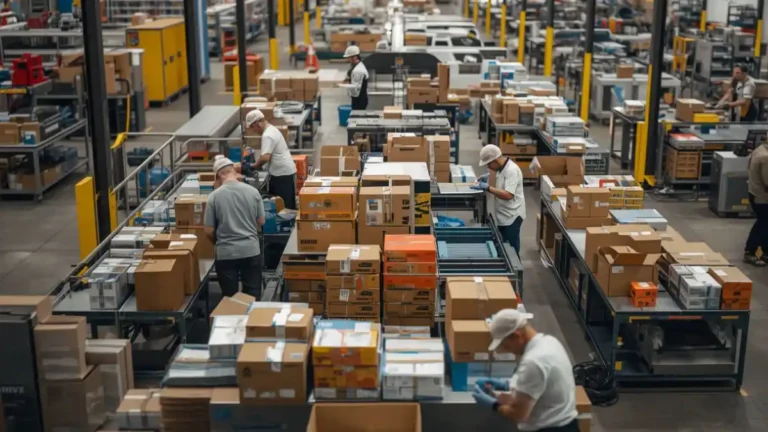

The Estonian packaging landscape in 2026 has moved on from being a localised manufacturing hub. It is now a high-tech “circularity lab” for Northern Europe.
The EU’s Packaging and Packaging Waste Regulation (PPWR) is entering its strictest enforcement phase. Estonian firms are using two advantages to lead in fibre-based alternatives and “smart” tracking solutions:
- their digital-first infrastructure
- their proximity to Nordic wood-fibre resources
2026 At-a-Glance: Top 10 Packaging Entities
| Rank | Entity (HQ) | FY25 Rev (Est) | Key Strategic Impact |
| 01 | Estiko-Plastar (Tartu) | €49.3M | High-barrier sustainable films |
| 02 | DS Smith (Tallinn) | €34.1M | E-commerce fiber-loop leader |
| 03 | Horizon Pulp (Kehra) | €37.5M | Global kraft paper exporter |
| 04 | Pakendikeskus (Tln) | €20.6M | Distribution & machinery hub |
| 05 | O-I Estonia (Järv.) | €18.2M | Glass circularity specialist |
| 06 | A&R Packaging (Tab.) | €15.4M | Premium cartonboard systems |
| 07 | Estpak Plastik (Hiiu) | €9.1M | Fresh-food rigid containers |
| 08 | Nefab (Lagedi) | €7.8M | Industrial transport protection |
| 09 | Kroonpak (Tartu) | €6.4M | Biodegradable food service |
| 10 | Multipack (Tallinn) | €5.9M | Horeca supply chain partner |
01. Estiko-Plastar AS
- Founded: 1918
- HQ: Tartu, Estonia
- FY Revenue: €49.3M (Projected 2025)
- Employees: ~208
Core Segments:
- High-barrier flexible films for food safety
- Bio-based and PCR (Post-Consumer Recycled) polymers
- Digital Printing & Smart Packaging (QR/NFC integration)
Operational Relevance:
Estiko-Plastar acts as the main “barrier layer” for the Baltic food industry.
Its facility in Tartu produces the critical multi-layer films that prevent spoilage for 70% of Estonia’s dairy and meat exports.
In 2026, it serves as the R&D bridge between raw polymer chemistry and retail-ready sustainability.
What It Means for Buyers
Estiko-Plastar is winning because it pivoted to “monomaterials” faster than regional competitors.
Others struggled with recycling regulations. Estiko, meanwhile, moved to 100% recyclable PE-based structures that maintain shelf life.
[What Buyers Should Know: Estiko-Plastar’s revenue per employee has surged by 9% in FY2025, signaling a massive shift toward high-margin automated production.]
02. DS Smith Packaging Estonia AS
- Founded: 1994 (as local entity)
- HQ: Tallinn/Paide, Estonia
- FY Revenue: €34.1M (Estimated Baltic segment)
- Employees: ~107
Core Segments:
- Corrugated cardboard and shipping solutions
- E-commerce “Fit-to-Product” automated packaging
- Point-of-Sale (POS) retail displays
Operational Relevance
As the local arm of a global leader, DS Smith Estonia dominates the “last-mile” logistics sector.
It is the main partner for Estonia’s massive e-commerce and furniture manufacturing exports (e.g., Cleveron, Woodman).
It provides circular fibre loops. Old boxes are collected and remade into new ones within 14 days.
What It Means for Buyers
DS Smith’s dominance is currently rooted in its “Supply Cycle” philosophy.
In 2026, it has moved beyond being a “box maker” to a data provider. It helps retailers reduce “air shipping” (oversized boxes) by up to 30%.
Its risk remains the rising cost of virgin wood pulp. However, its recycling infrastructure in the Baltics provides a significant buffer.
What Buyers Should Know: The 2026 “Plastic-to-Paper” transition has seen DS Smith capture 12% of market share previously held by shrink-wrap manufacturers in the beverage sector.
03. Horizon Pulp & Paper AS
- Founded: 1938 (Modern operations since 1995)
- HQ: Kehra, Estonia
- FY Revenue: €28.7M (Projected 2025)
- Employees: 325
Core Segments:
- 100% virgin long-fiber unbleached sack kraft paper
- Industrial paper bags and wrapping solutions
- Fully integrated pulp-to-paper production
Operational Relevance
Horizon is the main industrial export engine of the Estonian packaging sector.
Unlike downstream converters, Horizon is an integrated mill. This means it controls the process from raw timber to finished paper.
It supplies the global infrastructure for “heavy” packaging across 70+ countries. This covers cement, chemicals and bulk food ingredients.
What It Means for Buyers
Horizon’s strength in 2026 lies in its virgin fiber purity. As the world moves away from plastics, demand for high-strength paper that can withstand industrial stress has soared.
Its revenue forecast shows a slight stabilisation (7.9% growth) due to rising energy costs in the Baltics. Even so, its position as a “primary material provider” makes it indispensable.
It is the hedge against plastic volatility.
[What Buyers Should Know: Horizon currently manages a balance sheet total of over €108M, representing the highest capital intensity in the Estonian packaging market.]
04. Pakendikeskus AS
- Founded: 1994
- HQ: Tallinn, Estonia
- FY Revenue: €20.6M (2025 Forecast)
- Employees: 76
Core Segments:
- B2B & B2C Packaging Distribution (10,000+ SKUs)
- Packaging Machinery (Assembly, weighing, and packing lines)
- Custom Branding and Small-Batch Production
Operational Relevance
If Estiko and Horizon are the “producers,” Pakendikeskus is the “aggregator.”
It operates six major physical hubs across Estonia (Tallinn, Tartu, Pärnu, Jõhvi) and a sophisticated e-commerce platform.
It is critical infrastructure for Estonia’s SME (Small and Medium Enterprise) sector. It gives immediate access to materials that would otherwise need massive industrial lead times.
What It Means for Buyers
Pakendikeskus is the “Amazon of Packaging” in the Baltics. Its 2026 strategy has shifted towards “Packaging as a Service” (PaaS).
It offers machinery leasing alongside material sales. This has created a “lock-in” effect with food producers and e-commerce start-ups.
Its high profit margin (approx. 10.3%) comes from high-efficiency logistics and a “just-in-time” delivery model within Estonia.
What Buyers Should Know: Pakendikeskus’s ability to maintain 24-hour delivery across mainland Estonia has made them the default partner for the 2026 “Quick-Commerce” (Q-Commerce) grocery boom.
Deep-Dive: The “Fiber Shift” Analysis
Estonia’s 2026 market is going through a radical transition.
For the first time, Fiber-based Packaging (Paper/Cardboard) has overtaken Flexible Plastics in total domestic growth rate. This is driven by three factors:
- The EPR Tax: New Estonian environmental taxes specifically penalise non-recyclable multi-layer films.
- Nordic Proximity: Local firms are using Estonian wood pulp to create “Liquid Board” (milk/juice cartons) that rival global leaders like Tetra Pak.
- Consumer Sentiment: 84% of Estonian grocery shoppers now report a preference for “plastic-free” produce aisles.
05. O-I Estonia AS
- Founded: 1995 (Ownership transition)
- HQ: Järvakandi, Estonia
- FY Revenue: €56.1M (Prelim 2025)
- Employees: 155
Core Segments:
- Glass container manufacturing (Bottles and jars)
- Sustainable glass recycling loops
- Premium flint glass for the spirits industry
Operational Relevance
O-I Estonia is located in Estonia’s historic “glass capital.” It is the only large-scale glass packaging manufacturer in the country.
It is the backbone of the domestic beverage sector (A. Le Coq, Saku) and a major exporter to the Nordic markets.
In 2026, its operation is critical for the “Circular Glass” initiative. It processes nearly 90% of Estonia’s recovered container glass into new, energy-efficient packaging.
What It Means for Buyers
O-I is currently the “inflation hedge” of the industry. Energy prices have fluctuated, but glass remains the infinitely recyclable gold standard that consumers trust.
It increased its cullet (recycled glass) ratio to over 60% in 2025. This has significantly lowered its carbon tax liabilities compared with regional competitors.
It is no longer just a glass factory. It is a carbon-management facility.
[What Buyers Should Know: O-I Estonia achieved a net profitability of 8.2% in FY25, a standout performance in a high-energy manufacturing climate.]
06. A&R Carton AS (Graphic Packaging International)
- Founded: 1991
- HQ: Tabasalu, Estonia
- FY Revenue: €15.4M (Estimated local contribution)
- Employees: ~90
Core Segments:
- High-performance barrier cartons
- Luxury and retail food folding boxes
- Multi-component packaging for tobacco and confectionery
Operational Relevance
The Tabasalu plant operates under the Graphic Packaging International umbrella. It is the “precision engineering” hub of Estonian cartons.
It specialises in high-speed, high-quality printing on fibreboard. This provides the sophisticated boxes needed for pharmaceutical, cosmetic and premium food exports.
What It Means for Buyers
A&R Carton’s winning strategy in 2026 is its integration of “Barrier Coating” technology.
Brands want to replace plastic trays with paper-based alternatives. A&R can apply grease-resistant and moisture-resistant coatings to cardboard, which has let it capture the high-end “ready-meal” market.
It is moving the needle on fibre innovation.
What Buyers Should Know: The shift toward “monomaterial” cartonboard has allowed A&R to reduce production waste by 14% this fiscal year, significantly boosting their ESG rating.
07. Estpak Plastik AS
- Founded: 1999
- HQ: Kärdla, Hiiumaa
- FY Revenue: €8.02M (Prelim 2025)
- Employees: 39
Core Segments:
- Thermoformed plastic trays for fresh produce
- rPET (Recycled Polyethylene Terephthalate) containers
- Custom molds for industrial food processors
Operational Relevance
Estpak is a master of the “Specific Niche.” Based on the island of Hiiumaa, it provides the essential rigid packaging for Estonia’s fresh grocery aisles.
Its growth is driven by supermarket demand for transparent, lightweight yet durable trays that protect soft fruits and proteins.
What It Means for Buyers
Despite the “anti-plastic” trend, Estpak is thriving by mastering the rPET transition.
In 2026, nearly 100% of its output is made from post-consumer recycled content. This aligns with EU plastic tax exemptions.
Its small, agile team allows rapid custom moulding. This makes it the preferred partner for “Local Hero” food brands that cannot meet the high minimums of European giants.
[What Buyers Should Know: Estpak’s labor productivity reached €205,639 per employee in 2025, reflecting a highly automated, lean manufacturing model.]
08. Nefab Packaging OÜ
- Founded: 2001 (Estonia unit)
- HQ: Lagedi, Estonia
- FY Revenue: €7.8M (Estimated regional)
- Employees: ~45
Core Segments:
- Engineered industrial transport packaging
- Multi-material crates (Wood, Steel, Plastic)
- Lithium-ion battery transport solutions
Operational Relevance
Nefab is the guardian of the “Big and Heavy.” Others focus on the grocery shelf, but Nefab focuses on the cargo ship.
It designs and makes the protective systems used by Estonia’s high-tech manufacturing sector to move expensive equipment safely around the world. This covers energy, telecoms and automotive.
What It Means for Buyers
Nefab’s “Dark Horse” success in 2026 is its Lithium-battery packaging division.
The Nordics and Baltics are ramping up green energy storage production. Nefab has become the certified expert in “Dangerous Goods” transport packaging.
This specialised certification creates a high barrier to entry that keeps general competitors at bay.
09. Kroonpak OÜ
- Founded: 1990
- HQ: Tartu, Estonia
- FY Revenue: €6.4M (Projected 2025)
- Employees: 42
Core Segments:
- Eco-friendly fast-food packaging
- Biodegradable paper trays and take-away boxes
- High-end gift and souvenir packaging
Operational Relevance
Kroonpak is the main innovator for Estonia’s growing sustainable dining scene.
The “Paper-over-Plastic” movement reached its peak in 2025. Kroonpak then became the lead supplier for fibre-based hot food containers that do not use PFAS-based coatings.
It bridges the gap between heavy industrial paper and high-end retail presentation.
What It Means for Buyers
Kroonpak’s competitive advantage in 2026 is its proprietary “Bio-Barrier” technology.
It uses locally sourced organic coatings for moisture resistance. This has removed the recycling “pains” linked to traditional plastic-lined coffee cups and food trays.
Its growth is tied directly to the “Zero-Waste” municipal policies of cities like Tallinn and Tartu.
What Buyers Should Know: Kroonpak has reported a 22% increase in inbound inquiries from Nordic retailers looking for plastic-free alternatives for frozen food cartons in FY25.
10. Multipack OÜ
- Founded: 1994
- HQ: Tallinn, Estonia
- FY Revenue: €5.9M (Estimated)
- Employees: ~35
Core Segments:
- Horeca (Hotel, Restaurant, Cafe) disposables
- Hygiene and industrial protective packaging
- Retail-ready biodegradable utensils and containers
Operational Relevance
Multipack acts as the specialised “nervous system” for the hospitality and service industries.
Pakendikeskus handles broad industrial needs. Multipack, by contrast, focuses on the micro-logistics of the service sector.
It manages a complex inventory for over 1,500 local service businesses. This includes biodegradable straws, plant-based clear “plastics” and food-grade safety wraps.
What It Means for Buyers
Multipack is the “Compliance Partner.” For small restaurants and cafes, the 2026 EU single-use plastic regulations are a legal minefield.
Multipack wins by offering consultative sales. It makes sure clients use 100% compliant materials. This helps them avoid the heavy environmental fines brought in by the Estonian Ministry of Climate in late 2025.
[What Buyers Should Know: Multipack’s “Green Line” sales now account for 82% of their total revenue, up from 45% just three years ago.]
2026 Industry Outlook: The “Digital-Green” Convergence
The Estonian packaging sector enters the second half of the decade as a lean, high-tech outlier in the European market.
1. The Rise of “Smart” Fiber: By late 2026, we expect 15% of all corrugated boxes produced by DS Smith and A&R to include printed electronics or NFC tags. These will give real-time supply chain transparency.
2. Labor Crisis vs. Automation: The industrial workforce is shrinking. As a result, the “Top 10” are shifting CAPEX from physical expansion to AI-driven quality control and robotic palletising.
3. Decarbonization as a Product: Companies like O-I and Horizon are no longer selling just containers. They are selling “Carbon Credits” bundled with their products, helping clients reach Net Zero targets faster.
Frequently Asked Questions
Which is the top packaging company in Estonia in 2026?
Estiko-Plastar AS ranks first. It is based in Tartu, has around 208 employees and projected 2025 revenue of €49.3M.
Why is fibre packaging growing in Estonia?
Fibre-based packaging has overtaken flexible plastics in total domestic growth rate. The drivers are the EPR tax, Nordic proximity to wood pulp and consumer sentiment, with 84% of shoppers preferring “plastic-free” produce aisles.
Who makes glass packaging in Estonia?
O-I Estonia AS in Järvakandi is the only large-scale glass packaging manufacturer in the country. It processes nearly 90% of Estonia’s recovered container glass.
Conclusion
Estonia’s packaging sector in 2026 no longer works as a support function to manufacturing. It has become a testing ground for how regulation, material science and digital infrastructure can work together at scale.
What stands out is the speed of transition. From fibre-based innovation to smart tracking and circular systems, the market is moving faster than many larger European economies.
This is already shaping how suppliers interact with the FMCG chain. Packaging is now directly linked to compliance, cost control and consumer trust.
The impact is clearly visible across the Estonia supermarket sector. Retailers there are speeding up the shift towards low-waste formats and cleaner shelf presentation.
At the same time, recyclable and mono-material solutions are reinforcing the expansion of Estonia private label. Retailers are gaining more control over packaging design, sourcing and sustainability claims.
More broadly, Estonia is positioning its packaging industry as a strategic export advantage. Companies are no longer just supplying materials. They are exporting systems, standards and circular models that align with EU policy direction.
What happens next will depend on execution. The technology is in place. The regulatory pressure is only increasing.
The companies that can scale fibre innovation, integrate digital tracking and keep costs efficient will define the next phase of growth. This applies not just locally, but across the wider European packaging market.
Editor’s Note: This report is based on preliminary 2025-2026 fiscal data, industrial output metrics, and regional trade surveys. Market rankings are subject to change based on fluctuating energy prices and pulp market volatility.








