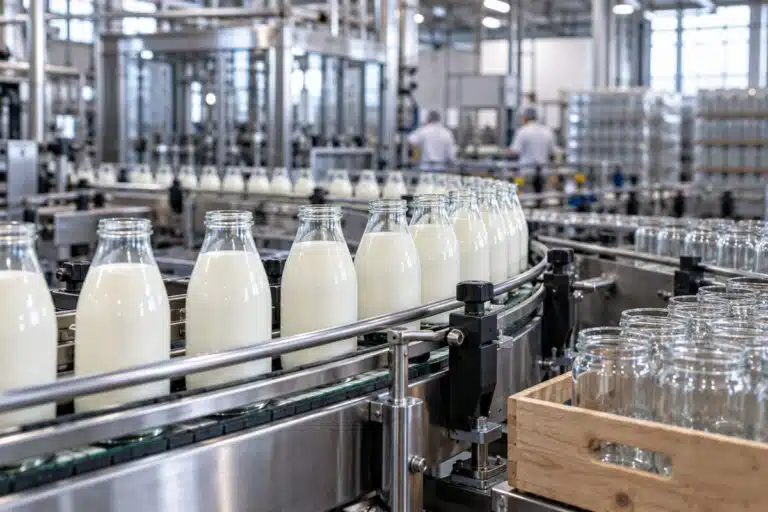

Ardagh Glass Packaging-North America has renewed its supply agreement with Stanpac, extending a long-running arrangement for US-made glass bottles and jars used by dairy, food and beverage brands.
The companies did not disclose the duration, contracted volumes or financial value of the renewed deal. That missing detail matters for procurement teams, but the continuation confirms that Stanpac will retain access to domestic glass manufacturing as it serves customers across the United States.
Stanpac was founded in 1949 and has specialised in glass milk bottles, decorating and closures for more than 40 years. Its offer now spans refillable dairy containers, food packaging and related components, while Ardagh has manufactured glass packaging in the US for more than 125 years.
The agreement is commercially relevant because refillable glass programmes depend on more than container availability. Dairies and food brands also need consistent bottle specifications, closure compatibility, decorating capacity and predictable replenishment when demand changes.
Cam Simmons, Stanpac’s vice-president of bottle decorating, said the dairy market naturally experiences fluctuations and credited Ardagh with adapting supply to those changes. Ardagh sales vice-president Thaddeus Luebbers added: “We are proud to continue manufacturing the glass containers that help Stanpac’s customers differentiate their products.”
For packaging buyers, the renewed arrangement lowers one part of the supply risk: continuity between a glass manufacturer and a specialist decorator and distributor. It does not remove the need to scrutinise lead times, minimum order quantities, freight exposure and the resilience of any single-source bottle specification.
Ardagh is already identified among the major packaging companies in Europe, where capital-intensive furnaces and long customer contracts create high switching barriers. Its Irish roots and international scale also place it within the wider market mapped in GTN’s ranking of packaging companies in Ireland.
The supplier cited consumer research showing that 45% of US shoppers consider recyclable materials influential when buying, while 43% point to reusable or refillable containers. It also said 57% buy food and drink in glass when available and 64% want more products offered in glass. The announcement did not publish the survey sample or methodology, so buyers should treat the figures as an indication of direction rather than a demand forecast.
Refillable glass can support premium positioning and packaging-reduction targets, but the unit economics depend on return rates and local logistics. Deposits, crate recovery, washing capacity, breakage and the number of completed refill cycles determine whether the format delivers a cost and environmental advantage over single-use alternatives.
That makes the Stanpac model most relevant to regional dairy and beverage systems with repeat purchasing and short transport loops. It is less straightforward for dispersed national distribution, where empty-container collection can add cost, handling and emissions.
The renewed agreement also gives food and dairy brands a route to prepare for extended producer responsibility requirements without changing their packaging partner. However, procurement teams will still need auditable data on recycled content, container weight, reuse cycles and loss rates before attaching sustainability claims to a refill programme.
For retailers and private label teams, the immediate question is not whether glass is inherently better, but whether the whole return system can operate at the required scale and price. The next evidence to watch will be new customer conversions, disclosed capacity commitments and measurable refill rates resulting from the renewed partnership.
Editor’s note: Information is sourced from Ardagh Glass Packaging’s company announcement published on 13 October 2026. Grocery Trade News added independent analysis of procurement risk, refill economics, reverse logistics and retailer implications.