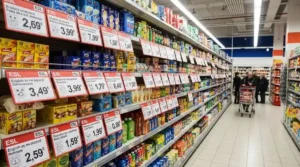

Bulgaria’s supermarket sector is becoming more digital, but the shift looks different from Western Europe. Instead of heavy AI or automation first, the market is built on strong fundamentals — fiscal compliance, POS systems, inventory control, and payments.
From small grocery shops to large chains, retailers rely on a tight ecosystem of local software providers, hardware manufacturers, and global enterprise systems.
This guide maps the top retail technology companies in Bulgaria, based on real use across supermarkets and FMCG operations in 2026.
Top 10 retail technology companies in Bulgaria
| Rank | Company | Core Role | Market Position |
|---|---|---|---|
| 1 | Datecs Ltd | Fiscal hardware & POS | Market leader |
| 2 | Microinvest | Retail software | SME dominant |
| 3 | Mistral Software | POS & store systems | Mid-large retail |
| 4 | Navtech Group | ERP (Microsoft Dynamics) | Enterprise tier |
| 5 | SIS Technology | ESL & automation | Innovation layer |
| 6 | Retail Systems Bulgaria | Store integration | Large chains |
| 7 | myPOS | Payments / SoftPOS | Fast-growing fintech |
| 8 | Online Services (I-CASH) | Cloud POS | SME digital shift |
| 9 | SAP | Enterprise retail systems | Big-box retail |
| 10 | Oracle (MICROS) | POS & enterprise | Premium retail |
1. Datecs Ltd
Founded: 1990
Datecs is the backbone of Bulgaria’s retail infrastructure.
The company produces fiscal printers, cash registers, and POS hardware required for legal compliance under Ordinance N-18. Almost every supermarket and grocery store uses Datecs devices in some form.
Its role is not optional — it is foundational. Without compliant fiscal hardware, retail operations cannot function legally in Bulgaria.
2. Microinvest
Founded: 1995
Microinvest dominates the small and mid-sized retail segment.
Its “Warehouse Pro” software is widely used by grocery shops, independent supermarkets, and food retailers. The system combines inventory, sales tracking, and reporting in a simple, cost-effective format.
For many retailers, Microinvest is the first step into structured digital operations.
3. Mistral Software
Founded: 1995
Mistral’s Zamboo platform is a staple in medium and larger supermarket chains.
It offers full store management — POS, stock control, pricing, and reporting — tailored for Bulgarian retail workflows. The system is known for reliability and strong integration with fiscal hardware.
Zamboo bridges the gap between SME tools and enterprise systems.
4. Navtech Group
Founded: 2007
Navtech operates at the enterprise level.
The company builds retail systems on Microsoft Dynamics, covering ERP, inventory, supply chain, and store operations. It is used by larger chains that need scalability and integration across multiple locations.
This is where Bulgarian retail starts to look like Western enterprise infrastructure.
5. SIS Technology
Founded: 2004
SIS Technology represents the innovation layer in Bulgarian retail.
The company integrates self-checkout systems, barcode solutions, and electronic shelf labels (ESL). These technologies are gaining traction as supermarkets look to improve efficiency and pricing flexibility.
ESL adoption, in particular, is accelerating in 2026.
6. Retail Systems Bulgaria
Founded: 2000
Retail Systems Bulgaria focuses on large-scale store integration.
It provides POS systems, back-office tools, and hardware support for bigger supermarket chains. The company is also linked with global hardware providers, helping retailers deploy reliable in-store infrastructure.
Its strength lies in support, maintenance, and system stability.
7. myPOS
Founded: 2014
myPOS is one of Bulgaria’s biggest fintech success stories.
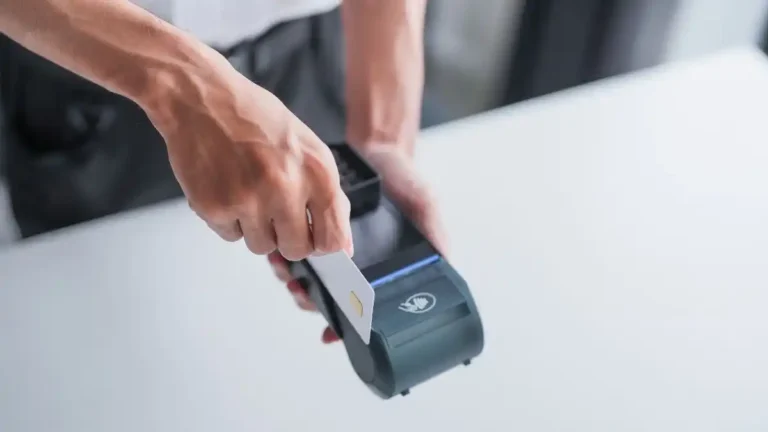
The company enables card payments through terminals and mobile devices, including SoftPOS (turning a phone into a payment terminal). This is transforming how smaller retailers and mobile sellers accept payments.
For supermarkets, it supports faster, more flexible checkout experiences.
8. Online Services
Founded: 2011
Online Services offers the I-CASH platform, a cloud-based POS solution.
It is widely used by small retailers looking for low-cost, compliant systems that meet Bulgarian fiscal requirements. The platform includes inventory, invoicing, and reporting tools.
Cloud adoption is growing, and I-CASH is a key part of that shift.
9. SAP
Founded: 1972
SAP powers some of the largest retailers operating in Bulgaria.
International chains use SAP systems for supply chain management, pricing, inventory, and financial operations. It provides full visibility across large retail networks.
This is the standard for big-box supermarkets.
10. Oracle
Founded: 1977
Oracle’s MICROS platform is widely used in high-end retail and hospitality.
It delivers advanced POS systems with strong analytics and integration capabilities. While more common in premium environments, it also supports supermarket operations at scale.
It represents the high-end of retail technology deployment.
Why it matters
For supermarkets in Bulgaria, retail technology is not about experimentation — it is about control.
Margins are tight. Compliance is strict. Operations must be efficient.
- POS systems ensure legal operation
- inventory systems reduce waste
- pricing tools protect margins
- payments improve speed and customer flow
At the same time, the market is evolving.
Automation, cloud systems, and mobile payments are expanding. Retailers are gradually moving from basic compliance systems toward more integrated platforms.
What happens next
The next phase of Bulgaria’s retail technology market will focus on integration.
- AI will start to enter pricing and demand forecasting
- ESL systems will expand across more chains
- cloud POS will replace legacy systems in smaller stores
- mobile payments will continue to grow
Local providers will remain strong, but competition from global platforms will increase as the market matures.
For supermarkets, the challenge is clear — adopt technology fast enough to stay competitive, without losing control of cost and complexity.
Conclusion
Bulgaria’s retail technology market is not built on hype. It is built on systems that keep supermarkets running every day — from compliance and checkout to inventory and payments.
What stands out is how local providers continue to hold strong positions across the Bulgaria supermarket sector, especially in POS, fiscal systems, and store-level operations. At the same time, global platforms are shaping the upper tier of the market, particularly in large-scale retail networks.
This creates a layered ecosystem where small retailers, regional chains, and international operators all rely on different technology stacks. That balance is now starting to shift as automation and cloud systems move deeper into Bulgaria FMCG operations.
Looking ahead, the next stage will not be about adding more tools, but connecting them. Retailers will need systems that link pricing, stock, and payments in real time, especially as pressure grows across the Bulgaria retail technology market.
For decision-makers, the direction is clear — invest in technology that improves control, not complexity. Those that do will be better positioned to manage costs, respond faster to demand, and stay competitive in a changing Bulgaria supermarket landscape.
Editor’s Note: Based on publicly available company data and market insights from Bulgaria’s retail technology sector in 2026, including POS, ERP, payments, and compliance systems under Ordinance N-18.