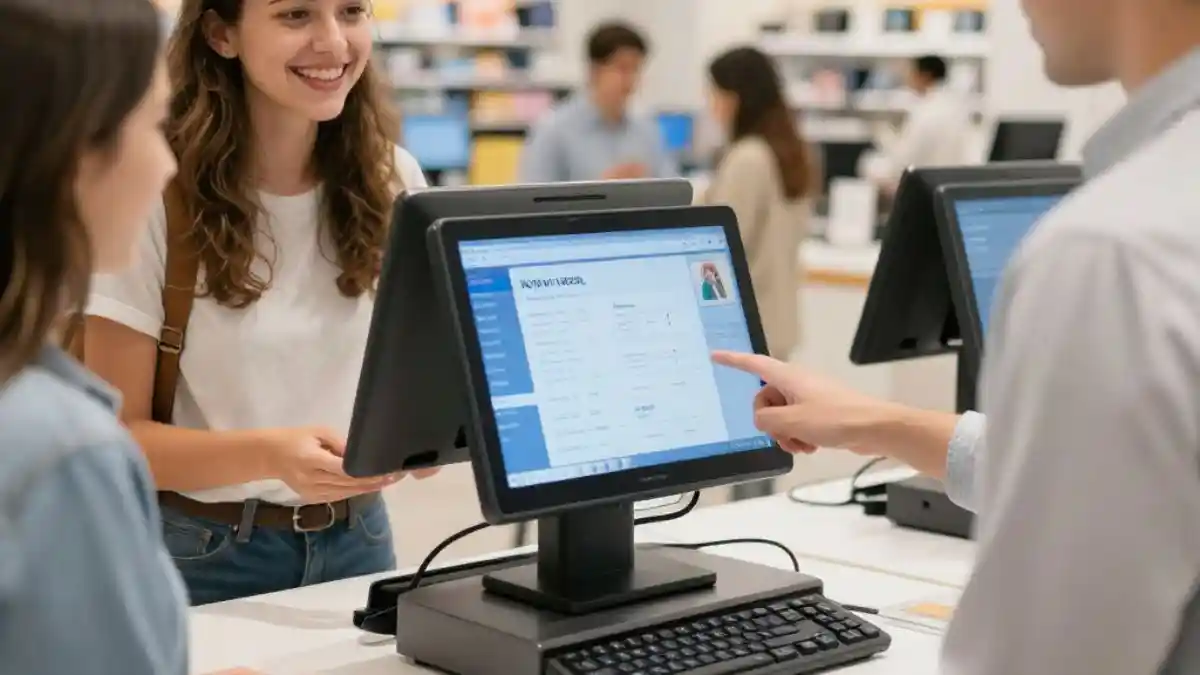

Norway’s retail technology ecosystem is shaped by a mix of store-automation specialists, digital loyalty platforms, data analytics providers, and enterprise software developers supporting supermarkets and omnichannel retail operations. The top 10 retail technology companies in Norway include StrongPoint, Boostcom, Liquid Barcodes, Zeipt, Link Retail, Neptune Software, Gelato, Data Respons, Retailhub, and Receipts AS. These firms contribute to the digital infrastructure used by grocery chains, convenience stores, and retailers across the Nordic market. The ranking below follows a hybrid methodology combining structural ecosystem relevance and available financial scale, focusing on companies headquartered in Norway whose technology directly supports retail operations such as store automation, loyalty systems, digital receipts, analytics, and retail software platforms.
Ranking Overview
| Rank | Company | HQ | FY Revenue* | Structural Role | Supermarket Relevance |
|---|---|---|---|---|---|
| 1 | StrongPoint | Oslo | NOK ~1.3B (FY2024) | Grocery automation systems | Self-checkout, store automation |
| 2 | Boostcom | Oslo | Private (undisclosed) | Retail marketing platforms | Loyalty and campaign systems |
| 3 | Liquid Barcodes | Oslo | Private | Mobile loyalty technology | Customer engagement tools |
| 4 | Zeipt | Oslo | Private | Digital receipt infrastructure | POS and shopper engagement |
| 5 | Link Retail | Oslo | Private | In-store analytics | Store traffic measurement |
| 6 | Neptune Software | Oslo | Private | Enterprise app platforms | Retail operational apps |
| 7 | Gelato | Oslo | Private | Global SaaS commerce infrastructure | Retail fulfilment integration |
| 8 | Data Respons | Høvik | NOK ~3.2B (FY2024) | Digital engineering | IoT and retail technology infrastructure |
| 9 | Retailhub | Oslo | Private | Retail showroom software | Omnichannel store platforms |
| 10 | Receipts AS | Oslo | Private | Transaction digitisation | Digital receipt ecosystems |
*Revenue refers to the latest publicly available fiscal year when disclosed. Private companies do not publish audited revenue in most cases.
1. StrongPoint
Founded: 1985
Headquarters: Oslo, Norway
FY Revenue: NOK ~1.3 billion (FY2024)
Employees: ~500+
Core Segments
-
Self-checkout technology
-
Cash management automation
-
Electronic shelf labels
-
Click-and-collect logistics
-
Retail analytics systems
Operational Relevance
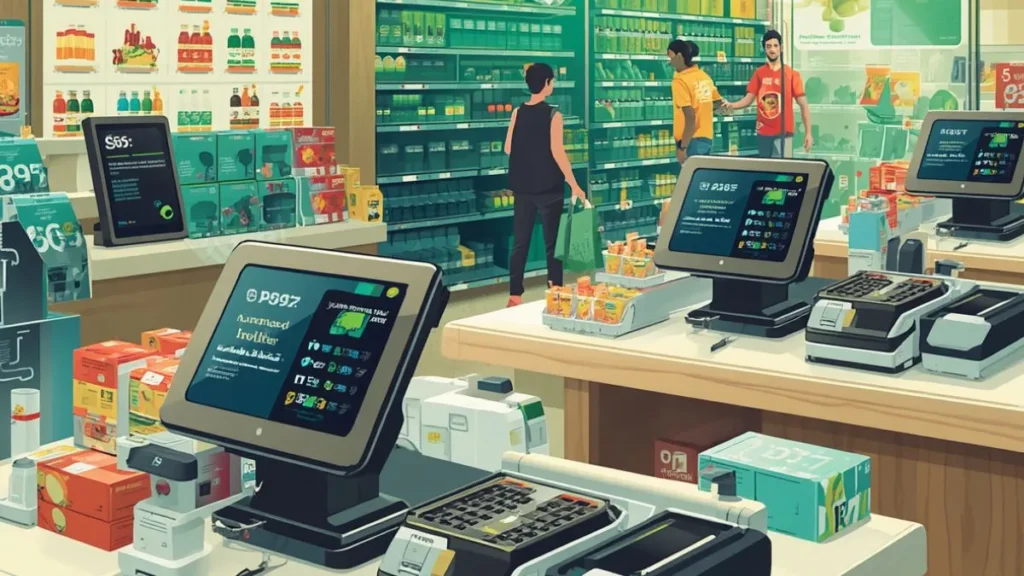
StrongPoint is widely recognised as Norway’s most influential retail technology provider for grocery chains. Its store automation portfolio is used by supermarkets across Scandinavia and several European markets. The company supplies technology that helps retailers manage checkout flows, automate cash handling, and integrate e-commerce order picking inside physical stores.
Retailers rely on these systems to reduce labour costs while improving checkout speed and customer throughput. StrongPoint’s grocery-focused solutions also support click-and-collect fulfilment models that have become increasingly important for Nordic supermarkets.
Market Position
The company occupies a central position in the Nordic retail technology infrastructure landscape. Unlike many retail-tech startups focused on niche applications, StrongPoint provides core operational hardware and software used directly on the supermarket floor. Its technology integrates with POS systems and store logistics processes, making it deeply embedded in daily retail operations.
Strategic Direction
StrongPoint continues to focus on automation tools designed specifically for grocery retail environments. Its strategy increasingly centres on e-commerce order fulfilment inside physical stores, including software that helps supermarket staff pick online grocery orders efficiently. This reflects the broader structural shift toward hybrid retail models combining physical stores and digital ordering.
2. Boostcom
Founded: 2000
Headquarters: Oslo, Norway
FY Revenue: Private company (not publicly disclosed)
Employees: Not publicly disclosed
Core Segments
-
Retail marketing automation
-
Loyalty programme platforms
-
Customer analytics tools
-
Omnichannel campaign management
Operational Relevance
Boostcom provides software used by retailers to manage customer engagement programmes. Its systems support digital loyalty schemes, targeted promotions, and marketing analytics across both physical stores and online retail channels.
Retailers increasingly depend on loyalty platforms to collect consumer data and personalise offers. Boostcom’s tools allow supermarket chains and retail groups to build integrated campaigns that combine POS data, mobile engagement, and promotional incentives.
Market Position
The company operates within the retail marketing technology segment, which has become a key component of digital retail infrastructure. While it does not supply hardware systems like checkout automation, its platforms influence how retailers communicate with customers and manage promotional strategies.
Strategic Direction
Boostcom continues to develop analytics-driven marketing systems capable of integrating data from multiple retail channels. The strategic focus reflects the broader industry shift toward data-driven customer engagement and loyalty ecosystems in grocery and retail markets.
3. Liquid Barcodes
Founded: 2012
Headquarters: Oslo, Norway
FY Revenue: Private company
Core Segments
-
Mobile loyalty programmes
-
Digital rewards platforms
-
Customer engagement tools
-
Gamified retail promotions
Operational Relevance
Liquid Barcodes develops technology used by retailers and consumer brands to create digital loyalty experiences. Its mobile platforms allow retailers to manage rewards programmes, track customer behaviour, and integrate promotional campaigns directly into smartphone applications.
In grocery retail, loyalty platforms play a growing role in shaping purchasing behaviour. Digital rewards programmes allow retailers to encourage repeat visits while collecting valuable data about customer preferences.
Market Position
The company operates within the expanding mobile loyalty technology sector. Retailers increasingly rely on mobile apps as central communication channels with customers, particularly in markets where digital payment and app usage are widespread.
Strategic Direction
Liquid Barcodes continues expanding its platform capabilities to support international retail markets. The company’s development roadmap focuses on integrating loyalty systems with payment platforms, CRM systems, and broader retail data infrastructure.
4. Zeipt
Founded: 2017
Headquarters: Oslo, Norway
FY Revenue: Private company
Core Segments
-
Digital receipts
-
POS integrations
-
Transaction analytics
-
Retail data platforms
Operational Relevance
Zeipt develops digital receipt infrastructure that replaces traditional paper receipts with electronic versions delivered through mobile apps or email. These systems integrate directly with point-of-sale systems used by retailers.
Digital receipts are increasingly important as retailers attempt to reduce paper usage while improving transaction transparency and customer engagement. They also allow retailers to link purchases with loyalty programmes and data analytics systems.
Market Position
The company operates within the emerging digital transaction infrastructure segment of retail technology. As retailers expand omnichannel operations, digital receipt systems provide an additional layer of data integration between physical purchases and digital retail platforms.
Strategic Direction
Zeipt’s development strategy focuses on expanding integrations with POS providers and payment platforms. This approach aims to make digital receipts a standard feature of modern retail transactions.
5. Link Retail
Founded: 1995
Headquarters: Oslo, Norway
FY Revenue: Private company
Core Segments
-
Retail footfall analytics
-
Shopper behaviour tracking
-
Store traffic measurement
-
Retail performance metrics
Operational Relevance
Link Retail develops in-store analytics technology used by retailers to monitor shopper behaviour. Sensors and analytics platforms measure customer traffic, movement patterns, and store visitation metrics.
For supermarkets and retail chains, understanding store traffic patterns is essential for merchandising strategies, staffing decisions, and store layout optimisation.
Market Position
The company operates within the store analytics technology segment, which has become increasingly important for data-driven retail management. Retailers use these insights to evaluate store performance and improve operational efficiency.
Strategic Direction
Link Retail continues expanding its analytics platform to include more advanced behavioural analysis and data integration capabilities. These developments support retailers seeking deeper operational insights into store performance.
6. Neptune Software
Founded: 2011
Headquarters: Oslo, Norway
FY Revenue: Private company
Core Segments
-
Enterprise application platforms
-
Low-code software development
-
SAP integration tools
-
Operational business applications
Operational Relevance
Neptune Software provides a platform that allows enterprises, including retailers, to develop business applications integrated with ERP systems. Retail companies use these tools to build operational applications supporting inventory management, logistics tracking, and store operations.
Market Position
The company operates in the enterprise software infrastructure layer supporting retail operations. Rather than creating consumer-facing tools, Neptune’s technology supports internal workflows used by retail organisations.
Strategic Direction
Neptune Software’s strategic focus centres on expanding low-code platforms that allow companies to build custom operational applications more efficiently. This reflects the broader enterprise technology trend toward faster software deployment.
7. Gelato
Founded: 2007
Headquarters: Oslo, Norway
FY Revenue: Private company
Core Segments
-
Global print-on-demand commerce
-
Cloud production networks
-
e-commerce fulfilment systems
-
distributed manufacturing platforms
Operational Relevance
Gelato provides a cloud-based platform that connects retailers and online merchants with local production partners. The system allows companies to produce printed goods closer to customers, reducing shipping distances and delivery times.
Although originally focused on print production, the platform supports retail commerce infrastructure and fulfilment networks used by global e-commerce businesses.
Market Position
Gelato operates within the digital commerce infrastructure sector, connecting digital retailers with production and fulfilment networks worldwide.
Strategic Direction
The company’s strategic focus is on expanding global production networks and improving logistics efficiency through distributed manufacturing technology.
8. Data Respons
Founded: 1986
Headquarters: Høvik, Norway
FY Revenue: NOK ~3.2 billion (FY2024)
Core Segments
-
IoT engineering
-
embedded systems
-
digital infrastructure development
-
industrial software platforms
Operational Relevance
Data Respons provides engineering services that support the development of embedded software and digital systems. These technologies are used across several sectors, including retail automation and smart infrastructure.
Retail technology increasingly depends on IoT devices and connected systems used for store monitoring, automation, and logistics management.
Market Position
The company operates primarily in the engineering and digital infrastructure sector but contributes to the development of connected technology systems used across multiple industries.
Strategic Direction
Data Respons continues expanding its engineering services across European markets, focusing on digital transformation projects involving connected devices and software infrastructure.
9. Retailhub
Founded: 2016
Headquarters: Oslo, Norway
FY Revenue: Private company
Core Segments
-
digital showroom platforms
-
retail product presentation systems
-
omnichannel retail tools
Operational Relevance
Retailhub develops software designed to help retailers showcase products digitally while connecting showroom experiences with e-commerce systems.
These platforms help retailers manage hybrid retail environments where physical stores also function as product experience centres.
Market Position
Retailhub operates in the emerging digital showroom technology segment, which bridges physical retail environments and online product presentation.
Strategic Direction
The company focuses on expanding omnichannel capabilities that connect digital product catalogues with in-store experiences.
10. Receipts AS
Founded: 2014
Headquarters: Oslo, Norway
FY Revenue: Private company
Core Segments
-
digital receipt infrastructure
-
purchase tracking systems
-
payment integration technology
Operational Relevance
Receipts AS develops technology that allows consumers to access transaction records digitally across multiple retailers. The platform connects payment cards with digital receipt storage systems.
Such technology supports improved transaction tracking and expense management for consumers while helping retailers integrate purchase data with customer systems.
Market Position
The company operates within the digital transaction technology segment, which supports the broader shift toward paperless retail operations.
Strategic Direction
Receipts AS continues focusing on expanding integrations with financial institutions and payment platforms to extend the reach of digital receipt services.
Structural Analysis: Retail Technology Development in Norway
The Nordic Grocery Technology Environment
Norway’s retail technology landscape reflects the broader structure of the Nordic grocery market. Supermarkets in Norway operate within a relatively concentrated retail sector dominated by a few major chains. These retailers have historically invested heavily in automation, digital systems, and data analytics to maintain efficiency in a high-cost labour environment.
Automation technologies such as self-checkout systems and electronic shelf labels have become widely adopted across Nordic supermarkets. Technology providers supplying these systems therefore play a central role in the retail ecosystem.
Companies such as StrongPoint illustrate how retail technology providers can become embedded within grocery infrastructure. These systems influence daily store operations, including checkout management, order fulfilment, and store logistics.
At the same time, a growing group of software companies supports the digital layer of retail operations. Loyalty platforms, analytics tools, and marketing automation systems increasingly influence how retailers interact with customers and manage promotional strategies.
Digital Transformation of Nordic Retail
The Norwegian retail technology sector has evolved alongside broader digital transformation trends across the Nordic retail market. Retailers in the region have adopted digital infrastructure at a relatively early stage compared with many other markets.
Mobile payment systems, loyalty applications, and digital receipts are now widely used across Nordic retail environments. Technology providers developing these tools play a significant role in shaping customer experiences and data management strategies.
Companies operating in this ecosystem typically focus on specialised segments of retail technology. Some develop store automation systems used on the shop floor, while others provide software platforms that support marketing, analytics, or customer engagement.
This diversity reflects the complex technological architecture of modern retail operations. Retailers require multiple integrated systems to manage transactions, inventory, customer engagement, and digital commerce channels.
Retail Technology and the Future of Grocery Operations
Retail technology providers are likely to play an increasingly important role in shaping supermarket operations over the coming decade. Automation systems, data analytics platforms, and digital customer engagement tools will continue to influence how retailers operate physical stores.
Technologies supporting omnichannel retail models are particularly significant. As supermarkets expand e-commerce services alongside traditional store operations, they require systems that integrate online ordering, in-store picking, and logistics management.
Retail technology companies developing these solutions will remain essential components of the retail infrastructure supporting grocery markets across Norway and the wider Nordic region.
Conclusion
The top 10 retail technology companies in Norway illustrate how a relatively small national technology ecosystem can still play an important role in shaping digital retail infrastructure. Companies ranging from store automation providers to loyalty platform developers contribute to the systems used by retailers across the Nordic market.
As investment in digital infrastructure continues, technology platforms are increasingly connected with the wider Norway supermarket environment, where retailers rely on automation, analytics, and omnichannel systems to manage store operations efficiently. These technologies also interact with supply-chain partners across areas such as Norway private label manufacturing and Norway packaging innovation, where data systems and logistics tools help coordinate sourcing, production, and distribution.
Retail technology providers therefore represent an important layer within the broader grocery ecosystem, supporting supermarkets, suppliers, and logistics networks as the Nordic retail sector continues its gradual digital transformation.
Editor’s Note: This analysis is based on publicly available company disclosures, industry databases, and corporate information available as of 2026. Revenue figures reflect the latest officially published fiscal years where available. Private companies generally do not disclose audited revenue. Currency references are presented primarily in Norwegian kroner (NOK) when reported by the companies.