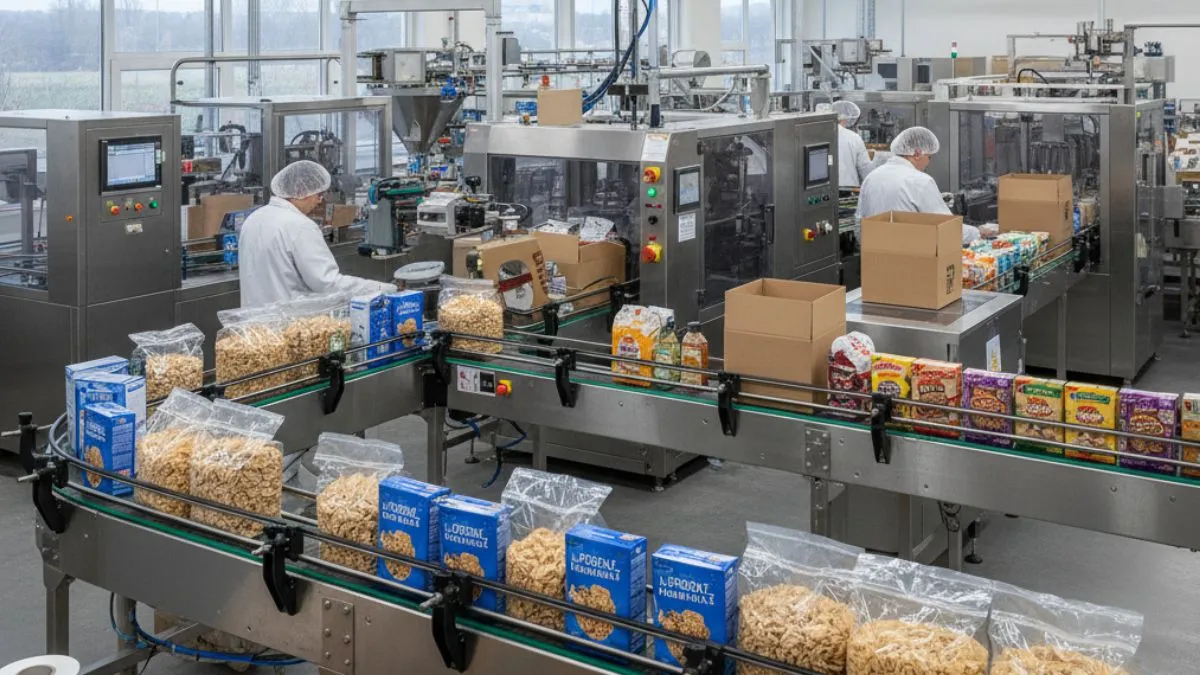

Private label products are a central part of Norway’s grocery market, where supermarket chains control the brands but rely on established food processors to manufacture the products. The top private label manufacturers supplying Norway therefore include companies with the industrial capacity, agricultural sourcing networks and retail partnerships required to support supermarket store-brand ranges. The most structurally important manufacturers are Nortura, TINE SA, Orkla Foods Norge, Scandi Standard (through Norsk Kylling) and Mills AS. Together these companies supply key grocery categories such as meat, dairy, poultry, sauces, spreads and prepared foods that appear under retailer labels across Norway’s leading supermarket groups.
| Rank | Company | Headquarters | FY Revenue | Structural Role | Supermarket Relevance |
|---|---|---|---|---|---|
| 1 | Nortura | Oslo, Norway | ~NOK 33bn (FY2025) | Cooperative meat processor | Core supplier for supermarket meat categories |
| 2 | TINE SA | Oslo, Norway | ~NOK 30bn (FY2025) | Dairy cooperative | Milk and dairy private-label production |
| 3 | Orkla Foods Norge | Oslo, Norway | Orkla ASA ~NOK 71bn group revenue (FY2024) | Processed food manufacturing | Major supplier of packaged grocery items |
| 4 | Scandi Standard / Norsk Kylling | Stockholm, Sweden | ~SEK 14bn (FY2024) | Poultry processing | Integrated poultry supply to retailers |
| 5 | Mills AS | Oslo, Norway | ~NOK 3.8bn (FY2025 approx.) | Oils and condiments manufacturer | Spreads, mayonnaise and chilled foods |
Figures refer to the latest publicly reported fiscal years available.
1. Nortura
Founded
2006
Headquarters
Oslo, Norway
FY Revenue
Approximately NOK 33 billion (FY2025)
Employees
Around 6,000
Core Segments
-
Meat processing and packaging
-
Poultry production
-
Processed meat foods
-
Agricultural cooperative sourcing
-
Retail and foodservice supply
Operational Relevance
Nortura is Norway’s largest meat processor and a cornerstone of the country’s agricultural food system. The cooperative is owned by Norwegian farmers and manages slaughtering, processing and packaging facilities across the country. While its branded products such as Gilde and Prior are well known to consumers, the company’s factories also support large volumes of retailer-labelled meat products.
For Norwegian supermarkets, fresh meat supply requires reliable domestic production because of regulatory and logistics constraints. Nortura’s nationwide agricultural sourcing network allows retailers to maintain stable supply chains for private-label meat products including minced beef, pork cuts and packaged poultry. These categories are among the most important components of supermarket store-brand assortments.
Market Position
Within the Norwegian protein supply chain, Nortura holds a dominant position due to its integrated farmer cooperative model. Thousands of farmers supply livestock to the cooperative, which processes and distributes meat products through a national logistics network. This scale ensures supermarkets can source large volumes of domestically produced meat products for their private-label ranges.
Strategic Direction
Nortura continues to modernise processing facilities and improve traceability systems across its production network. These investments support efficiency improvements and strengthen domestic supply capacity as Norwegian supermarkets expand their private-label meat offerings.
2. TINE SA
Founded
1928
Headquarters
Oslo, Norway
FY Revenue
Approximately NOK 30 billion (FY2025)
Employees
Around 5,000
Core Segments
-
Milk processing
-
Cheese manufacturing
-
Yogurt and dairy beverages
-
Butter and cream
-
Dairy ingredient supply
Operational Relevance
TINE is Norway’s dominant dairy cooperative and plays a critical role in the national milk processing system. The company collects milk from thousands of farmers and processes dairy products across a network of facilities throughout the country. Although TINE operates several well-known consumer brands, its infrastructure also enables production of retailer-labelled dairy staples.
Supermarkets require large volumes of milk, butter, yogurt and cheese for their private-label programmes. Because dairy production is heavily regulated and dependent on domestic agricultural supply, only a few processors can deliver these products at scale. TINE’s national processing capacity therefore supports retailer private-label ranges such as basic milk and cheese products.
Market Position
The cooperative structure gives TINE a unique position in Norway’s dairy market. By linking farm production with large-scale processing facilities, the company ensures reliable supply for both branded dairy products and supermarket store brands.
Strategic Direction
TINE continues investing in efficiency improvements, sustainability initiatives and value-added dairy product development. These investments strengthen its role as the central processor supporting both branded and private-label dairy supply for Norwegian supermarkets.
3. Orkla Foods Norge
Founded
The Orkla group traces its origins to 1654, with modern food operations built throughout the twentieth century.
Headquarters
Oslo, Norway
FY Revenue
Orkla ASA group revenue approximately NOK 71–72 billion (FY2024)
Employees
Several thousand across Norwegian operations
Core Segments
-
Sauces and condiments
-
Ready meals and frozen foods
-
Jams and spreads
-
Packaged grocery items
-
Contract manufacturing
Operational Relevance
Orkla Foods Norge operates an extensive network of food manufacturing facilities supplying the Norwegian grocery market. While the company produces many branded grocery products, its factories also manufacture items that can be adapted for retailer private-label ranges. These products include sauces, ready meals, frozen pizza and shelf-stable packaged foods.
Supermarkets rely on established food processors for these categories because production requires specialised equipment, recipe development and large-scale packaging operations. Orkla’s manufacturing infrastructure allows retailers to introduce private-label alternatives in several grocery categories while maintaining consistent quality standards.
Market Position
Orkla is one of the most influential food producers in Norway’s grocery sector. Its factories supply both branded products and private-label lines that appear in supermarket assortments. The company’s presence across multiple food categories makes it a key manufacturing partner for retailers.
Strategic Direction
In recent years Orkla has increasingly positioned itself as an investment-focused consumer goods group while continuing to operate large-scale food production in Norway. Its food manufacturing division remains important for retailers seeking reliable supply of packaged grocery products under store-brand labels.
4. Scandi Standard (Norsk Kylling)
Founded
2013 (modern group formation)
Headquarters
Stockholm, Sweden
FY Revenue
Approximately SEK 14 billion (FY2024)
Employees
Around 3,000
Core Segments
-
Poultry production
-
Fresh chicken processing
-
Frozen poultry products
-
Prepared poultry foods
-
Retail and foodservice supply
Operational Relevance
Scandi Standard is one of the largest poultry producers in the Nordic region. In Norway, its operations include Norsk Kylling, a major poultry processor closely integrated with the supply chain of discount retailer REMA 1000. This relationship makes the company a key supplier within the Norwegian private-label poultry market.
Chicken products represent a major category within supermarket private-label ranges due to high consumer demand and standardised production processes. Companies such as Scandi Standard provide the processing capacity required to supply packaged poultry products tailored to retailer specifications.
Market Position
Through its Nordic production network, Scandi Standard provides the scale necessary for efficient poultry processing. Its operations across several countries allow supermarkets to secure stable poultry supply even as demand grows across the region.
Strategic Direction
The company continues investing in processing technology, production efficiency and animal welfare improvements. These initiatives support long-term poultry supply for retailers while helping supermarkets expand private-label meat and ready-meal categories.
5. Mills AS
Founded
1885
Headquarters
Oslo, Norway
FY Revenue
Approximately NOK 3.8 billion (FY2025 estimate)
Employees
About 400+
Core Segments
-
Margarine and edible oils
-
Mayonnaise and condiments
-
Chilled prepared salads
-
Spreads and sauces
-
Foodservice and retail supply
Operational Relevance
Mills AS specialises in oils, spreads and condiments and is one of Norway’s most recognisable food manufacturers in these categories. The company produces a wide range of products sold through supermarkets, including both branded and retailer-labelled items.
Private-label mayonnaise, margarine and chilled salad products are widely offered across Norwegian supermarket chains. Manufacturers such as Mills provide the expertise and production capacity required to deliver these items consistently at scale.
Market Position
Within Norway’s edible oils and spreads category, Mills has developed a strong manufacturing presence supported by domestic production facilities. Its expertise in these product segments makes it an important partner for supermarkets seeking reliable private-label production.
Strategic Direction
Mills continues to focus on product innovation, improved nutritional profiles and sustainable ingredient sourcing. These initiatives align with retailer efforts to expand private-label ranges with healthier formulations and updated product formats.
How Private Label Manufacturing Works in Norway
Norway’s grocery system differs from many larger European markets because private-label brands are typically controlled by retailers rather than manufacturers. Supermarket groups design the brand, manage the product range and oversee pricing strategy, while established food processors handle the actual production.
The country’s three dominant grocery groups — NorgesGruppen, Coop Norge and REMA 1000 — operate extensive private-label portfolios covering nearly every food category. These ranges include basic value products, mid-tier alternatives and premium store-brand offerings. To produce them, retailers partner with existing manufacturers whose factories already process similar foods for branded products.
This model allows supermarkets to expand their private-label offerings without building costly manufacturing facilities. Instead, they rely on processors that can produce both branded and retailer-labelled goods within the same production lines. The approach ensures efficient factory utilisation while maintaining consistent quality standards.
At the same time, some Norwegian retailers have begun investing in selective vertical integration. NorgesGruppen owns several production businesses including coffee roasting and bakery operations, while REMA 1000 has invested heavily in poultry production through Norsk Kylling. These investments reflect a growing trend toward greater supply chain control in certain categories.
Why Nordic Manufacturing Networks Supply Norway
Norway’s relatively small population — around 5.5 million people — means that many food categories cannot support dedicated production facilities exclusively for private-label products. Instead, manufacturers often operate dual-purpose factories producing both branded and retailer-labelled goods.
The Nordic region’s integrated logistics and regulatory frameworks make cross-border manufacturing partnerships feasible. Food processors in Sweden, Denmark and Finland can supply Norwegian supermarkets efficiently while meeting similar food safety standards.
Currency conditions have also played a role in shaping supply chains. In recent years the Norwegian krone has weakened against major currencies such as the euro, increasing the cost of importing food products from continental Europe. As a result, retailers have relied more heavily on domestic or Nordic manufacturers whose production costs are tied to regional currencies.
This combination of domestic processors and Nordic manufacturing partners allows Norwegian supermarkets to maintain stable supply chains while supporting competitive private-label pricing.
Private Label and Competition in Norwegian Supermarkets
Private-label products have become a central competitive tool in Norway’s grocery sector. Supermarkets increasingly use store-brand products to offer lower prices while maintaining quality comparable to national brands.
Retailers control the product development process, allowing them to introduce new items quickly and tailor assortments to consumer demand. Private-label ranges also allow supermarkets to improve margins by reducing reliance on external brand suppliers.
Manufacturers remain essential to this system. Companies such as Nortura, TINE, Orkla, Scandi Standard and Mills provide the processing capacity that keeps supermarket shelves stocked with store-brand products. Their factories ensure that retailers can maintain consistent supply across categories ranging from fresh meat and dairy to sauces and chilled foods.
As Norwegian supermarkets continue expanding private-label assortments, these manufacturing partnerships will remain a critical part of the national grocery supply chain.
Conclusion
The top private label manufacturers supplying Norway illustrate how the country’s grocery system balances retailer brand control with large-scale food manufacturing. Companies such as Nortura, TINE, Orkla Foods Norge, Scandi Standard and Mills provide the production infrastructure that allows major players in the Norway supermarket sector to maintain extensive store-brand ranges across meat, dairy, poultry and packaged grocery categories.
These manufacturers play a central role in supporting the broader Norway FMCG supply chain, producing high-volume private label goods that retailers distribute nationwide through established food retail networks.
As private-label products continue to expand within Norwegian supermarkets, cooperation between retailers and established food processors will remain essential for ensuring reliable supply, competitive pricing and long-term stability within the wider Norway grocery retail system.
Editor’s Note: This article is based on publicly available company reports, industry disclosures and corporate financial statements. Revenue figures refer to the most recent fiscal years available, primarily FY2024 or FY2025 depending on company reporting schedules. Currency references follow company reporting standards and may include Norwegian kroner (NOK) or Swedish kronor (SEK).