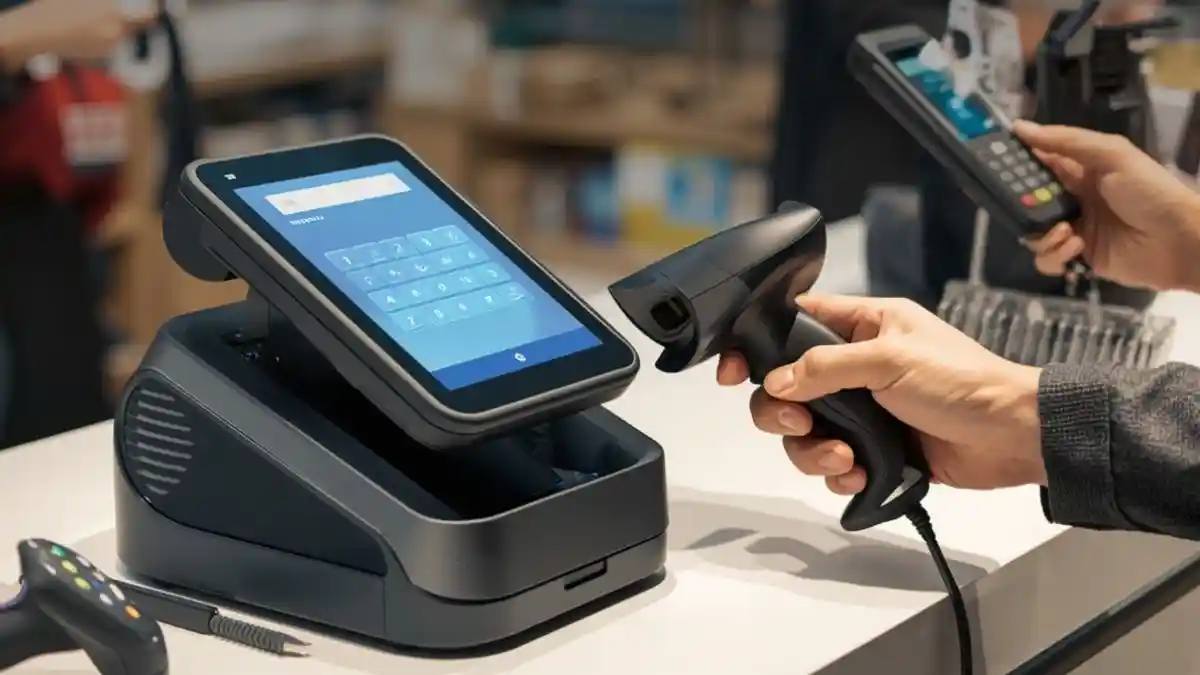

Australia’s retail technology landscape is shaped by a mix of POS platforms, payments infrastructure, logistics software and in-store media systems that support both ecommerce and physical retail operations. This ranking of top 5 retail technology companies in Australia is based on a hybrid model (structural relevance + scale) rather than pure revenue, reflecting how technology integrates into supermarket and FMCG supply chains. The companies included are Retail Express (Maropost), Shippit, Afterpay (Block), Airwallex and Mandoe Media. Together, they represent core layers of modern retail infrastructure across checkout, payments, delivery, omnichannel operations and in-store engagement.
Australia retail technology leaders
| Rank | Company | HQ | Scale Metric (2025/26) | Structural Role | Supermarket Relevance |
|---|---|---|---|---|---|
| 1 | Retail Express (Maropost) | Melbourne, Australia | 5,000+ retailers (est.) | POS & retail operations | Mid-market & franchise retail |
| 2 | Shippit | Sydney, Australia | ~$30M+ est. revenue | Logistics orchestration | Ecommerce fulfilment |
| 3 | Afterpay (Block Inc.) | Melbourne / USA | $24B+ (Block FY2025) | BNPL & payments ecosystem | Checkout conversion |
| 4 | Airwallex | Melbourne, Australia | $1B+ ARR (reported) | Cross-border & embedded finance | Global retail expansion |
| 5 | Mandoe Media | Gold Coast, Australia | 20,000+ screens | Retail media & signage | In-store engagement |
Note: Private company revenues are not publicly audited unless stated. Scale indicators reflect disclosed milestones or industry estimates.
1. Retail Express (Maropost)
Founded: 2010
Headquarters: Melbourne, Australia
FY Revenue: Not publicly disclosed
Employees: Not publicly disclosed
Core segments
-
Cloud-based POS systems
-
Inventory and order management
-
Omnichannel retail integration
-
Customer and loyalty management
Operational relevance
Retail Express operates as a core POS and retail management platform within Australia’s mid-market and large franchise segment, rather than Tier 1 supermarket infrastructure. Its system connects in-store transactions, ecommerce and inventory into a unified view, allowing retailers to maintain stock accuracy and pricing consistency across multiple locations.
Market position
The company holds a strong position among SME and multi-store retailers in Australia. While large supermarket groups rely on enterprise systems such as SAP or Oracle, Retail Express focuses on flexibility and local integration, which are critical for franchise and specialty retail formats.
Strategic direction
Ongoing development is centred on unified commerce, integrating ecommerce, CRM and fulfilment into a single system. As retailers move toward real-time operations, POS platforms are becoming central infrastructure rather than standalone tools.
2. Shippit
Founded: 2014
Headquarters: Sydney, Australia
FY Revenue: Not publicly disclosed (estimated ~$30M+ scale)
Employees: Not publicly disclosed
Core segments
-
Delivery management software
-
Carrier aggregation
-
Last-mile optimisation
-
Ecommerce fulfilment integration
Operational relevance
Shippit provides a software layer that connects retailers with multiple delivery carriers, allowing fulfilment operations to be managed centrally. This is particularly important in Australia, where geographic scale creates complexity in last-mile delivery. The platform supports click-and-collect, home delivery and third-party logistics coordination.
Market position
Shippit is positioned as a leading logistics technology provider in Australia and the Asia-Pacific region. Backed by funding that places its valuation in the mid-hundreds of millions, it operates as infrastructure rather than a transport provider, integrating with retail systems instead of replacing them.
Strategic direction
The company is investing in predictive logistics and automation to improve delivery efficiency. As ecommerce continues to grow, integrated delivery platforms are becoming essential for maintaining cost control and service reliability.
3. Afterpay (Block Inc.)
Founded: 2014
Headquarters: Melbourne, Australia (origin) / Block Inc., USA
FY Revenue: Block Inc. FY2025 approximately $24–25 billion
Employees: Included within Block Inc. global workforce
Core segments
-
Buy Now Pay Later (BNPL)
-
Retail checkout integration
-
Consumer financial services
-
Merchant payment infrastructure
Operational relevance
Afterpay operates within Block Inc.’s broader payments ecosystem, where its role extends beyond standalone BNPL. Integration with Cash App and Square allows pay-later functionality to be embedded across a wider range of transactions. For retailers, this influences basket size, conversion rates and customer retention.
Market position
Afterpay remains one of the most recognised consumer payment platforms in Australia, now supported by Block’s global infrastructure. Its role has shifted from a single checkout option to part of a broader financial ecosystem connecting consumers, merchants and payment services.
Strategic direction
Future growth is tied to deeper integration within Block’s ecosystem. The expansion of pay-later functionality through tools like Cash App Card reflects a move toward embedded finance, positioning Afterpay within a wider retail payments infrastructure.
4. Airwallex
Founded: 2015
Headquarters: Melbourne, Australia
FY Revenue: $1B+ Annualised Recurring Revenue (ARR) milestone
Employees: Not publicly disclosed
Core segments
-
Cross-border payments
-
Multi-currency financial infrastructure
-
Embedded finance APIs
-
POS and merchant payment solutions
Operational relevance
Airwallex enables retailers to manage global transactions through a unified financial platform. Its expansion into POS solutions extends its role from back-end payments to front-end retail operations, allowing merchants to manage both transactions and financial flows within a single system.
Market position
With over $1 billion in ARR, Airwallex has reached significant scale within the fintech sector. Its positioning combines financial infrastructure with merchant-facing tools, differentiating it from traditional payment processors and banks.
Strategic direction
The company is evolving toward a full-stack financial platform for global commerce. The addition of POS capabilities reflects a broader shift toward embedded finance, where financial services are integrated directly into retail systems.
5. Mandoe Media
Founded: 2014
Headquarters: Gold Coast, Australia
FY Revenue: Not publicly disclosed
Employees: Not publicly disclosed
Core segments
-
Digital signage software
-
In-store marketing automation
-
Retail media solutions
-
Content management platforms
Operational relevance
Mandoe Media operates within the in-store technology layer, providing digital signage systems that allow retailers to manage promotions and content across store networks. This supports real-time communication with customers and enhances in-store engagement.
Market position
The company has deployed its platform across 20,000+ screens, positioning it within a growing retail media segment. As physical stores adopt digital communication tools, signage platforms are becoming an integrated part of retail infrastructure.
Strategic direction
Expansion is focused on retail media and data-driven advertising. Investment backing supports scaling across larger retail networks, aligning with broader trends where stores function as both sales and media environments.
Structural analysis: Retail technology layers in Australia
Retail technology in Australia operates across interconnected layers rather than a single dominant system. POS platforms manage transactions and inventory, payments systems influence checkout behaviour, logistics platforms control fulfilment, and in-store technologies support engagement. Each layer interacts with the others, forming a unified retail infrastructure.
This layered structure reflects the complexity of modern retail operations. Retailers must manage physical stores, ecommerce platforms and supply chains simultaneously. Technology enables these components to function together, allowing real-time visibility and coordination across operations.
Australia’s geographic scale adds another dimension. Retailers must balance urban density with long-distance logistics, increasing reliance on integrated systems. As a result, technology providers are positioned not as standalone vendors but as essential components of the retail ecosystem.
Structural analysis: Omnichannel and supply chain integration
Omnichannel retail has increased the importance of integration across systems. Retailers are combining ecommerce, store operations and logistics into unified platforms, requiring consistent data flow between each component.
Delivery platforms connect warehouses with last-mile logistics, while POS systems ensure stock accuracy across channels. Payment systems support both online and in-store transactions, creating a seamless customer experience. Financial infrastructure platforms extend this integration into global supply chains, enabling cross-border sourcing and sales.
For supermarkets and FMCG supply chains, this integration is critical. Products must move efficiently from suppliers to shelves while maintaining availability and cost control. Retail technology platforms support this process by enabling coordination, reducing inefficiencies and improving responsiveness to demand.
Structural analysis: Retail media and in-store transformation
Physical retail environments are evolving through the adoption of digital technology. In-store media, digital signage and data-driven marketing are becoming key components of retail strategy, reflecting changes in consumer behaviour and competition from ecommerce.
Retailers are increasingly using store space as a communication channel, delivering targeted promotions in real time. This approach aligns with broader retail media trends, where data and content influence purchasing decisions directly at the point of sale.
In Australia, digital signage platforms support this transformation by enabling scalable content management across store networks. Combined with transaction data and analytics, these systems allow retailers to optimise promotions and improve customer engagement.
The role of physical stores is shifting from purely transactional spaces to integrated platforms for sales, marketing and customer experience. Technology is central to this transition, supporting both operational efficiency and customer interaction.
Conclusion
The structure of the top 5 retail technology companies in Australia reflects a diversified ecosystem where POS systems, payments platforms, logistics software and in-store technologies operate together to support modern retail. Each company contributes to a specific layer of this system, enabling retailers to manage operations, fulfilment and customer engagement more effectively.
As retail continues to evolve, driven by ecommerce growth and supply chain complexity, the role of integrated technology platforms is expected to increase. Supermarkets and FMCG networks will continue to rely on these systems to maintain efficiency, adapt to changing demand and support both domestic and global operations.
Editor’s Note: This article is based on publicly available company disclosures, funding data and industry analysis. Revenue figures refer to FY2024, FY2025 or latest reported milestones where applicable. Private company revenues are not publicly audited and are presented as non-disclosed or milestone-based indicators. Currency references are based on reported figures at the time of publication.