
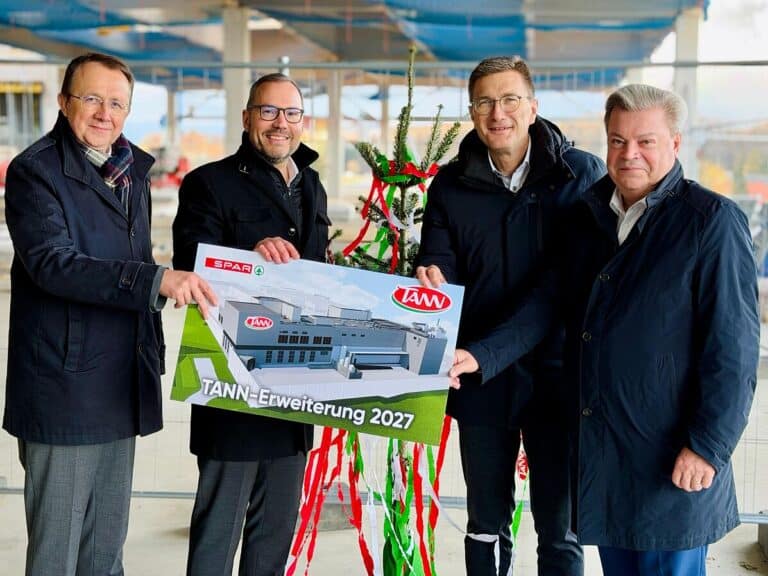

SPAR Austria is investing more than €22 million to expand its TANN food-production plant in St Pölten, adding new areas for poultry and convenience products and creating 40 jobs. The company confirmed the project on 20 November 2026, when construction reached its topping-out milestone.
Production in the new facilities is expected to begin in autumn 2027. The investment will increase employment at the site from around 230 to 270 people, strengthening an operation that already manufactures meat products, ready-to-eat foods and plant-based alternatives.
For supermarket food buyers, this is more than a local factory expansion. It increases the retailer’s control over product development and manufacturing in categories shaped by convenience, fresh-food availability, preparation time and changing consumer preferences.
TANN has developed beyond its traditional meat and sausage business into ready-meal and meat-alternative production. The new capacity is specifically aimed at poultry and convenience products, reflecting SPAR’s assessment that customers increasingly seek easy-to-prepare food.
Leopold Scharmer, who leads TANN at SPAR, said stronger demand for poultry and convenient foods was behind the investment. The company also expects benefits for Austrian farmers, ingredients suppliers, contractors and service businesses that support local production.
SPAR has been active in St Pölten since 1979. Construction and engineering work on the development involves several Austrian suppliers, while the larger manufacturing footprint is expected to bring additional procurement opportunities once operations start.
SPAR managing director Alois Huber said the business was proceeding without public financial support for this investment. That is a company statement about the project’s funding, not proof that other parts of its operations receive no incentives.
There are still important unknowns for supply-chain partners. SPAR has not specified the new annual tonnage, line-by-line capacity, supplier contracts or how much output will go into private-label products rather than other assortment categories. Nor has it quantified the effect on current import requirements.
The expansion will be relevant to companies supplying packaging, food ingredients, poultry and chilled-food logistics. It follows the wider European trend towards closer retailer involvement in the manufacture of high-turnover food. GTN has also examined Austria’s fresh-produce supply network and retail technology suppliers in Austria, two other components of the country’s supermarket supply chain.
The next milestone is the planned autumn 2027 production start. A clearer picture of capacity and sourcing should emerge as the new lines are commissioned.