
StrongPoint says some of the largest US grocery retailers could collectively save at least $1 billion a year by improving the way online orders are picked inside stores.
The Norway-based grocery technology company published the estimate on 25 November 2026. It compares US in-store picking productivity with results achieved by leading European grocery operators.
The figure is a vendor estimate. It is not an independently audited saving, and retailers should not treat it as a guaranteed return.
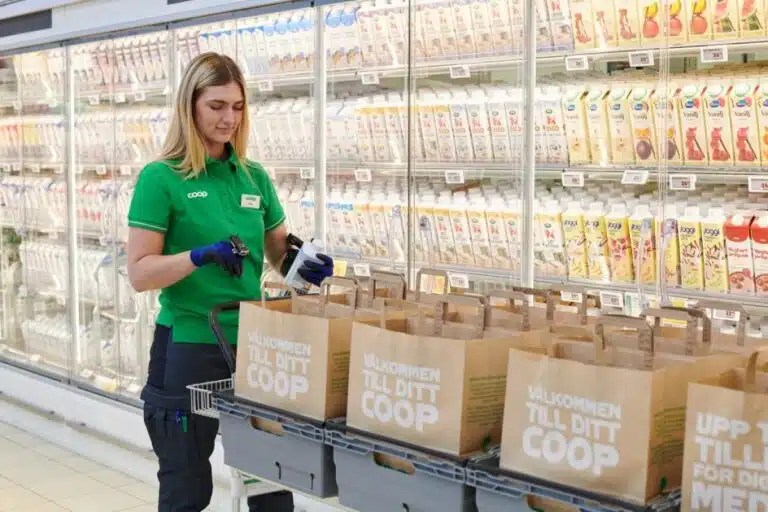
StrongPoint says the opportunity comes from using existing supermarket estates more effectively. Faster picking can reduce the labour time attached to each online basket without requiring every order to pass through a dedicated automated fulfilment centre.
The company says users of its order-picking system average about 240 grocery items per labour hour. Some operations reach 350 items per hour.
Those figures are useful benchmarks. They are not directly transferable to every store.
Picking speed changes with store layout, basket size, order density, product location accuracy and the number of substitutions. Chilled, frozen, fresh produce and age-restricted products also add different handling requirements.
Local wage rates matter as well. A retailer with high labour costs and a large online operation has more cash value attached to every minute saved than a smaller operator with lower order volumes.
StrongPoint has not published a retailer-by-retailer breakdown of the $1 billion estimate in its announcement. Grocery groups assessing the claim will therefore need to rebuild the business case using their own order data, labour costs and current picking rates.
Jacob Tveraabak, chief executive of StrongPoint, said US retailers already have the principal asset required to capture the opportunity: their stores.
“European grocery retailers show that with the right operating model, in-store picking can be productive at scale,” he said.
The argument reflects StrongPoint’s roots in Norway’s grocery technology sector and the development of store-based fulfilment systems in Sweden’s retail technology market.
The company also challenges the idea that store picking reaches a fixed capacity ceiling when online grocery becomes a larger part of sales.
It cites industry analysis suggesting store-based fulfilment often becomes difficult at online penetration of around 12% to 15%. StrongPoint says one European customer operates redesigned stores where online orders represent more than 40% of sales.
That comparison needs care. A store built around high online demand is not the same as a conventional supermarket adding more pickers to busy aisles.
Capacity depends on back-room space, staging areas, refrigeration, parking or collection facilities and the ability to separate customer traffic from picking routes. Retailers may also need dedicated zones, earlier picking windows or tighter controls over the number of orders accepted in each time slot.
StrongPoint’s recent US progress gives the argument a live commercial test. StrongPoint’s Meijer order-picking rollout is its first large-scale deployment with a US grocery retailer.
The software is designed to sequence picking routes, support multiple orders and guide staff to products. Strong inventory data remains essential. A fast route offers limited value if the system sends a colleague to an empty shelf or repeatedly creates substitutions.
Substitution decisions can be especially costly. Contacting a customer, returning to an aisle or completing an additional picking run can remove much of the time saved elsewhere.
Retailers should therefore measure more than items per hour during a pilot.
The most useful scorecard includes cost per order, order accuracy, substitution rate, on-time completion, training time and customer complaints. It should also separate the time spent walking, searching, scanning, weighing, packing and staging orders.
Productivity should be compared across normal weeks and peaks. A short trial during a quiet trading period may overstate the benefit, while a badly prepared Christmas test could understate it.
StrongPoint also argues that grocers should keep their own e-commerce channels at the centre of the customer relationship. Third-party platforms can add reach, but greater dependence can reduce access to shopper data and make the retailer more exposed to external fees and service rules.
For procurement teams, the central question is not whether European picking rates can be copied in full. It is how much of the gap can be closed in each store format after software, devices, integration, training and support costs are included.
A credible contract should define the starting benchmark, agreed service levels and the evidence required to prove savings. It should also set out responsibility for product-location data, system downtime and integrations with order management, inventory and loyalty platforms.
StrongPoint’s $1 billion figure puts a clear value on a longstanding grocery problem. The next evidence will come from US store deployments that can show sustained savings without weakening availability, accuracy or the customer experience.
Editor’s note: This article is based on StrongPoint’s company announcement and research paper published on 25 November 2026. Additional industry context and analysis have been added by Grocery Trade News.