
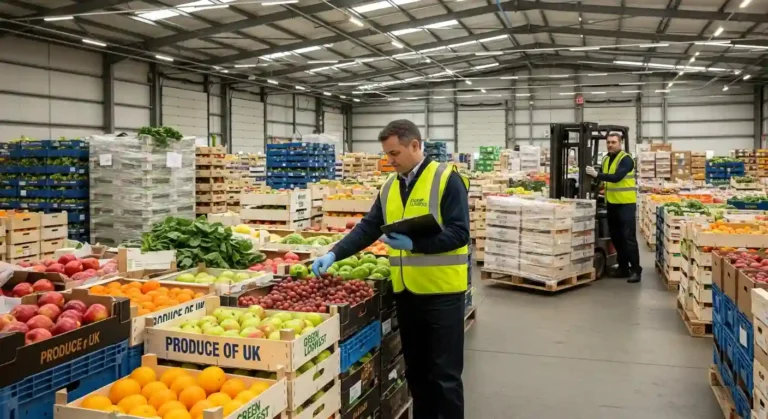

The UK pesticide residues report 2024 shows that almost all food tested last year met legal standards, with regulators reporting very few cases requiring action. The Health and Safety Executive (HSE) analysed 3,482 samples from 29 foods across Great Britain and Northern Ireland and found that 97.93% were within legal maximum residue levels (MRLs).
According to the pesticide residues report , just 72 samples (2.07%) exceeded MRLs. All findings were risk-assessed, and a small number were escalated to the Food Standards Agency (FSA) for follow-up.
National Compliance Results
The UK pesticide residues report outlines three headline numbers:
1,785 samples (51.26%) contained no detectable residues
1,625 samples (46.67%) had residues at or below legal limits
72 samples (2.07%) were above the MRL
All detected residues were assessed for consumer risk. HSE carried out 24 detailed short-term risk assessments, with 11 cases referred to the FSA for further action. These referrals mainly concerned imported produce where MRLs were exceeded.
The programme is risk-based and focuses on foods where residues are more likely, such as beans with pods, grapes, potatoes, chillies, and certain specialty vegetables. The UK pesticide residues report confirms that common staples such as bread, milk and wheat flour remain low-risk categories.
Great Britain findings
HSE tested 2,609 samples in Great Britain, covering 28 food categories. The UK pesticide residues report 2024 shows that:
52.13% contained no residues
46.03% were within MRLs
1.84% exceeded the MRL
For UK-produced food, only 0.77% of samples were above the MRL. For non-UK products, this figure was 2.92%.
Fruit and vegetables formed the largest part of the GB dataset, with 1,469 samples tested. According to the UK pesticide residues report, 2.86% of fruit and vegetable samples exceeded MRLs. Imported beans with pods accounted for several of these cases, particularly from Kenya, India, Morocco, and Egypt.
Some samples of grapefruit, grapes, chillies, limes, mushrooms and potatoes also exceeded their MRLs. Each case was investigated, and suppliers were contacted. Where needed, stock was removed and INFOSAN notifications were issued so exporting countries could be informed.
In melon testing, chlorate was found above the MRL in one sample. Pesticide residues report 2024 emphasises that such chlorate residues are linked to disinfectants used for food hygiene or water treatment—not to agricultural use. HSE says balancing pesticide rules and microbiological safety remains important.
For starchy foods such as bread and wheat flour, no samples exceeded MRLs. Ninety per cent of these samples contained residues below the MRL, consistent with milling and baking processes.
Animal products in Great Britain also showed low risk. Out of 540 samples (excluding fish), just one organic egg sample exceeded the limit due to cyromazine. The UK pesticide residues report 2024 notes that cyromazine can appear when biocidal products are used in poultry houses. Honey, milk and beef showed no MRL breaches.
Northern Ireland Findings
In Northern Ireland, 873 samples were tested. The UK pesticide residues report 2024 reported:
48.68% with no residues
48.57% within MRLs
2.75% above MRLs
For UK-labelled food, 4.69% exceeded MRLs. These were mainly linked to copper residues in eggs and BAC residues in beef. HSE concluded these levels did not present a health risk, and the Northern Ireland authorities are increasing poultry feed surveillance in 2025–2026.
Fruit and vegetables in Northern Ireland showed a 1.81% over-MRL rate. Most non-compliant results were isolated, such as chlorate in aubergines and propargite in Brazilian grapes. As in the GB survey, the UK pesticide residues report 2024 links chlorate detections to hygiene and cleaning chemicals, not crop protection.
Starchy foods and olive oil in Northern Ireland showed no residues above MRLs. Infant food samples tested in NI were fully compliant.
Follow-Up Actions And Transparency
The UK pesticide residues report 2024 highlights how the monitoring system works:
HSE investigates every residue above the MRL
Producers and brand owners are contacted
Additional testing may be requested
FSA may recommend product withdrawals
International alerts may be issued through INFOSAN
The programme also confirms that no UK-grown produce in the GB sample contained pesticides not authorised for use in Great Britain.
The report stresses that HSE publishes brand names, countries of origin and residue findings openly to support responsible sourcing across the food supply chain. According to the UK pesticide residues report 2024, this public reporting continues to improve compliance and helps retailers and suppliers prevent repeat issues.