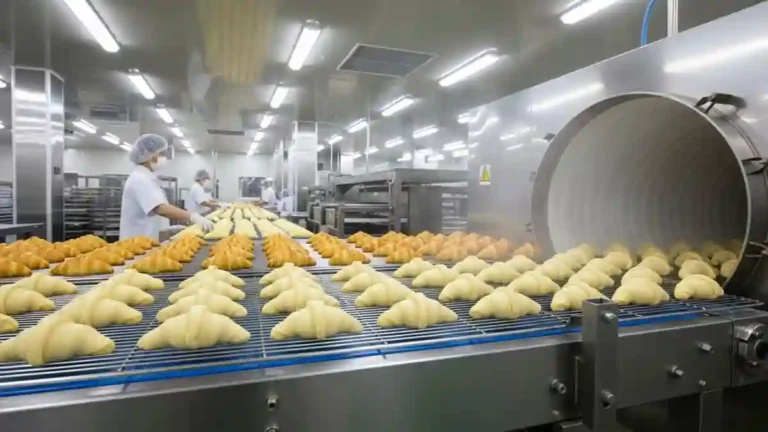

Japanese food exports grew in many categories this year, but one area kept slipping under the radar: frozen bakery.
While everyone talks about matcha, noodles, seafood, or ready meals, the frozen bakery segment has been quietly building real momentum. By late 2025, buyers from Europe, the Middle East, Southeast Asia, and even North America were giving serious attention to Japan’s frozen croissants, buns, café-style pastries, and mochi-based baked goods.
It is a category that feels simple at first glance — bread and pastries — but Japan has turned it into something more refined. Controlled texture, long shelf life, clean packaging, and that soft, almost “fluffy” style of Japanese bread that travellers often fall in love with.
In this long-form blog, we explore why Japanese frozen bakery is growing fast, which products are leading the trend, and what supermarket buyers should expect in 2026.
Why Frozen Bakery Became A Quiet Export Winner
Japan already has a strong reputation for quality in snacks, confectionery, tea, and bakery overall. But frozen bakery wasn’t a headline export item until recently.
Something changed between 2023 and 2025.
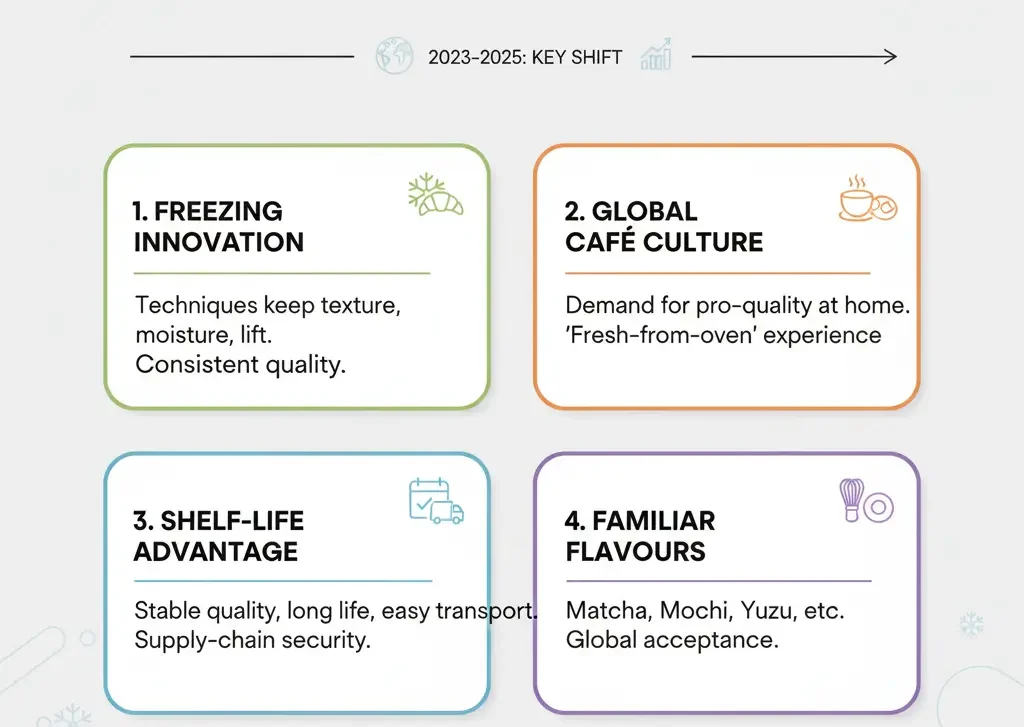
Here are some of the reasons:
1. Japanese bakeries refined their freezing techniques
Japan’s manufacturers now use processes that keep layers, softness, and moisture stable. Frozen croissants bake with consistent lift. Filled buns stay soft after thawing. Mochi-based bakery holds texture even after shipping long distances.
This improved reliability made international buyers feel more comfortable bringing these items into mainstream retail instead of niche Asian sections.
2. Café-style bakery culture exploded worldwide
Shoppers want café-quality pastries at home.
Frozen bakery lets retailers offer “fresh-from-oven” experiences without investing in full in-store bakeries. Japanese suppliers already specialise in café-style items, so the timing was perfect.
3. Shelf life became a huge advantage
After several years of supply-chain instability, frozen categories felt safer for retailers.
Longer shelf life + stable quality + simple transport = fewer headaches.
4. Japanese flavours became more familiar globally
Things like matcha, red bean, black sesame, yuzu, custard cream, and mochi textures are being understood more easily by shoppers in western markets.
This comfort helped push frozen bakery into regular shopping baskets instead of novelty shelves.
The Product Types Driving Growth
Japan’s frozen bakery segment is not one thing — it is a mix of traditional, Western-inspired, and uniquely Japanese items.
Below are the product groups that buyers kept talking about in 2025.
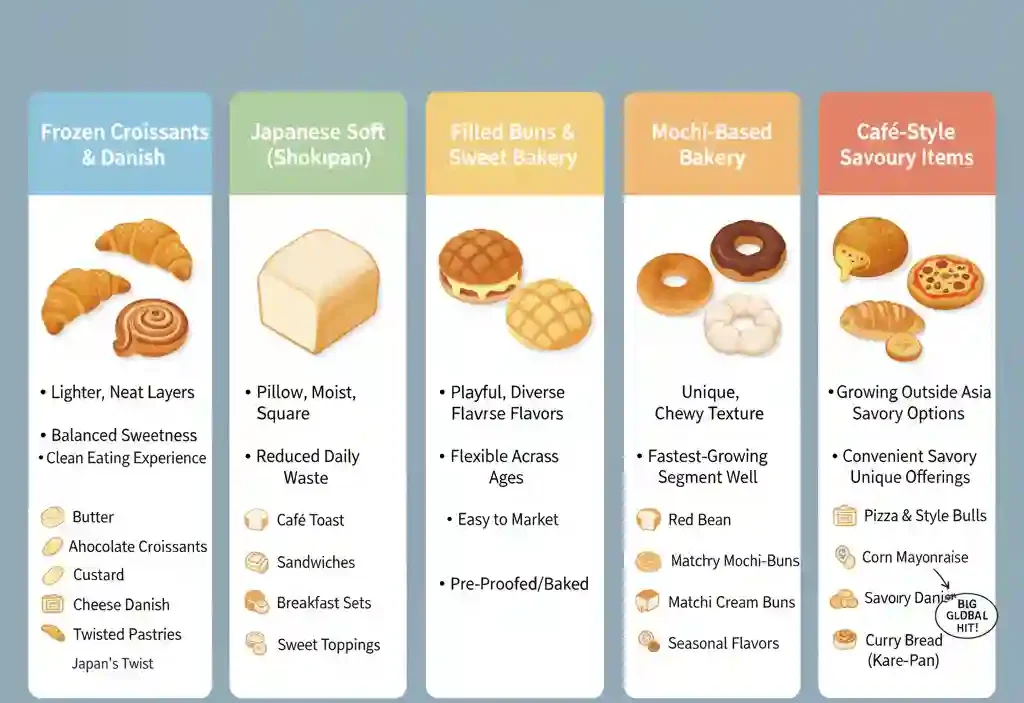
1. Frozen Croissants and Danish Pastries
You might wonder why Japanese croissants matter when Europe already dominates this category.
But Japan brings its own twist — lighter layers, balanced sweetness, neat lamination, and very stable structure.
Retailers tested:
butter croissants
almond croissants
chocolate croissants
custard-filled danish
cheese danish
twisted sweet pastries
Japanese bakeries tend to avoid excessive greasiness, which many buyers described as a “cleaner” eating experience. This appeals to supermarkets in health-conscious markets.
2. Japanese Soft Bread (Shokupan)
Shokupan — that pillowy, moist, square-shaped bread — has become a global favourite.
Frozen versions allow retailers to bring it in without worrying about daily waste.
Uses include:
café-style toast
sandwiches
breakfast sets
sweet toast with toppings
Buyers like it because it is simple to market. Once shoppers try it, they usually stay loyal.
3. Filled Buns and Sweet Bakery
This is where Japanese frozen bakery gets interesting.
The flavours are different, playful, and very flexible across age groups.
Popular items include:
custard cream buns
chocolate-filled buns
melon-pan style frozen items
red bean buns
matcha cream-filled buns
seasonal limited flavours
Many of these are pre-proofed or fully baked. Retailers only need to thaw or quick-bake.
4. Mochi-Based Bakery
Mochi bakery is one of the fastest-growing segments because it is unique.
Chewy, soft, slightly elastic textures have become trendy worldwide.
This includes:
mochi-cheese bread
mochi-buns in savoury flavours
mochi donuts (frozen versions designed for in-store baking)
mochi chocolate bites
mochi-based mini loaves
These products also freeze extremely well because mochi texture holds moisture.
5. Café-Style Savoury Items
Japan’s frozen savoury bakery lines also grew this year, especially with supermarkets outside Asia.
Popular examples:
ham & cheese rolls
pizza-style buns
corn mayonnaise buns
savoury danish pastries
curry bread (kare-pan) — a big global hit
Curry bread in particular gained traction because it is something shoppers cannot find easily from Western suppliers.
Why Overseas Supermarkets Are Paying Attention
Supermarkets rarely take risks with bakery because bakery sections already create waste and logistical challenges.
But Japanese frozen bakery solves many of these issues.
Here’s why retailers like it:
1. Bake-on-demand or thaw-and-sell flexibility: Retailers can bake small batches or simply thaw the buns. No need for full bakery teams.
2. High quality with predictable consistency: Japan is extremely strict with temperature, texture, and weight control. Retailers appreciate predictable outcomes.
3. A point of difference for competition: Frozen bakery from Japan creates a “premium but affordable” positioning. Buyers in 2025 said these items help differentiate from discounters.
4. Suitable for multicultural markets: Japanese products appeal to customers looking for Asian bakery but also to general shoppers wanting café-style pastries.
5. Matches global convenience trends: Home cafés, air fryers, and toaster ovens made frozen bakery more attractive.
Packaging: A Major Strength In Japan’s Export Success
One of the biggest advantages for Japanese suppliers is packaging.
Even frozen bakery has packaging that feels modern, clean, and attractive.
Common traits:
neat typography
soft colours
transparent windows
resealable pouches
simple English descriptions
step-by-step reheating guides
Retailers in 2025 repeatedly said packaging was a reason they chose Japanese frozen bakery over other suppliers.
Shoppers notice packaging first — and Japanese packaging generally looks “premium” even at mid-tier prices.
Where Japanese Frozen Bakery Is Trending Next
Looking ahead to 2026, several trends seem ready to expand.
1. Mini-size bakery packs
Perfect for portion control and snacking.
Japanese suppliers are leading this trend in Asia already.
2. Premium café-style morning sets
Croissant + mini-shokupan + jam or butter — frozen variety packs.
3. Health-driven bakery
Low-sugar versions, high-protein buns, fibre-added breads.
4. Dessert-style pastries
Mochi donuts, chocolate mochi twists, sweet custard rolls.
5. Regional speciality flavours
Yuzu cream, Hokkaido milk bread, Okinawa brown sugar buns.
6. Frozen-ready mochi waffles
A new category emerging from café chains, now moving into export packaging.
What Supermarket Buyers Should Prepare For 2026
Based on retailer feedback in 2025, here are the key preparation steps for sourcing Japanese frozen bakery next year:
1. Secure supply early: Demand is rising. Supply is still limited because many Japanese bakeries are mid-size operations.
2. Plan freezer space carefully: Frozen goods need strategic placement so bakery shoppers find them easily.
3. Start with café-style items: Croissants, danish pastries, and soft buns are the safest entry items before introducing mochi-based products.
4. Use sampling campaigns: Shoppers who taste Japanese bakery usually return for it.
Retailers saw strong repeat sales after sampling.
5. Watch logistics costs: Frozen logistics from Japan can be slightly higher, so buyers should optimise full-container shipments.
Why Japanese Frozen Bakery Is Only Going To Grow
This category has something that many others don’t:
It blends Japanese craftsmanship with convenience, texture, innovation, and global consumer appeal.
It isn’t loud.
It isn’t trendy in the social media sense.
But it is consistent — quietly growing every quarter, supported by strong retail feedback.
When supermarkets need a bakery item that feels premium and stable, Japanese frozen bakery is becoming a natural choice.
By the end of 2025, it feels almost certain that its growth will continue into 2026.
And soon, shoppers around the world may treat mochi-buns and shokupan the same way they treat croissants or baguettes — everyday essentials, not niche imports.