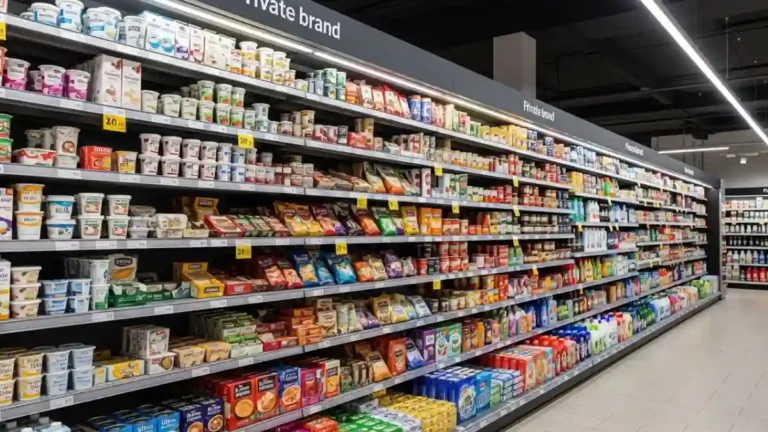

Across Europe, private label now represents roughly 38–40% of total grocery value, and in several countries the share is even higher. Growth has outpaced national brands for more than two consecutive years, making own-label one of the fastest-moving parts of the grocery market.own-label products are no longer the cheaper alternative. They have become a mainstream choice for millions of shoppers as retailers expand ranges across fresh food, household, personal care and ready meals. Private label continues to grow fast across Europe, driven by price pressure and major improvements in quality, design and consistency.
Private label’s rise across Europe is closely linked to the economic pressure felt in many households.
in shopper surveys across Europe, more than half of consumers say they are now “actively choosing” private label in at least five categories, compared with around one-third before inflation surged.
This shows behavioural change — something competitors mention.
As living costs remain elevated in several markets, shoppers are more aware of basket prices and more willing to switch away from national brands if the savings feel meaningful. Retailers support this behaviour with clear price ladders, visible unit pricing and strong entry-tier ranges that look more credible than previous generations.
Trust in supermarket brands is also higher than before. Improved recipes, cleaner ingredient lists and transparent sourcing have helped reposition private label as a safe everyday choice. Packaging upgrades—better photography, modern layouts, stronger claims—make products feel more reliable on shelf and online. Shoppers see the improvements in dairy, snacks, household cleaning and especially ready meals, where supermarkets now offer restaurant-style products at noticeably lower price points. Together, these changes have turned private label from a temporary inflation coping mechanism into a long-term shift in how Europeans shop.
Key Private-Label Trends Shaping 2025
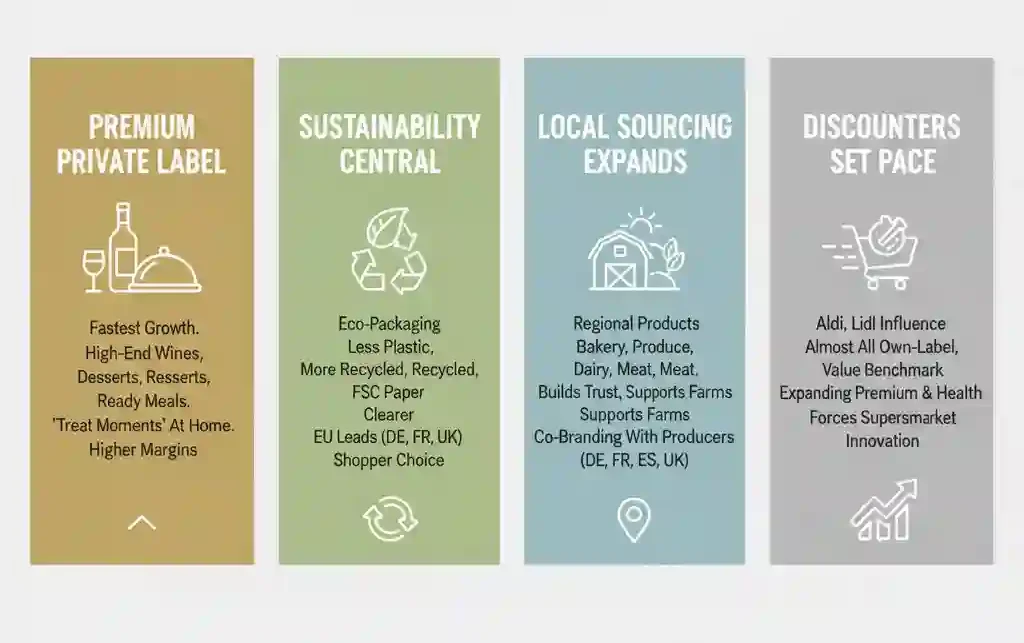
Premium private label is growing fastest
Premium own-label ranges are expanding rapidly. Retailers are releasing more high-end wines, chilled desserts, frozen meals, deli-style ready-to-eat dishes and even premium beauty and skincare. This shift is happening because shoppers still want to enjoy “treat moments,” but many are eating out less often. Restaurant-style private label—especially in chilled meals and bakery—fills that gap at a fraction of the price.
For retailers, premium private label offers higher margins and helps them take share directly from mid-price national brands. The growth also builds on wider developments seen in our earlier private label market growth analysis, where premiumisation played a central role. By 2025, nearly every major European retailer has positioned premium tiers as a core part of their business, not just a seasonal add-on.
Sustainability becomes central to packaging
In 2025, sustainability is shaping almost every packaging decision in private label. Retailers are cutting plastic where possible, incorporating more recycled content, and switching to FSC-certified paper and board across fresh food, bakery, beverages and household categories. Lightweight films, clearer recycling instructions and simplified pack formats now appear across hundreds of SKUs.
Shoppers pay more attention to packaging sustainability than in previous years. When prices are close, many customers choose the product that feels “less wasteful” or easier to recycle. This trend is strongest in Germany, France and the UK, where regulations and store policies push supermarkets to move faster than national brands. Sustainability signals—green logos, recycled-content icons, short claims—have become an essential part of private label’s value proposition.
Who Is Driving the Shift?
Younger households, students and urban shoppers are pushing many of these changes. Private label has become especially strong among Gen Z and younger families, who see supermarket brands as good value without feeling like a compromise. Category data across Europe shows the fastest growth in chilled ready meals, plant-based milks, high-protein yogurts, snacks, pet food and household cleaning. These categories have become the entry point for millions of shoppers moving away from national brands.
Local sourcing and regional products expand
Supermarkets in Germany, France, Spain and the UK are expanding local and regional sourcing within their private-label ranges. Bakery items, fresh produce, dairy lines and meat are the strongest growth areas. Local origin stories build trust and help shoppers feel they are supporting nearby farms and suppliers.
In several markets, retailers now co-brand private label with regional producers. This approach blends supermarket control over price and range with producer credibility. Examples include regional cheeses in France, bakery partnerships in Germany, and produce programmes in the UK and Spain. Local sourcing aligns well with trends explored in our fresh produce market report, where proximity and seasonality are increasingly important to shoppers.
Hard discounters continue to set the pace
Aldi, Lidl and similar discounters continue to shape expectations around private label. In markets such as the UK, Germany and Spain, discounter private-label penetration is estimated at 45–55%, creating a competitive baseline that full-line supermarkets cannot ignore.Their assortments are almost entirely own-label, which sets the benchmark for value across Europe. The simplicity of their ranges, combined with strong pricing discipline, forces full-line supermarkets to respond quickly.
In 2025, discounters are not just competing on price—they are expanding premium lines, health ranges and ready meals to reach a wider shopper base. This puts pressure on national brands while also pushing supermarkets to match innovation speed. As discussed in our supermarket trends coverage, discounter influence is one of the clearest structural forces defining today’s grocery market.
Health-focused private label grows sharply
Shoppers expect supermarket brands to match national-brand standards in health. Health-led private label is now one of the fastest-growing parts of the market, with many retailers reporting double-digit growth in plant-based and high-protein items compared with last year. Plant-based, high-protein, reduced-sugar, organic and free-from products are now core parts of private label, not specialist categories.
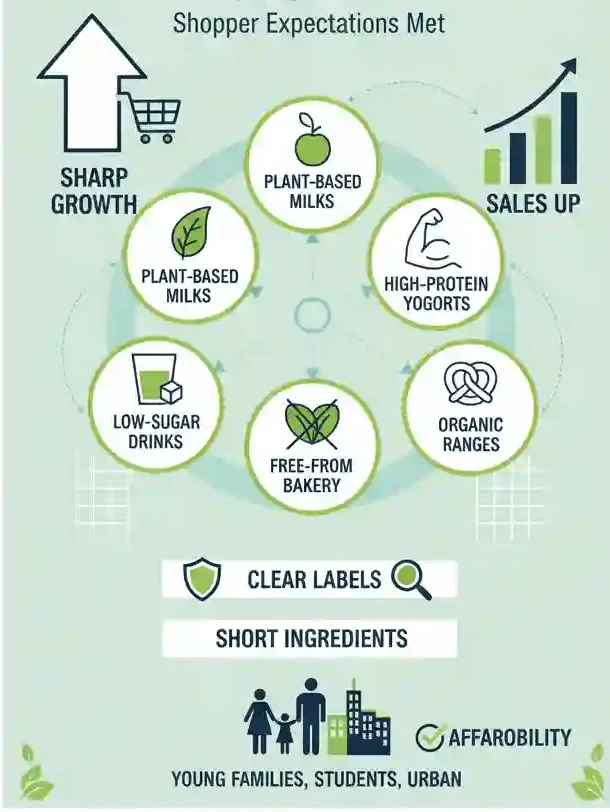
Retailers are expanding:
Plant-based milks
High-protein yogurts
Low-sugar beverages
Free-from bakery
Organic store-brand ranges
Clearer front-of-pack labels, short ingredient lists and visible functional claims help shoppers feel confident. Health-based private label is growing quickly among young families, students and urban customers who want healthier choices but still need affordability.
Ready meals and convenience are booming in 2025
Private label ready meals, frozen meals, grab-and-go lunches and meal kits are among the fastest-growing segments in Europe. Time-pressed households want fast options without paying restaurant prices. Retailers now offer global cuisines, restaurant-style sauces, and produce-based convenience lines that feel fresher and more modern.
Convenience is also where private label competes most effectively against takeaway and food delivery. New packaging formats—microwave bowls, dual-compartment trays, resealable bags—signal quality and ease of use. The overlap with fresh produce trends strengthens the link between ready meals and healthier eating.
Country-By-Country Snapshot
United Kingdom
The UK remains one of Europe’s strongest private-label markets. Private label already accounts for close to half of grocery sales in some major UK retailers, with premium and health-focused tiers rising fastest. Retailers continue investing in premium tiers and sustainability upgrades, especially across chilled food, bakery, produce and household items. Private label already holds a high share, and growth continues as shoppers rely on supermarket brands for both value and premium treats.
Germany
Discounters dominate Germany’s private-label market, but full-line supermarkets are expanding mid-tier and premium tiers at speed. Retailers use packaging, health-based claims and global meal ranges to differentiate from discounters while staying competitive on price for essentials.
Spain
Spain has some of the highest private-label penetration in Europe. Retailers push healthier alternatives to national brands and expand home-ready meal lines suited to family living. Fresh produce-based ranges and value household items drive daily penetration.
Italy
Italy shows strong private-label growth in bakery, fresh food and deli. In-store bakery and chilled desserts are clear growth engines. Many retailers also emphasise regional recipes and ingredients to build authenticity.
France
France continues shifting toward eco-friendly packaging and clearer on-pack origin statements. Regulatory pressure speeds up private-label innovation, especially in dairy, beverages and household cleaning.
What Retailers Must Do Now
To stay competitive in 2025, retailers need a clearer, more structured approach to private label. “Private label has moved from a margin tool to a strategic growth engine,” says one senior European retail analyst. “Retailers that treat own-label as a true brand portfolio—not an add-on—are seeing the strongest shopper loyalty.” Packaging design must be modern, simple and instantly readable. Shoppers compare products quickly, especially online, so clean labels and straightforward claims are essential. Packaging must also be recyclable or clearly explain how to dispose of it.
Retailers also need deeper supplier partnerships. Manufacturers capable of delivering plant-based, high-protein and reduced-sugar innovation are in high demand. Working closely with suppliers allows quicker launches, better pricing and more reliable volumes across essential categories.
Quality must remain consistent across all tiers: entry-level, mid-tier and premium. Entry-level needs honest value, while premium should feel genuinely high-end—not just a decorative name. At the same time, competing with discounters requires tight price control on staples like bread, pasta, oil, milk and cleaning products.
Retailers should also use category data, loyalty insights and retail technology tools to see which private-label lines underperform or could expand. This data-driven approach links directly to broader investments covered on our retail technology page. The goal is to treat private label as a brand portfolio with clear roles, not a collection of low-cost SKUs.
Forward Look
Private label will remain one of Europe’s strongest growth engines through 2026. Retailers that keep improving recipe quality, packaging, sustainability and price architecture will stay ahead. Competition will intensify, but those who treat private label as a strategic brand family—not just a cheaper alternative—will capture the most long-term value.