
The fresh produce supply chain is changing fast in 2025. Fruits and vegetables used to move through a slow, messy system. Growers, packers, retailers, and transport partners often worked with weak information and late updates. Today, new digital tools are fixing this problem. These tools are called collaboration platforms in fresh produce industry, and they help everyone share clear data in real time.
A collaboration platform is a simple digital place where all partners see the same details — what is ready to harvest, what is already packed, where trucks are, what quality the product has, and how demand is shifting. This clear view reduces waste, improves planning, and speeds up decisions.
In simple words: these platforms help the fresh produce world work smarter.
Old Way Vs New Platforms
For many years, fresh-produce buying worked in the same old way. Someone made phone calls. Someone else updated a spreadsheet. Quality checks happened late. If something changed on the farm or during transport, retailers often learned too late.
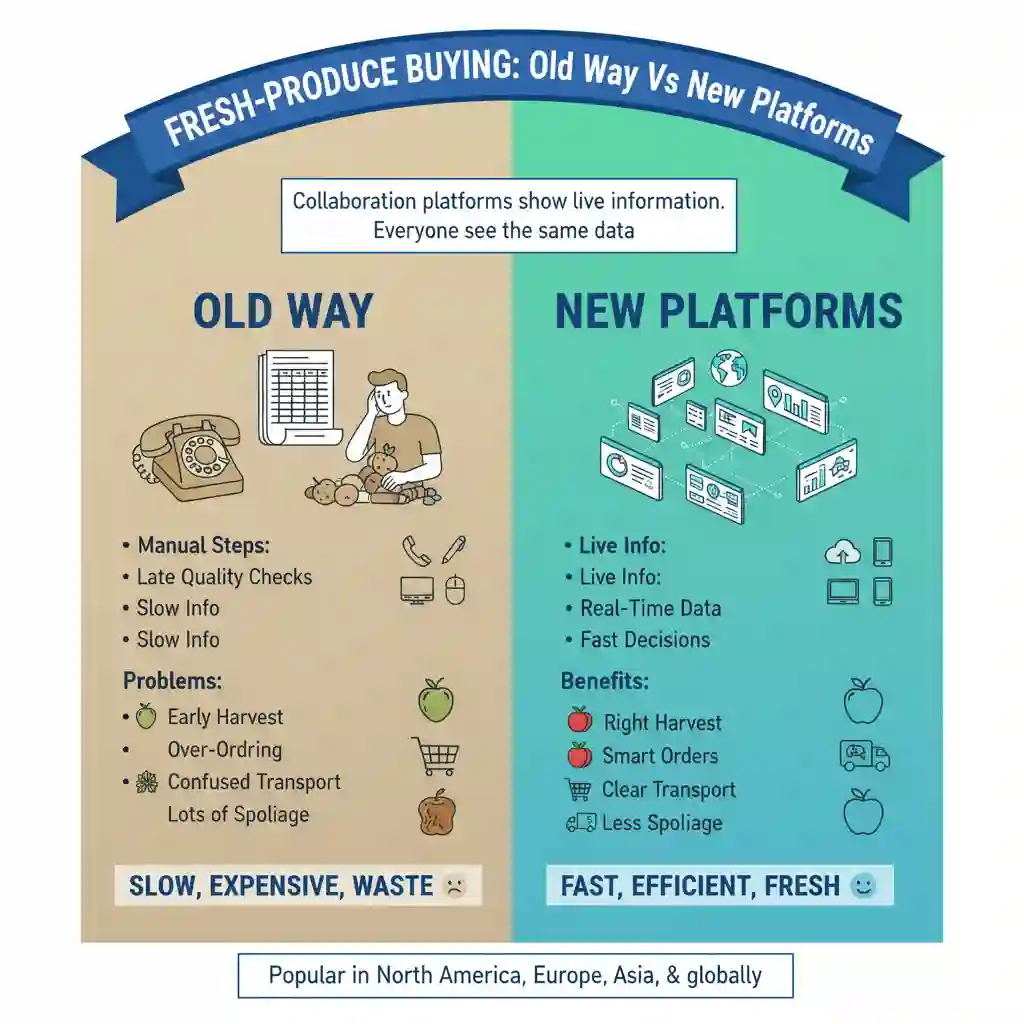
This led to common problems:
- Growers harvested too early.
- Retailers over-ordered “just in case”.
- Transport partners did not always know which truck should move first.
- Lots of produce spoiled on the way.
The old system was slow because people handled too many manual steps.
The new system fixes this. Collaboration platforms show live information. Retailers see what is ready right now. Growers see what retailers plan to order next week. Logistics teams see where the truck is, which order is urgent, and when it must arrive.
Because everyone sees the same data, mistakes drop. Decisions happen fast. And fresh produce moves with better timing.
This is why collaboration platforms in fresh produce industry are becoming popular in North America, Europe, Asia, and every major producing region.
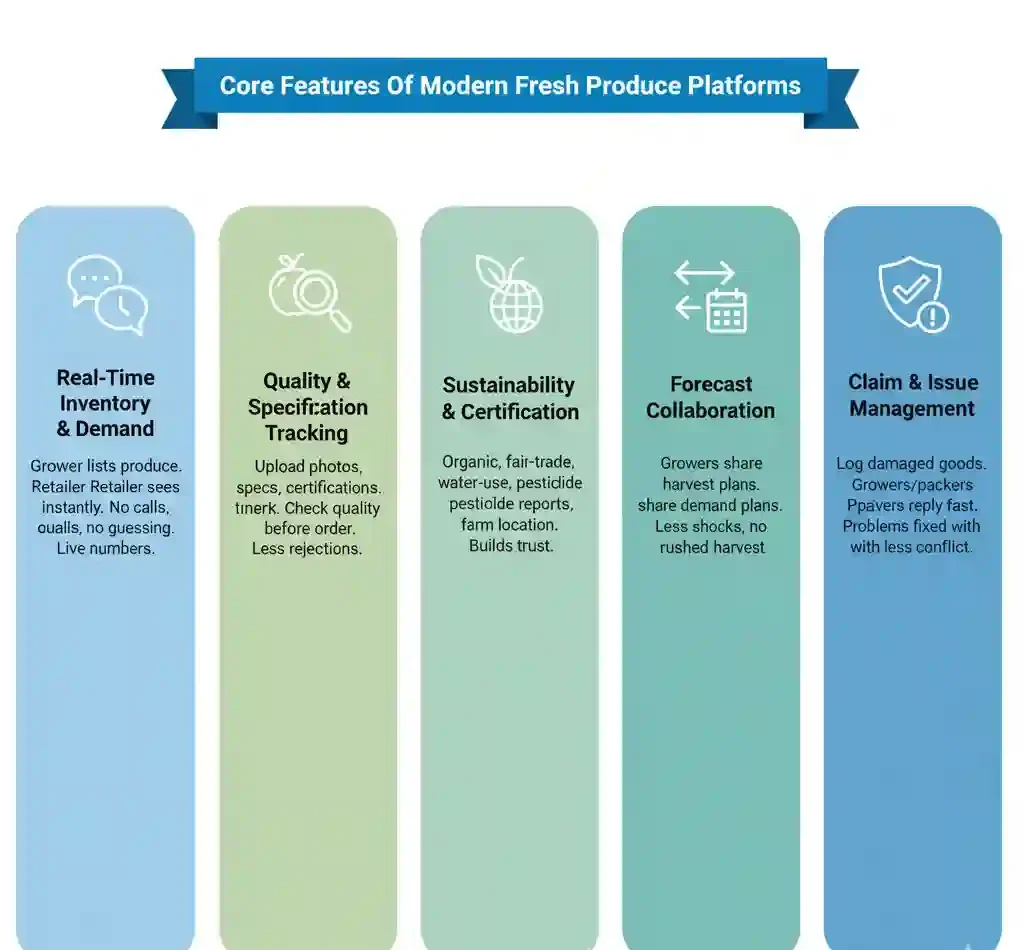
Core Features Of Modern Fresh Produce Platforms
Real-Time Inventory And Demand Signals
This is one of the biggest benefits. A grower lists available produce. A retailer sees it instantly. If a retailer needs more apples or fewer tomatoes, they update demand. The grower sees it on the platform at the same moment.
No need for long calls.
No need for guessing.
Everyone works with live numbers.
Quality And Specification Tracking
Fresh produce quality changes fast. Good platforms allow growers to upload photos, specs, and certification data. Retailers can check quality before they order.
This reduces new problems at delivery. It also cuts the number of rejections at warehouses.
Sustainability And Certification Data
Retailers care about where produce comes from and how it is grown. These platforms store:
- organic certification
- fair-trade data
- water-use records
- pesticide reports
- farm location
This gives retailers and shoppers more trust in the supply chain.
Forecast Collaboration From Grower To Retailer
Platforms allow both sides to share forecasts. Growers share harvest plans. Retailers share demand plans. If a retailer plans a promotion next month, the grower sees it early and can prepare.
This reduces shocks, shortages, and rushed harvesting.
Claim And Issue Management
Sometimes produce arrives damaged. Sometimes the quality does not match the order. In the past, solving these issues took days. Now, retailers log the issue in the platform. Growers and packers see it immediately. They reply fast. Problems are fixed with less conflict.
Impact On Waste, Availability, And Margins
Fresh produce is highly perishable. Every hour matters. When growers and retailers have clear visibility, produce does not sit for too long. Forecasts help avoid over-harvesting. Live data keeps trucks moving on time.
Waste starts to fall.
Retailers improve availability. Shelves stay full. Shortages become less frequent. Spoilage becomes smaller.
Margins also get better. Waste is expensive. Rejections are expensive. Urgent transport is expensive. Collaboration platforms cut these costs. So even small growers and small retailers benefit.
For the whole market, this means more stable prices, more predictable supply, and fewer shocks.
What Retailers Want From These Tools
Retailers need platforms that work with the systems they use every day. They do not want extra tools that create more work. They want simple, direct integration with:
- ordering
- pricing
- inventory
- warehouse
- planning
Retailers also want clear visibility of local produce. They want to see what is grown close to their stores. This helps with delivery planning and helps build “local sourcing” ranges.
Retailers want strong seasonality data. Fresh produce changes every month. With better digital tools, they can run smarter promotions during peak supply periods.
What Growers And Suppliers Need
Growers do not want complicated tools. Many small or mid-size farms do not have IT teams. They need simple onboarding, simple dashboards, and simple ways to update availability.
They also want fair rules. Data must be safe. Many growers worry about sharing yield estimates or pricing details. Good platforms explain how data is used and who can see it.
Growers also need support. Not only big companies should benefit. Platforms that help small and mid-size growers can strengthen whole rural economies.
Suppliers also want transparency on payment terms, shipping status, and rejections. A platform that closes the communication gap helps them operate with less stress.
Why This Matters In 2025
Climate pressure is rising. Weather patterns change quickly. Water issues affect crops in Spain, Italy, California, and parts of Asia. Retailers demand stable supply. Consumers expect good quality at good prices.
In this environment, slow communication is a big risk.
This is why collaboration platforms in fresh produce industry are becoming a core part of the supply chain.
These platforms offer:
- better visibility
- faster decisions
- fairer negotiations
- less waste
- more stable prices
- stronger partnerships
They also help countries share best practices. For example, when you look at fresh produce operations in Canada, Italy, or Asia, you see similar challenges — timing, weather, transport. Collaboration tools help solve these problems in every region.
And when supermarkets use retail technology to improve produce forecasting, they often link these systems with their collaboration platform. This connection creates a full picture of the supply chain from farm to shelf.
Fresh Produce Supply Chain Examples In 2025
Different countries now adopt these tools at different speeds:
In Europe, large supermarkets use platforms to plan fresh produce from Spain, Italy, and the Netherlands.
In Asia, platforms help support small growers who need direct access to buyers.
In North America, platforms help reduce waste in long-distance transport routes.
Where supply chains were once slow and uncertain, they now become more predictable.
Collaboration tools also support traceability. Retailers can see exactly when a crop was harvested and how it moved. This helps maintain freshness and safety.
How These Platforms Reduce Risk
Every fresh-produce company faces three major risks:
- price shocks
- supply shocks
- quality shocks
Collaboration platforms give early warning signs. If weather affects a crop, growers update the system. Retailers adjust orders. Logistics teams plan for changes. Information flows quickly.
This reduces panic buying, reduces emergency transport costs, and reduces disputes.
Slow information used to hurt the supply chain. Fast information now protects it.
How These Tools Help Retailers Plan Better Promotions
Retailers often run produce promotions when supply peaks. If they get early data from growers, they plan promotions weeks earlier.
For example:
- If growers share that strawberries will peak in two weeks, retailers plan offers now.
- If tomatoes will be short, retailers shift promotions to other categories.
Before digital tools, this planning was guesswork. Now it is accurate.
How Collaboration Platforms Support Small Growers
Small growers face many challenges:
- limited contact with big retailers
- slow payments
- lack of transport information
- low bargaining power
Platforms help by:
- giving them visibility
- connecting them to more buyers
- showing demand signals early
- reducing paperwork
- improving payment tracking
When small growers have better digital support, retailers also win because they access more local and diverse supply.
Looking Ahead: What Happens Next
In the next two to three years, collaboration platforms will become normal in the fresh produce supply chain. They may not look exciting from outside, but inside the industry they will be the backbone of daily work.
Phones and spreadsheets will not go away completely, but they will not run the whole system anymore.
Growers and retailers will expect live data.
Transport teams will expect shared schedules.
Quality teams will expect digital records.
Buyers will expect early forecasts.
The whole chain will be more connected.
This will help reduce waste, support sustainability goals, and ensure smoother operations even during climate pressure.
Simply put, collaboration platforms in fresh produce industry are now shaping the future of how fruits and vegetables reach the shelf.