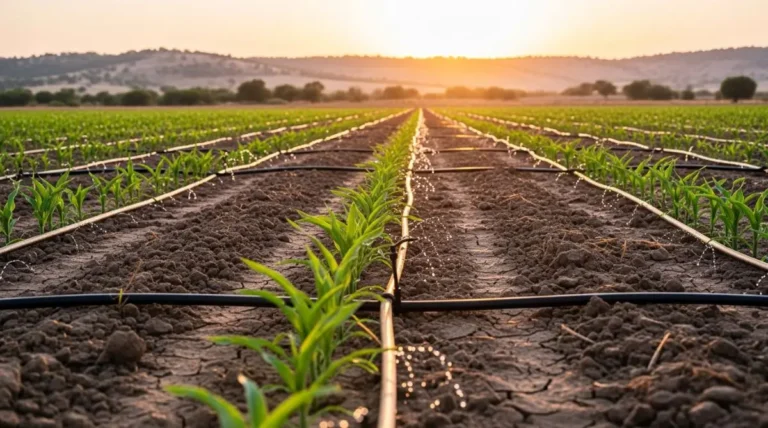

Kazakhstan will spend more than 214 billion tenge between 2026 and 2028 to expand water-saving technology in agriculture, as the government steps up efforts to protect yields in one of Central Asia’s most water-stressed regions.
The Ministry of Water Resources and Irrigation confirmed the new measures, which raise reimbursement levels for drilling wells and purchasing water-efficient equipment from 50% to 80%.
A further 13.5 billion tenge is allocated to subsidise irrigation water, with support now linked directly to the use of water-efficient systems.
Why It Matters
Kazakhstan is a key producer of onions, carrots, potatoes, melons and grains — all categories that influence regional supermarket supply.
The new programme signals deeper reform across the irrigation network.
A water code adopted earlier this year strengthens penalties for unauthorised use and restricts economic activity around water bodies and protected buffer zones.
The measures sit alongside broader changes already underway.
In the last season, more than 158,000 hectares were equipped with modern irrigation systems, including drip and sprinkler technology, according to earlier government data. Field-levelling projects were also used to reduce water loss across irrigated land.
The introduction of irrigation condominiums — collective maintenance groups responsible for pipelines and drainage networks — is designed to cut repair costs for farmers and reduce infrastructure downtime.
Another rule allows construction of reservoirs up to 2 million cubic metres, helping farms store meltwater, rainwater and floodwater for use during peak demand.
For fresh produce buyers, the upgrades could reduce volatility in Kazakh onion, melon and vegetable supply over the next three to five years. More efficient irrigation typically stabilises yields, lowers per-hectare water costs and reduces crop-loss risk during dry periods.
It also connects to a wider shift in Central Asia. Countries across the region are pushing farmers toward water-efficient systems as climate pressure increases and river flows become less predictable.
Kazakhstan’s expanded subsidy package offers one of the strongest incentives in the area and may accelerate the transition faster than earlier programmes.
Source note: This story is based on official information published by the Ministry of Water Resources and Irrigation of Kazakhstan and reporting from eldala.kz.