
Australia’s fruit and vegetable sector enters 2025 under real pressure. The Australia fresh produce market 2025 is shaped by extreme weather, higher labour costs, rising energy bills and stronger regulatory oversight. Growers are dealing with more uncertainty than at any point in the last decade, while supermarket buyers face tighter margins and higher expectations from customers who want stable prices year-round.
The challenge is simple to see but difficult to manage. Weather is reducing volumes in key regions. Production costs continue to climb. And the recently strengthened Food and Grocery Code of Conduct has shifted how buyers and suppliers work together. All this affects the availability, pricing and consistency of everyday categories such as berries, citrus, table grapes, salads and avocados.
For international suppliers, this is a market that needs reliable seasonal partners. For domestic retail buyers, the new landscape demands better forecasting, more transparent communication and smarter planning around promotions. The goal is not to replace Australian growers, but to create a more predictable supply chain during a turbulent year.
Where Australia’s Fresh Produce Market Stands in 2025
Fresh produce remains one of the most important parts of the grocery basket in Australia. Households expect year-round availability, stable pricing and good quality, even when the domestic season is unpredictable. This expectation puts continual pressure on supermarket buyers to balance local supply with imports, manage seasonal gaps and keep waste under control.
Australia’s main fruit and vegetable categories in 2025 include:
Citrus – oranges, mandarins, lemons and limes
Berries – strawberries, blueberries, raspberries and blackberries
Grapes – table grapes with significant export demand
Avocados – a category recovering from heavy oversupply
Salads and leafy greens – short shelf life and very sensitive to heat
The domestic market absorbs most production, especially for salads, berries and avocados. But exports remain essential for grapes and citrus, giving these categories a dual challenge: meeting local needs while competing in overseas markets. When weather disrupts yields, the tension between export commitments and domestic availability becomes sharper.
Climate patterns across 2023–2024 created difficult growing conditions: heat spikes, localised flooding, storm damage and lower water allocations in several regions. As a result, volumes for some crops are already forecast to be lower in the 2024/25 season. Buyers will see this in tightening availability and shorter promotional windows.
Cost Pressures and Weather Impacts
Growers across Australia describe the same broad pattern: everything costs more. Labour is the biggest expense and continues to rise, particularly for categories that rely on hand-picking. Energy is another major challenge. Refrigeration, packing sheds and glasshouse heating all sit on higher power bills than just a few years ago.
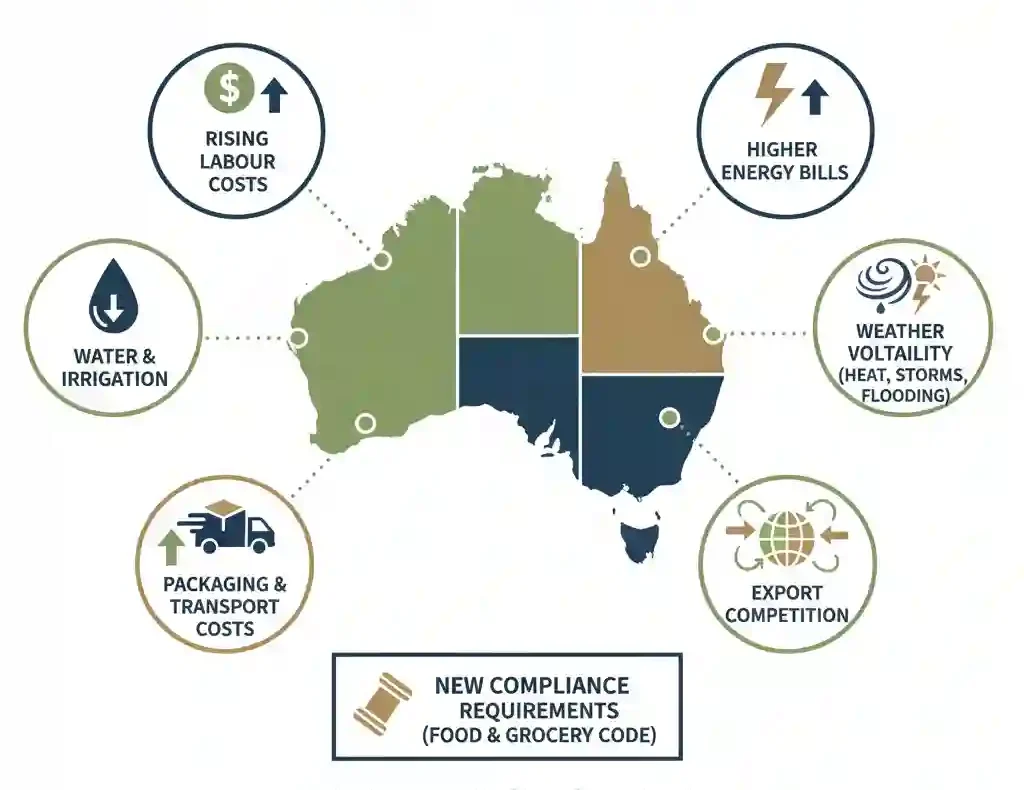
Input costs follow the same trend. Fertiliser prices remain elevated. Packaging and freight add new pressure after years of supply-chain disruption. Water is an increasingly sensitive issue, with irrigation becoming more expensive as allocations tighten in some regions.
These cost increases have not been matched by selling prices. Even in seasons where retail prices rise, farmgate prices often lag behind. For growers, this makes each season more financially risky. For buyers, it creates supply instability because fewer growers feel confident investing in future production.
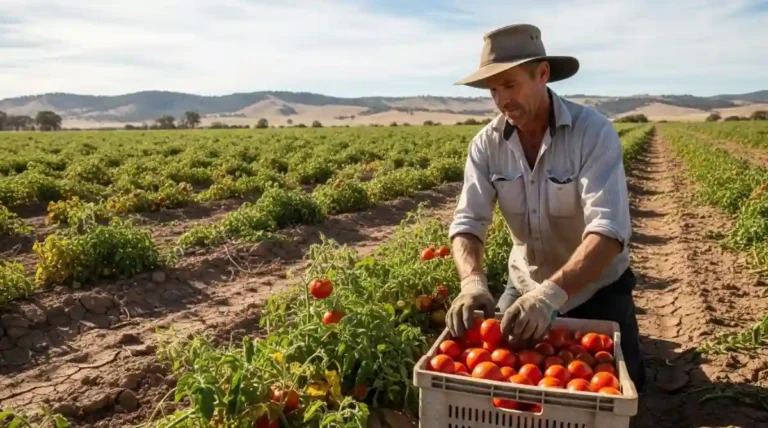
Weather compounds the challenge. Storms have damaged citrus orchards and table grape vineyards in some regions. Heat events hit leafy green yields quickly. Flooding and saturated soils affect root crops and berries. In many categories, growers describe 2024 as one of their most inconsistent seasons in recent memory.
The overall picture is clear: volumes are less predictable, operating costs are higher, and the market is more exposed to sudden shortages. Retail buyers will need to plan around this volatility throughout 2025.
Growers vs Supermarkets: The Power Balance in 2025
The relationship between supermarkets and growers has been under national attention. The ACCC’s recent review of the sector highlighted long-standing concerns from growers and called for clearer rules to govern commercial relationships. The Food and Grocery Code of Conduct was strengthened in 2025, becoming mandatory for major retailers. This change aims to give suppliers more confidence and clearer protections.
Growers say they face limited bargaining power. They want faster price adjustments when costs rise and more stability in contracts. They argue that farmgate prices have not increased at the same pace as production costs. Many also want better transparency around how retail prices are set.
Retail buyers face their own pressures. They operate in a strict price-matching environment and must protect customer value perception. Promotions, private-label commitments and quality standards require tight planning and detailed supplier communication. The new Code also adds reporting requirements and documentation expectations, increasing workload on buyers and suppliers alike.
Both sides face a difficult year. Growers ask for higher prices to survive rising costs. Buyers must offer competitive retail pricing in a market where consumers are more cautious with spending. The goal in 2025 will be finding a workable balance where both sides can manage risk without compromising supply stability.
What This Means for Retail Buyers
The 2025 season will demand a more proactive approach from retail produce teams. Buyer teams also work under tighter price-matching pressure and must manage produce volatility within a competitive retail landscape, as outlined in our guide to the largest supermarkets in Australia.
Shorter seasons and reduced volumes
Some categories, such as table grapes, avocados and citrus, face lower production forecasts. Buyers will need alternative sourcing options earlier in the year.
Higher buyer visibility into grower plans
Growers want earlier conversations on volume, packaging, waste and promotion cycles. Retailers who provide clearer forecasts will secure better availability.
Greater use of imports during seasonal gaps
Imported leafy greens, berries or grapes may be needed during tight domestic windows. The cost may be higher, but it prevents empty shelves and protects customer loyalty.
Careful promotional planning
Deep discounts carry risk when volumes are uncertain. Buyers must time promotions around confirmed supply, not historical patterns.
Private-label tender timing becomes more important
Growers want certainty before committing to planting and labour. Buyers who offer earlier or longer tenders may secure more reliable supply.
Closer collaboration required
The new Code of Conduct will push retailers and growers to communicate better. Buyers who share data, forecasts and packaging plans will find the transition easier.
Category Snapshots
Each category is feeling the pressure differently going into 2025.
Berries
Berries remain one of the most price-sensitive and labour-intensive categories. Weather plays a major role — too much rain impacts quality, while heat reduces yields quickly. Growers in multiple regions have reported higher input costs and inconsistent fruit size.
For buyers, expect more fluctuations in weekly volumes and a high need for backup options during sudden dips. Promotions should be planned with caution.
Citrus
Citrus has a strong export element. Lower yields forecast for mandarins, oranges and lemons mean tighter domestic supply. Export demand to Asia remains steady, adding more competition for available fruit.
Prices may firm due to reduced volumes and higher freight costs. Buyers should expect shorter promotional windows and more variability in fruit size across the season.
Leafy Greens / Salads
Leafy greens respond immediately to heat stress and water shortages. The 2024 season saw inconsistent yields and higher waste rates across several regions. Labour is also a significant cost for growers, as many items require fast harvesting and handling.
Buyers should prepare for sudden supply gaps and may need to adjust specifications or accept greater variability in leaf colour or size.
Grapes
Table grape forecasts suggest lower volumes for the 2024/25 harvest. Growers face rising input costs and export competition from other southern-hemisphere producers. Weather has affected size and consistency in some regions.
For retailers, this means tighter supply early in the season and more reliance on imported grapes later in the year.
Avocados
The sector experienced a 15% drop in production in 2024/25. Oversupply from previous years has eased, but growers remain cautious. Recovery is expected, but volumes will not return to peak levels immediately.
Retail buyers may see steadier pricing, but the category remains sensitive to weather and labour conditions.
Glasshouse Vegetables
Glasshouse produce — tomatoes, cucumbers, capsicums — offers more predictable supply but comes with high energy costs. Any rise in electricity or gas pricing has a direct impact on grower profitability.
Buyers may face higher pricing in winter months. Glasshouse categories still carry fewer weather risks, making them a critical option during volatile field seasons.
Opportunities for Exporters and Importers
International suppliers have a clearer role in 2025 than in previous years. Australia’s domestic growing conditions remain volatile, and buyers need predictable volumes to maintain shelf standards. When local yields fall, import programs become a protective layer that keeps pricing stable and prevents sudden shortages.
Counter-seasonal supply is the biggest opportunity
Northern hemisphere growers can support Australian retailers during winter gaps in berries, citrus and table grapes. Leafy greens and salad items are more complex to import, but controlled-environment producers with strong cold-chain management can help fill short windows of tight supply.
Export opportunities also remain important
Australian citrus and grapes still have strong demand in Asia, particularly when fruit size and sugar levels meet premium specifications. Lower domestic volumes may reduce export tonnage this season, but the long-term customer base remains strong. Export growers will focus on quality-driven sales rather than high-volume programs.
To work effectively with Australian supermarkets, overseas suppliers must provide stable volumes, reliable arrival windows and consistent specifications. Any uncertainty increases waste or risk of empty shelves, and both issues hurt retail margins. Suppliers who deliver strong technical support and packaging that withstands long haul routes will see more opportunities throughout the year.
Practical Checklist for Retail Produce Teams
A year of tighter volumes, higher costs and more weather volatility means produce teams need stronger planning across the whole supply chain. These are the core steps buyers should follow in 2025:
Share earlier and more accurate forecasts with growers.
Clear expectations give growers confidence to invest in labour and inputs.Run longer contract cycles for sensitive crops.
Categories like berries and leafy greens perform better with multi-month commitments.Build seasonal import buffers.
Import programs help cover the weeks where domestic fruit or vegetables drop sharply.Plan promotions based on confirmed supply, not historical patterns.
Reduced volumes mean heavy promotions carry higher risk.Review pack sizes and waste rates monthly.
Category profitability drops quickly when waste increases during heatwaves.Use simplified specifications where appropriate.
Accepting slight variation in size or colour can secure better availability.Coordinate more closely on packaging and handling.
Rising input costs mean growers want earlier decisions on materials.Strengthen communication between buying teams and suppliers.
Weekly updates on volume, quality and weather conditions reduce surprises.
These steps help both sides manage risk and keep availability stable during a challenging growing year.
Key Australian Fresh Produce Categories and 2024/25 Trends
| Category | Price Trend | Volume Trend | Risk Level | Key Issue |
|---|---|---|---|---|
| Berries | Firming | Variable | High | Labour-intensive, sensitive to weather |
| Citrus | Rising | Slightly down | Medium | Export competition + storm damage |
| Table Grapes | Firming | Down | Medium | Weather pressure and export demand |
| Avocados | Stable | Down (2024/25) | Medium | Recent oversupply easing, slower recovery |
| Leafy Greens | Volatile | Unstable | High | Heat impact and water stress |
| Glasshouse Veg | Rising | Stable | Low–Medium | Energy costs driving price adjustments |
This table gives buyers a quick snapshot of the core pressures shaping each category and the practical retail impact for 2025.
What Happens Next
The next year will continue to test the resilience of growers, buyers and suppliers across the horticulture sector. Production costs will remain high, and weather will remain difficult to predict. Retailers who rely on past patterns may struggle to plan effectively. Those who build closer relationships with growers and commit to earlier, more transparent planning will have a smoother season.
Import programs will play a larger role, especially for berries, grapes and some leafy vegetables during seasonal dips. Domestic production will still form the core of supermarket ranges, but buyers will need more flexibility across the calendar.
As the market adapts to these pressures, one theme is clear: predictable supply is now the most valuable advantage in produce. This is what will shape the Australia fresh produce market 2025 and how supermarkets navigate a year of climate pressure and rising costs.