
EU food inflation continued its steady descent in December, but the latest figures confirm that the European grocery sector has entered a post-crisis phase that is proving more complex than the inflationary peak itself.
Data released by Eurostat on 17 December shows that headline EU food inflation eased to 2.4% in November, down from 2.5% in October. However, the moderation remains uneven, highly category-specific, and far less visible to consumers than the headline numbers suggest.
For supermarkets, the challenge is no longer absorbing rapid cost shocks — it is managing a prolonged period of elevated prices, thin margins, and fatigued shoppers.
Food Inflation Is Easing — But Relief Is Selective
The December release confirms that food inflation across the EU remains positive, even as broader inflation stabilises. Crucially, the slowdown is not uniform across the food basket.
Eurostat’s Harmonised Index of Consumer Prices (HICP) reveals a two-speed inflation reality, with fresh food and packaged goods moving at very different paces.
The Two-Speed Inflation Reality On The Shop Floor
The headline moderation masks a clear split between the fresh perimeter and the centre of the store.
Fresh and unprocessed food (3.2%)
Prices for meat, fruit and vegetables have largely stabilised month-on-month. However, they remain higher than last year due to ongoing labour cost pressure and weather-related supply constraints. These categories react faster to changes in energy and logistics, which is why easing appears here first.
Processed food and staples (2.2%)
While inflation is technically lower, prices in packaged categories are proving far stickier. Long-cycle supply contracts, packaging costs and wage inflation mean that for many centre-of-store items — from canned goods to snacks — the current price level is becoming a structural plateau rather than a temporary peak.
For supermarkets, this split limits the scope for broad price resets and reinforces the need for targeted intervention.
Why Shoppers Still Feel No Relief
Although inflation is slowing, food prices are not falling in absolute terms — they are simply rising more slowly.
Consumers compare today’s prices to pre-inflation levels, not to month-on-month movements. As a result, perceptions of “expensive food” remain deeply entrenched, even as the data improves.
Retailers are responding cautiously:
- Base prices are largely being held
- Promotions are used to manage footfall and volume
- Permanent price cuts remain selective
This dynamic is expected to persist well into 2026.
A Continent Divided: The Divergence Factor
The December data also highlights growing divergence across EU member states, complicating pricing strategies for cross-border retailers operating across the European grocery market.
In France (0.8%) and Italy (1.1%), food inflation has cooled significantly, creating room for more aggressive price signalling and promotional activity. By contrast, supermarkets in Romania (7.6%) and Estonia (4.7%) continue to face pronounced upward pressure.
For international chains, centralised buying offers scale benefits, but local cost dynamics are increasingly dictating shelf prices and margin outcomes.
Private label Remains The Growth Engine
One of the clearest winners in the post-inflation environment remains European private label.
Industry data shows that retailers with a high own-brand share are significantly more likely to outperform the market, both in volume and margin resilience.
Private label advantages include:
- Faster price adjustment — up to 30% quicker than national brands
- Greater control over margin recovery
- Stronger value perception during prolonged price plateaus
Notably, the 2026 focus is shifting from “cheapest” to “best value”. Premium private label ranges, such as Lidl’s Deluxe or Carrefour’s Extra, are becoming core retention tools rather than niche add-ons.
Branded Suppliers Face A Tougher Phase
As inflation cools, supermarkets are taking a firmer stance with branded suppliers.
Price increases that were tolerated during the inflationary surge are now being challenged more aggressively. Retailers are demanding clearer justification tied to raw material costs, while promotional funding expectations are rising.
This is already leading to:
- Harder negotiations
- Increased risk of temporary de-listings
- A sharper divide between essential and discretionary brands
For many suppliers, 2026 will be about defending shelf space, not pushing prices.
The New Revenue Engine: Retail Media
Perhaps the most significant strategic shift linked to easing food inflation is happening off the shelf.
With grocery margins typically sitting between 1.8% and 3%, supermarkets are increasingly turning to retail media to offset pressure.
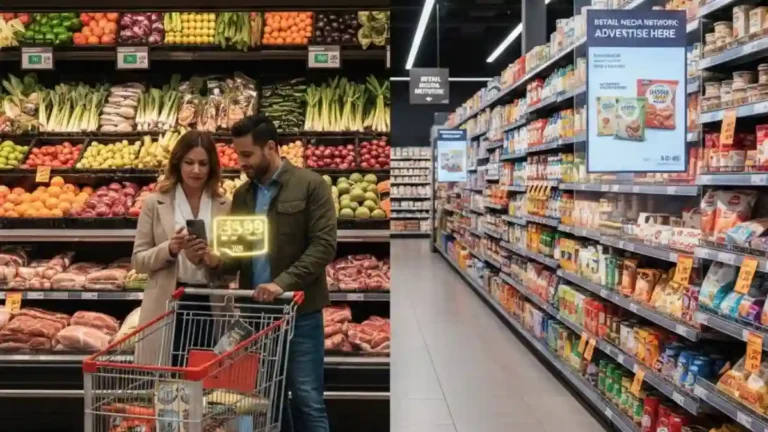
Retailers are monetising their loyalty ecosystems by selling high-margin digital advertising to the very brands they negotiate with. These retail media networks are expected to reach €20.8 billion in Europe by 2026, with margins that can exceed 80%.
The implication is clear:
Retail media is becoming the mechanism that allows supermarkets to keep food prices competitive while protecting profitability.
What supermarkets should watch in 2026
Several themes are emerging clearly from the December data:
- Negotiation stalemates: Expect more brand de-listings where price hikes are not backed by transparent cost data.
- Loyalty walls: Generic discounts are fading. The best prices are increasingly locked behind app-based loyalty programmes, which also fuel retail media growth.
- Plateau management: The core challenge for 2026 is not rising prices, but managing consumer frustration with prices that refuse to return to 2021 levels.
The Bottom line For The Grocery Sector
The latest EU food inflation figures confirm that the crisis phase is over — but the adjustment phase is far from settled.
Supermarkets are now operating in a market where:
- Costs are no longer surging
- Prices are no longer climbing rapidly
- But margins, trust and loyalty remain under pressure
How retailers balance pricing, private label expansion, supplier relationships and retail media monetisation will define competitive performance in 2026.
Editorial note: This analysis is based on official EU food inflation data published by Eurostat on 17 December, using the Harmonised Index of Consumer Prices (HICP), alongside established industry benchmarks on retail margins, private label performance and retail media growth.