
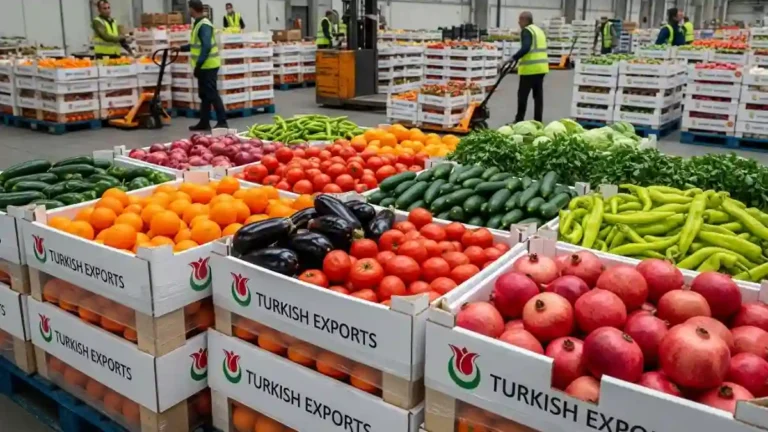

Turkish fresh produce exports have fallen sharply this year after severe spring frost damaged crops across key growing regions.
Export volumes are now expected to be almost 30% lower than in 2024, continuing a multi-year downward trend. Total exports are forecast to reach just over 3.0 million tonnes in 2025, down from 4.1 million tonnes in 2024 and around 4.7 million tonnes in 2023.
Just a few years ago, Turkey exported more than 5 million tonnes of fresh produce a year.
The frost had the strongest impact on fruit production, reducing both yields and export availability. Vegetables were also affected, but to a lesser extent.
Russia Still leads, Europe Also Affected
Exports declined to almost all destination markets this year. Russia remains Turkey’s largest customer, accounting for just under 30% of total exports.
However, shipments to Russia dropped by more than 25% in the first ten months of the year. Volumes are now expected to fall below 1 million tonnes for the first time in many years.
Exports to other markets also fell sharply. Combined exports to non-Russian destinations reached just over 2.1 million tonnes in the first ten months of 2025, compared with nearly 3.0 million tonnes in 2024 and around 3.4 million tonnes in 2023.
After Russia, key buyers include Iraq, Ukraine, Romania, Germany, and Syria. The decline in volumes is likely to affect Germany fresh produce supply planning, especially for categories where Turkish imports play an important seasonal role.
Declines Accelerated From April
The export downturn became more pronounced from April 2024, when frost damage began to limit supply. The downward trend continued through 2025, with no strong recovery during the main export months.
Almost all major product groups recorded lower shipments.
Mandarins, Turkey’s most important export fruit, saw a relatively limited decline of 7%. Lemons were hit much harder, with exports down 40% in the first ten months of the year, following an earlier drop in 2024.
Tomato exports, the third-largest category, fell by around 25% over the same period.
Apple exports collapsed, falling to less than half of last year’s volume. Even sharper drops were recorded for peaches, nectarines, and oranges, where exports fell to roughly one-third of 2024 levels.
A few exceptions
Not all categories declined. Watermelons, onions, and cucumbers recorded higher export volumes this year.
Watermelon exports are expected to reach a record level, while onion exports, although higher, remain below peaks seen several years ago.
Why It Matters
Turkey is a major supplier of fresh fruit and vegetables to Europe. A sustained export decline tightens availability, increases sourcing pressure, and may influence seasonal pricing across multiple markets.
For European retailers and importers, including those focused on the Germany market, the trend highlights growing climate-related supply risks and the need for more diversified sourcing strategies.
Editor’s note: Based on market data from Fruit and Vegetable Facts, published December 23, 2025.