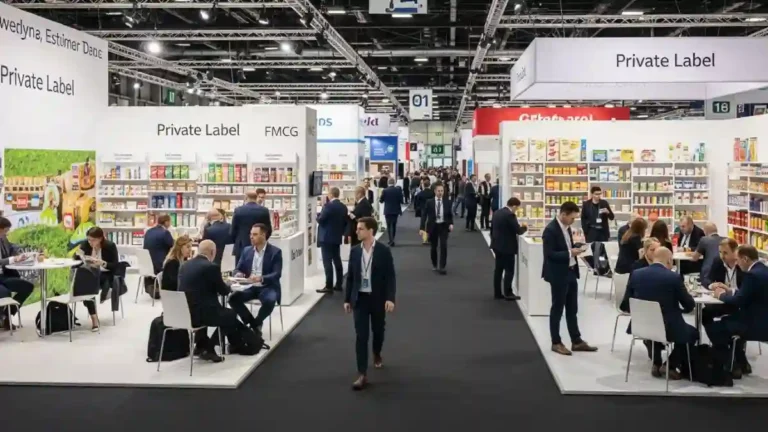

The Netherlands does not host many grocery and FMCG trade events, but the ones it does host play a direct role in private label and supplier decision-making.
Dutch buyers are structured, cost-led, and highly focused on execution. Trade events here are not about visibility. They sit inside buying cycles and are used to confirm suppliers, pricing, and readiness.
This guide explains which Netherlands trade events matter for grocery, private label, and FMCG, who should attend them, and what actually gets decided at each stage.
Why Netherlands Trade Events Matter For Grocery And FMCG
The Dutch retail market is mature and disciplined.
Private label penetration is high.
Buyers focus on cost, quality, and delivery reliability.
Packaging, compliance, and logistics are treated as operational basics.
Many Dutch buying teams influence listings beyond their own market, particularly in Belgium and parts of Germany. That gives Netherlands-based meetings more weight than the country’s size suggests.
As a result, trade events in the Netherlands tend to align closely with real commercial decisions.
PLMA World Of Private Label, Amsterdam
PLMA World of Private Label is the most important private label trade event in the Netherlands and a fixed point in the European grocery calendar.
It is not a discovery-driven exhibition.
It is a decision-focused working event.
Who it is for: Private label buyers, own-label manufacturers, and packaging or ingredient suppliers supporting active private label bids.
What deals get done: Supplier shortlisting, pricing validation, range gap discussions, and follow-up negotiations linked to autumn and winter listings.
Timing reality: By late May, most buyers already have category priorities and target cost levels defined. PLMA is where suppliers demonstrate that they can meet those requirements in practice.
For anyone operating seriously in Private Label Netherlands, this event is non-negotiable.
Other Netherlands Trade Events That Matter
Beyond PLMA, the Netherlands hosts a small number of trade events that support different stages of the buying and development process.
These events are not substitutes for PLMA. Each serves a specific role.
Packaging Events: Where Compliance And Cost Are Tested
Packaging-focused trade events in the Netherlands are typically smaller and more technical than broad FMCG shows.
Who they are for: Packaging suppliers, private label manufacturers, and buyers responsible for compliance, materials, and cost control.
What happens: Material comparisons, regulatory discussions, cost trade-offs, and sustainability claims tested against real requirements.
These events often prevent problems later in the buying cycle. Suppliers that fail packaging or compliance checks here frequently struggle during retailer reviews.
This is where the Packaging hub relevance sits, especially for regulation-led categories.
FMCG And Ingredient Forums: Early Signal Events
Smaller FMCG and ingredient-led forums play a different role in the Netherlands trade landscape.
Who they are for: Product development teams, ingredient suppliers, and technical buyers.
What happens: Early formulation discussions, cost-reduction exploration, and functional benchmarking.
These events are not where listings are secured. They shape what products, formats, and cost structures may appear later during buyer meetings or at PLMA.
Netherlands Trade Events At A Glance
This table summarises how the Netherlands trade calendar fits together in practice.
| Event | City | Month | Best for | Why it matters |
|---|---|---|---|---|
| PLMA World of Private Label | Amsterdam | May | Private label buyers & suppliers | Supplier shortlisting, pricing validation, range decisions |
| Packaging trade events | Amsterdam / Utrecht | Sep–Oct | Packaging & compliance teams | Regulation readiness, material cost control |
| FMCG & ingredient forums | Amsterdam / Rotterdam | Spring / Autumn | Product & technical teams | Early-stage innovation and cost signals |
Who Should Attend Which Events
Retail buyers: PLMA is the main working event for supplier evaluation and range alignment. Packaging events support regulatory and cost-risk management.
Private label suppliers: PLMA is essential. Packaging events reduce the risk of late-stage rejection. Ingredient forums support long-term pipeline planning.
Packaging suppliers: Packaging-focused trade events should be the priority. PLMA is relevant only when supporting active private label bids tied to retailer programs.
Timing Strategy Across The Year
A practical Netherlands trade-event strategy usually follows this pattern:
Autumn: Packaging and compliance validation
Winter: Early supplier and concept discussions
Spring: Sampling and pre-PLMA meetings
May: PLMA for validation, negotiation, and next steps
Companies that treat these events as isolated appearances often miss momentum. Those that treat them as checkpoints tend to perform better.
Why This Matters Beyond The Netherlands
Decisions influenced at Dutch trade events often affect listings in neighbouring markets, particularly Belgium and parts of Germany.
This is why the Netherlands consistently plays an outsized role in private label and supplier selection, despite hosting relatively few events.
Final Thought
PLMA is the centre of decision-making.
Packaging events reduce execution risk.
FMCG forums signal what comes next.
The Netherlands does not need many trade events.
The few it has sit directly inside how grocery and private label decisions are made.