
Marks & Spencer Food has launched a new private-label range aimed at addressing persistent nutrition gaps in the UK diet, with a focus on fibre, vitamins, and essential minerals.
The new Nutrient Dense range reflects growing concern across public health, retail, and FMCG sectors that many consumers are eating less overall, while still failing to meet daily nutrient requirements. For retailers, the launch signals a continued shift toward health-led own-label development, designed to support changing lifestyles, ageing populations, and the impact of weight-loss medication on eating habits.
Product Overview: A Health-Led Private-Label Range
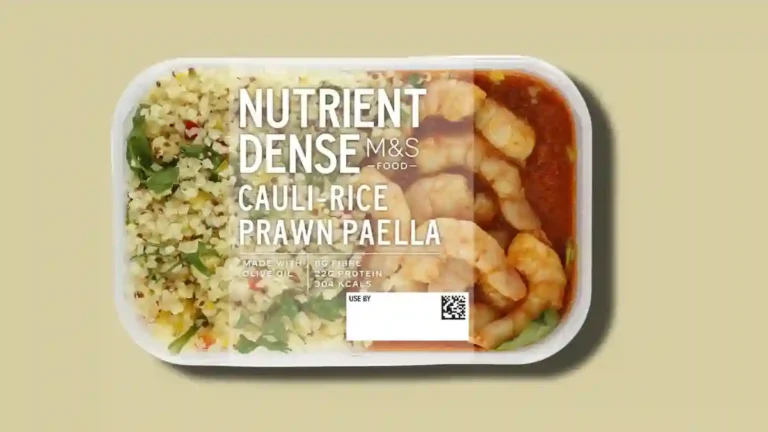
The Nutrient Dense range consists of 20 private-label SKUs, including salads, snacks, meals, drinks, and bakery items.
Products were developed jointly by M&S chefs and in-house nutritionists, using wholefoods and everyday ingredients, with the aim of delivering more nutrients per calorie. Each product contains at least one of ten essential micronutrients, including vitamin D, iron, folate, and vitamin B12.
All items are clearly signposted in store with grams of fibre listed on pack, are calorie controlled, and carry the Eat Well flower logo, helping shoppers identify healthier choices quickly at shelf.
Why Nutrient Density Matters For Today’s Consumers
Nutrient density is becoming a critical concept in food retail, particularly as some consumers eat smaller portions due to age, lifestyle changes, or the use of weight-loss medication.
In these cases, lower calorie intake can result in insufficient fibre and micronutrient consumption. Foods that deliver a higher concentration of nutrients relative to calories help mitigate this risk, ensuring nutritional adequacy even when portion sizes are reduced.
For retailers, this creates demand for ranges that combine health positioning, functional benefits, and convenience, without requiring major behavioural change from shoppers.
UK Nutrition Gap: Fibre And Micronutrient Shortfalls
According to the National Diet and Nutrition Survey 2025, 96% of the UK population does not meet the recommended daily fibre intake of 30g. The same data highlights widespread shortfalls in key micronutrients, including iron, vitamin D, and folate.
M&S research also indicates that 79% of shoppers consider healthy eating important when doing their main grocery shop, particularly for breakfast and midweek meals consumed at home. This reinforces the role of supermarkets in shaping daily nutrition through accessible, clearly signposted products.
Expert Insight From M&S Food
Grace Ricotti, Head of Food Nutrition at M&S Food, said the range was designed to support health without increasing complexity for shoppers.
“Our Nutrient Dense range is perfect for customers looking to support their health, as each recipe is packed with the key nutrients we all need in our diets.”
She highlighted that reduced appetite, particularly linked to weight-loss injections, increases the importance of nutrient density.
“With the increase in popularity of weight-loss injections, a reduced appetite can mean missing out on important nutrients, and that’s why nutrient density is so important.”
Ricotti added that fibre intake remains a major concern.
“The importance of us all eating enough fibre cannot be overestimated. Products such as our Nutrient Dense Super Seeded Oaty Bread, which delivers 13g of fibre in two slices, are aimed at making it easier for customers to reach the recommended 30g a day.”
Product launch Details
The Nutrient Dense range launches across M&S Foodhalls on 5 January 2026.
Highlighted products include:
Super Seeded Oaty Bread, delivering 13g of fibre per two slices
H₅O Shot, a fibre-rich drink made with coconut water, cold-pressed ginger juice, fruit and vegetable fibres, sea moss, and five botanicals
The H₅O Shot provides 4g of fibre per serving and is high in iodine, with its botanical ingredients verified by scientists at the Royal Botanic Gardens, Kew.
What This Means For Retailers And Buyers
For supermarket buyers and wholesalers, the Nutrient Dense range demonstrates how UK private label is increasingly being used to address public health priorities, not just price and margin.
The range offers retailers an opportunity to:
Meet rising demand for health-led food solutions
Support shoppers eating less but seeking better nutrition
Strengthen own-label credibility in functional and wellness-focused categories
Stocking nutrient-dense private-label ranges also allows retailers to align more closely with national dietary goals while maintaining control over formulation, pricing, and shelf presentation.
Editor’s note: This article is based on Marks & Spencer Food’s official press release and product launch materials issued on 30 December 2025,