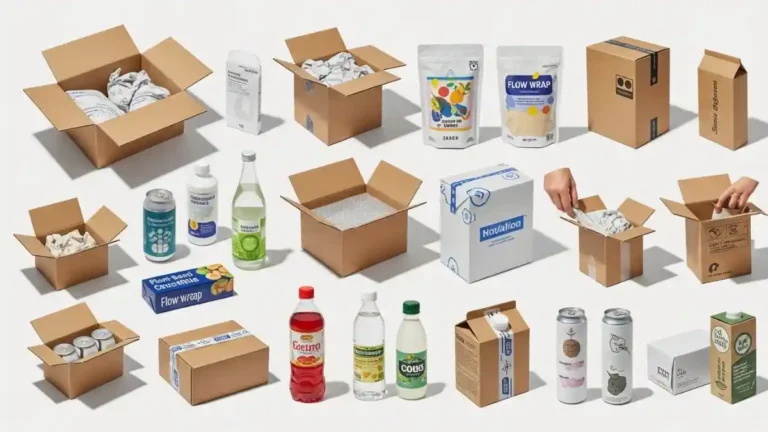

Finland’s packaging sector sits at the centre of the European food and FMCG supply chain.
The country combines three strengths:
- access to forest-based raw materials
- advanced board technology
- export-driven industrial groups that supply cartons, flexible packaging and foodservice materials worldwide
In recent fiscal cycles, Finnish-headquartered companies have stayed structurally important to supermarket private label programs, global beverage brands and international quick-service chains.
The market is highly concentrated at the top.
A small number of multinational forest and packaging groups account for most revenue. This revenue is linked to fibre-based food packaging, specialty materials and consumer board exports.
Below is a revenue-led ranking based on publicly available FY2024–FY2025 financial disclosures.
Revenue and Global Footprint Overview (FY2024–FY2025)
| Company | Revenue (Latest FY) | Fiscal Year | Employees | Countries of Operation | Core FMCG Packaging Exposure |
|---|---|---|---|---|---|
| UPM-Kymmene | ~€10–11bn (Group) | FY2024 | ~17,000 | 40+ | Barrier papers, labels |
| Stora Enso | ~€9–10bn (Group) | FY2024 | ~20,000 | 30+ | Folding boxboard, containerboard |
| Huhtamaki | ~€4–4.5bn | FY2024 | ~18,000 | 35+ | Flexible & foodservice |
| Ahlstrom | ~€3bn (Group) | FY2024 | ~7,000 | 20+ | Food-contact fibre materials |
| Metsä Board | ~€2bn | FY2024 | ~2,500 | 30+ | Premium folding boxboard |
| Walki Group | ~€700–800m | FY2024 | ~1,700 | 10+ | Barrier laminates |
| Pyroll | ~€150m+ | FY2024 | ~500 | Nordic focus | Flexible packaging |
| Westpak Group | ~€100m+ | FY2024 | ~400 | Europe | Retail packaging |
| Starcke Oy | ~€50m+ | FY2024 | ~300 | Finland + exports | Printed cartons |
| Marvaco | ~€40m+ | FY2024 | ~200 | Nordic + EU | Packaging prepress |
Revenue figures reflect total group revenue where specified. Packaging-specific revenue may be a segment of total operations in diversified forest industry groups.
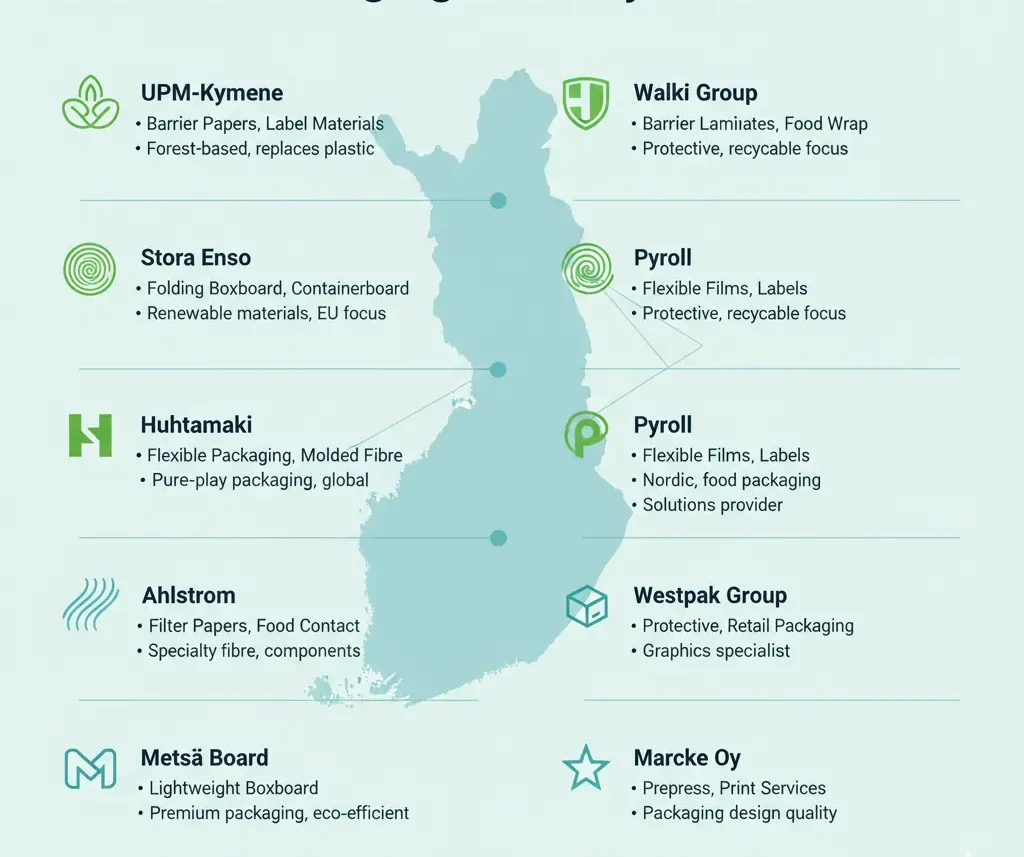
1. UPM-Kymmene
UPM was founded in 1996 through the merger of Kymmene and Repola. It is one of Finland’s largest forest-industry groups.
Core packaging-related categories:
- Barrier papers
- Specialty food wrapping papers
- Label materials
- Renewable flexible packaging substrates
Why it matters to supermarket buyers
UPM’s packaging exposure sits mainly within Specialty Papers and Raflatac label materials.
Pulp and energy operations contribute significantly to overall turnover. But UPM’s barrier paper development has become structurally important as retailers move away from fossil-based flexible plastics.
UPM’s materials are built into European supermarket own-brand packaging and food export programs. Its innovation focus centres on fibre-based replacement materials that work with existing converting lines.
Its latest development extends that barrier technology into grease-resistant paper for food labels.
2. Stora Enso
Stora Enso was established in its modern form in 1998, with historical roots dating back centuries. It operates across renewable materials and packaging board.
Core packaging categories:
- Folding boxboard
- Containerboard
- Corrugated packaging
- Barrier-coated fibre board
Why it matters to supermarket buyers
The company’s Packaging Materials division represents a significant share of revenue. Its board is widely used in frozen food cartons, dairy packaging, confectionery and beverage multipacks.
Stora Enso holds a strategic position in European cartonboard supply.
Recent capacity investments have targeted premium lightweight board and renewable barrier technologies. These are designed to meet tightening EU packaging regulations.
3. Huhtamaki
Founded in 1920, Huhtamaki is Finland’s largest pure-play packaging company.
Core categories:
- Flexible packaging
- Foodservice packaging
- Molded fibre solutions
- Retail food containers
Why it matters to supermarket buyers
Unlike diversified forest groups, Huhtamaki’s revenue is mainly packaging-driven. It supplies quick-service restaurant chains, global beverage brands and supermarket private label programs.
It has production sites across Europe, Asia and the Americas. This gives Huhtamaki exposure to high-growth emerging markets alongside mature EU retail systems.
Recent strategy has focused on recyclable flexible packaging and molded fibre as alternatives to rigid plastics.
4. Ahlstrom
Founded in 1851, Ahlstrom operates as a specialty fibre materials supplier.
Core packaging-related materials:
- Coffee filter papers
- Baking papers
- Food contact materials
- Sustainable fibre substrates
Why it matters to supermarket buyers
Ahlstrom is not a traditional carton producer. Instead, it supplies critical fibre components built into food packaging systems.
Its global manufacturing footprint supports multinational coffee, food and filtration brands.
Its strategy emphasises specialty materials with higher margins and regulatory-compliant food-contact performance.
5. Metsä Board
Metsä Board, part of Metsä Group, traces its origins to the Finnish forest cooperative system.
Core categories:
- Premium lightweight folding boxboard
- White kraftliners
Why it matters to supermarket buyers
The company’s board is positioned in high-end retail and food packaging. Here, strength-to-weight performance reduces material use and transport emissions.
Metsä Board has invested in mill modernisation to increase efficiency and lower Scope 1 and 2 emissions intensity.
Its revenue scale is smaller than Huhtamaki and Ahlstrom. But its strategic position in premium FMCG packaging remains significant.
6. Walki Group
Founded in 1930s Finland, Walki specialises in barrier laminates and protective packaging materials.
Core categories:
- Recyclable barrier laminates
- Food wrapping materials
- Industrial protective packaging
Walki’s customer base includes food producers that need moisture and oxygen barrier solutions.
The group has expanded internationally. It focuses on sustainable multilayer material redesign to meet EU recyclability requirements.
7. Pyroll
Established in 1973, Pyroll focuses on flexible packaging and label solutions.
Core categories:
- Food packaging films
- Printed packaging
- Label production
Its operations are mainly Nordic, serving domestic food producers and retailers.
8. Westpak Group
Westpak operates as a packaging solutions provider across retail and industrial sectors.
Core categories:
- Protective packaging
- Retail packaging
- Industrial packaging solutions
While smaller in scale, the company supports Finnish manufacturing exports.
9. Starcke Oy
Starcke is a printed packaging specialist.
Core categories:
- Printed cartons
- FMCG packaging graphics
The company operates mainly within Finland, with selective export activity.
10. Marvaco
Founded in 1934, Marvaco focuses on flexographic prepress solutions.
Core categories:
- Packaging design prepress
- Print reproduction services
Marvaco is not a board manufacturer. Even so, it plays a critical role in retail packaging production quality across Nordic FMCG brands.
Market Structure Impact
Finland’s packaging sector is shaped by vertically integrated forest ownership. Large groups control fibre sourcing, pulp production and board manufacturing. This creates structural cost advantages.
This integration provides resilience during raw material volatility cycles and energy price shocks.
At the same time, pure-play packaging groups such as Huhtamaki run asset-light flexible packaging networks globally. This reduces their dependency on domestic fibre cycles.
Category Dominance Trends
Fibre-based board remains the dominant export category.
Key trends include:
- Lightweighting of folding boxboard
- Replacement of plastic barrier layers
- Growth in molded fibre foodservice packaging
- Increasing demand for recyclable flexible packaging
EU regulatory pressure under packaging waste directives continues to shape capital allocation.
Industry Direction
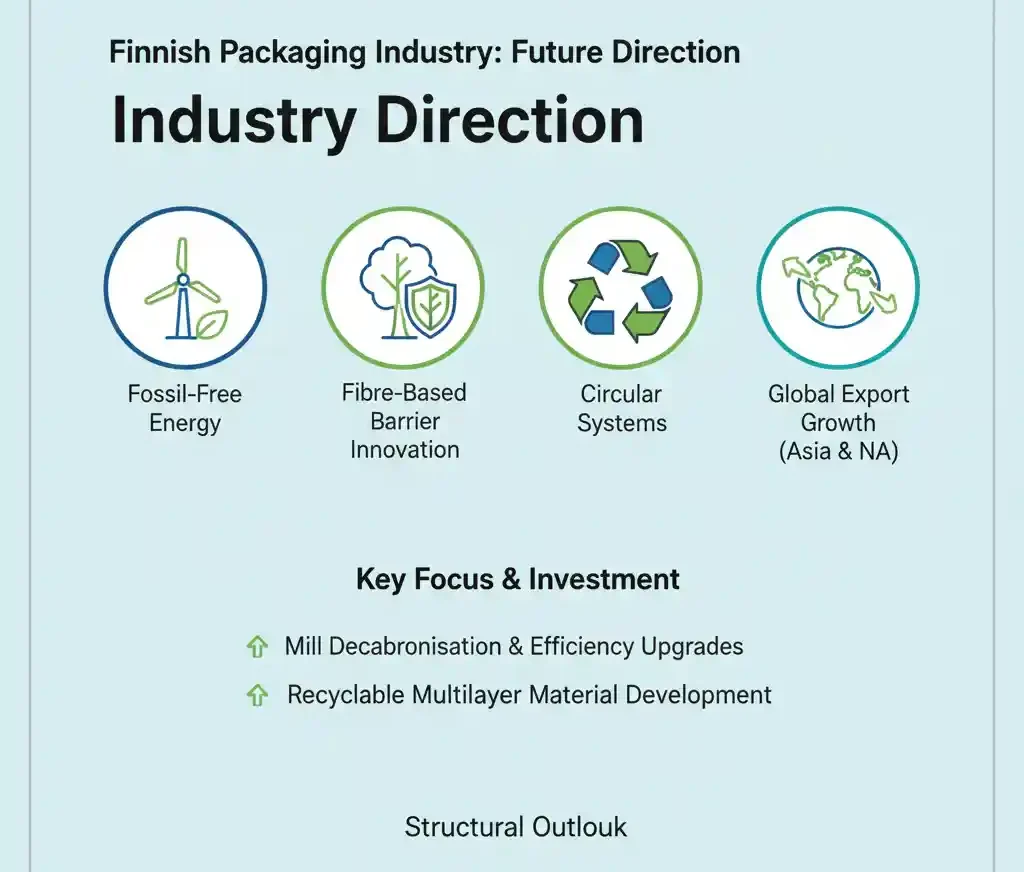
The Finnish packaging ecosystem is transitioning toward:
- Fossil-free production energy
- Fibre-based barrier innovation
- Circular material systems
- Export growth in Asia and North America
Investment has increasingly targeted decarbonisation of mills and development of recyclable multilayer alternatives.
Structural Outlook
Revenue concentration at the top is expected to remain high.
UPM and Stora Enso will likely keep scale advantages through integrated forest supply chains.
Huhtamaki’s global footprint positions it well in flexible and foodservice growth markets.
Mid-sized players such as Walki and Pyroll may focus on specialisation and sustainable niche materials rather than scale competition.
Finland will continue to serve as a core supplier to European supermarket packaging systems. This is especially true in premium cartonboard and renewable material segments.
Frequently Asked Questions
What is the largest packaging company in Finland by revenue?
UPM-Kymmene leads the ranking, with group revenue of about €10–11bn in FY2024. Its packaging exposure sits mainly in Specialty Papers and Raflatac label materials.
Which is Finland’s largest pure-play packaging company?
Huhtamaki, founded in 1920, is Finland’s largest pure-play packaging company. Its FY2024 revenue was about €4–4.5bn.
What trends are shaping Finnish packaging?
Key trends include lighter folding boxboard, replacement of plastic barrier layers and growth in molded fibre foodservice packaging. Demand for recyclable flexible packaging is also rising.
Conclusion
Finland’s packaging sector remains structurally important to European food and FMCG supply chains.
The largest revenue generators are diversified forest groups. Pure-play packaging firms provide category-specific leadership in foodservice and flexible materials.
Their output is closely embedded in Finland supermarket supply chains. There, fibre-based cartons and recyclable materials increasingly define shelf presentation and compliance standards.
The direction of travel is clear. Fibre-based innovation, decarbonisation and export-oriented growth will define the next phase of Finnish packaging development.
This shift is also reinforcing Finland private label expansion. Retailers are prioritising renewable materials, lightweight board and simpler packaging structures across own-brand food ranges.
Editor’s Note: All financial information is based on publicly available FY2024–FY2025 company annual reports and disclosures. Revenue figures reflect total group revenue where applicable. Currency figures are presented in euros as reported by each company.