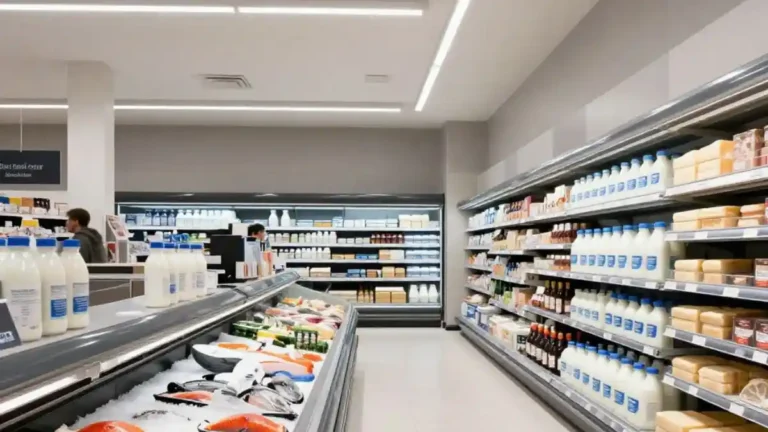

Norway’s fast-moving consumer goods sector combines domestic agricultural cooperatives, global seafood exporters and established packaged food manufacturers. They supply supermarket chains across the Nordic region.
The top 10 FMCG companies in Norway reflect a unique industry structure. Farmer-owned organisations operate alongside large branded food groups and internationally competitive seafood producers.
The ranking is hybrid. It considers both revenue scale and structural importance in Norway’s grocery ecosystem. The companies included are:
- Orkla ASA
- TINE SA
- Nortura SA
- Mowi ASA
- SalMar ASA
- Lerøy Seafood Group
- Bama Gruppen
- Kavli Holding
- HOFF SA
- Hennig-Olsen Is
Together they represent the core of Norway’s consumer food manufacturing system. They play an essential role in supplying supermarkets domestically while exporting Norwegian food products to global markets.
Ranking Overview
| Rank | Company | Headquarters | FY Revenue | Core FMCG Segments | Supermarket Relevance |
|---|---|---|---|---|---|
| 1 | Orkla ASA | Oslo | NOK 70.7B (FY2024) | Branded packaged foods, snacks, sauces | Major Nordic grocery brand portfolio |
| 2 | TINE SA | Oslo | ~NOK 28B (FY2024) | Dairy products, cheese, milk | Dominant dairy supplier to Norwegian supermarkets |
| 3 | Nortura SA | Oslo | NOK 31.6B (FY2024) | Meat, poultry, processed foods | Primary meat supplier through brands like Gilde |
| 4 | Mowi ASA | Bergen | €5.6B (FY2024) | Salmon, seafood products | Global seafood brand supplying retail chains |
| 5 | SalMar ASA | Frøya | ~NOK 21B (FY2024) | Farmed salmon | Export seafood and retail seafood supply |
| 6 | Lerøy Seafood Group | Bergen | NOK 31.1B (FY2024) | Seafood farming, processing | Retail seafood distribution across Europe |
| 7 | Bama Gruppen | Oslo | ~NOK 24B (FY2024) | Fresh produce distribution | Key fruit and vegetable supplier to supermarkets |
| 8 | Kavli Holding | Bergen | ~NOK 5B (FY2024) | Cheese spreads, sauces | Strong branded grocery presence |
| 9 | HOFF SA | Gjøvik | ~NOK 1.5B (FY2024) | Potato products, frozen foods | Major potato supplier to retail and foodservice |
| 10 | Hennig-Olsen Is | Kristiansand | ~NOK 1.6B (FY2024) | Ice cream | Leading Norwegian ice cream brand |
The ranking reflects a hybrid methodology combining revenue scale and structural supply chain importance. Several companies operate cooperative ownership models closely tied to Norwegian agriculture. Others are export-driven seafood producers that increasingly supply consumer-ready products to retail markets worldwide.
1. Orkla ASA
- Founded: 1654 (modern FMCG group structure developed during the 20th century)
- Headquarters: Oslo, Norway
- FY Revenue: NOK 70.7 billion (FY2024)
- Employees: about 21,000
Orkla’s latest ownership disclosure showed that an Orkla CFO-linked company bought 20,000 shares, providing additional context for readers monitoring management-aligned ownership in the Norwegian consumer-goods group.
Core Segments
- Packaged food brands
- Snacks and confectionery
- Sauces, condiments and ready meals
- Health and personal care products
- Nordic grocery brands
Operational Relevance
Orkla is the largest branded consumer goods group headquartered in Norway and one of the most influential FMCG companies in the Nordic region.
The company owns a wide portfolio of well-known grocery brands. They appear regularly on supermarket shelves across Norway, Sweden, Denmark and Finland.
Orkla’s products span several everyday grocery categories, from snacks and condiments to bakery ingredients and ready meals.
Its strong brand recognition and broad product portfolio allow the company to maintain close partnerships with major supermarket chains operating across Scandinavia.
Market Position
Within Norway’s consumer goods market, Orkla holds a dominant position as a branded food manufacturer rather than a commodity food producer.
Its portfolio strategy focuses on developing regional brands that maintain strong market shares within Nordic grocery markets.
This approach allows the company to compete effectively against multinational consumer goods groups while maintaining a strong domestic presence.
Strategic Direction
Orkla has increasingly focused on strengthening its core food and consumer goods divisions while streamlining parts of its broader industrial portfolio.
Investments in product innovation, digital retail partnerships and sustainable packaging have become central components of the company’s strategy. It continues expanding its branded grocery offerings across Nordic markets.
2. TINE SA
- Founded: 1856 (cooperative origins)
- Headquarters: Oslo, Norway
- FY Revenue: about NOK 28 billion (FY2024)
- Employees: around 8,000
Core Segments
- Milk and dairy beverages
- Cheese production
- Yogurt and cultured dairy products
- Butter and cream
- Dairy ingredients
Operational Relevance
TINE is Norway’s largest dairy cooperative and one of the most important organisations in the country’s agricultural supply chain.
Owned by Norwegian dairy farmers, the cooperative collects milk from farms across the country. It processes the milk into a wide range of consumer products sold in supermarkets nationwide.
Its logistics and processing infrastructure ensure that dairy products remain widely available across Norway’s grocery retail network.
Market Position
The cooperative dominates the Norwegian dairy sector and supplies many of the most widely consumed dairy products in the country.
TINE’s product range appears across nearly all supermarket chains, making the company a central component of Norway’s grocery distribution system.
Strategic Direction
TINE continues to invest in modernising production facilities while developing new dairy products that reflect evolving consumer preferences.
Sustainability initiatives and export development have also become part of the cooperative’s broader strategy as it adapts to changing market conditions.
3. Nortura SA
- Founded: 2006 (merger of several agricultural cooperatives)
- Headquarters: Oslo, Norway
- FY Revenue: NOK 31.6 billion (FY2024)
- Employees: about 5,500
Core Segments
- Beef and pork processing
- Poultry production
- Processed meat products
- Packaged ready-to-cook foods
Operational Relevance
Nortura is Norway’s largest meat producer and a cooperative owned by thousands of Norwegian farmers.
The organisation processes livestock across multiple facilities. It supplies supermarkets with fresh and processed meat products under established brands such as Gilde and Prior.
Nortura’s nationwide procurement network connects livestock farmers directly with the retail food system.
Market Position
The company plays a central role in the Norwegian meat industry and represents a major supplier to the country’s grocery retailers.
Its scale and cooperative structure allow it to maintain stable supply chains. These support both agricultural producers and supermarket distribution networks.
Strategic Direction
Nortura continues investing in production efficiency and product development, particularly within convenience foods and ready-to-cook products.
These investments reflect broader consumer demand for prepared meals and packaged grocery items.
4. Mowi ASA
- Founded: 1964
- Headquarters: Bergen, Norway
- FY Revenue: about €5.6 billion (FY2024)
- Employees: around 11,000
Core Segments
- Atlantic salmon farming
- Processed seafood products
- Packaged retail seafood
- Global seafood distribution
Operational Relevance
Mowi is the world’s largest salmon producer and one of Norway’s most internationally recognised food companies. Its vertically integrated operations span fish farming, processing, packaging and global distribution.
Mowi products appear in supermarkets across Europe, North America and Asia. This makes the company one of the most influential seafood suppliers in the global retail market.
Market Position
Within Norway’s food industry, Mowi represents the export-oriented seafood segment that has become one of the country’s most important food industries.
Its production scale and international distribution network allow Norwegian seafood to reach retail markets worldwide.
Strategic Direction
The company continues investing in aquaculture technology, sustainability initiatives and value-added seafood products designed specifically for supermarket distribution.
5. SalMar ASA
- Founded: 1991
- Headquarters: Frøya, Norway
- FY Revenue: about NOK 21 billion (FY2024)
- Employees: around 2,000
Core Segments
- Salmon aquaculture
- Seafood processing
- Export distribution
Operational Relevance
SalMar is one of Norway’s largest salmon farming companies and a significant contributor to the country’s seafood export industry.
Its operations include fish farming facilities, processing plants and logistics infrastructure that distribute salmon to international retail markets.
Market Position
The company’s production scale and efficient aquaculture operations have made it one of the most competitive salmon producers globally.
Norwegian salmon remains a major retail seafood category in supermarkets around the world.
Strategic Direction
SalMar continues investing in offshore aquaculture technology and sustainable production systems designed to improve efficiency and environmental performance.
6. Lerøy Seafood Group
- Founded: 1899
- Headquarters: Bergen, Norway
- FY Revenue: NOK 31.1 billion (FY2024)
- Employees: about 6,000
Core Segments
- Salmon farming
- Seafood processing
- Retail seafood distribution
Operational Relevance
Lerøy Seafood Group operates across the entire seafood value chain, from aquaculture and processing to international distribution. Its seafood products are supplied to retailers across Europe and other global markets.
Market Position
The company is one of Norway’s largest seafood exporters and an important supplier of consumer-ready seafood products for supermarket retail.
Strategic Direction
Lerøy continues investing in advanced aquaculture technology, sustainable production methods and improved logistics infrastructure supporting seafood distribution.
7. Bama Gruppen
- Founded: 1886
- Headquarters: Oslo, Norway
- FY Revenue: about NOK 24 billion (FY2024)
- Employees: around 3,000
Core Segments
- Fresh fruits
- Vegetables
- Packaged produce
Operational Relevance
Bama Gruppen is Norway’s leading distributor of fresh fruits and vegetables.
The company connects global produce suppliers with domestic supermarket chains. This ensures year-round availability of fresh produce throughout the Norwegian grocery market.
Market Position
The company’s extensive logistics and sourcing network make it a central player within Norway’s fresh produce supply chain.
Strategic Direction
Bama continues expanding sustainable sourcing initiatives while strengthening distribution infrastructure that supports grocery retail and foodservice markets.
8. Kavli Holding
- Founded: 1893
- Headquarters: Bergen, Norway
- FY Revenue: about NOK 5 billion (FY2024)
- Employees: around 900
Core Segments
- Cheese spreads
- Sauces and condiments
- Processed dairy products
Operational Relevance
Kavli produces several well-known grocery brands sold widely across Scandinavian supermarkets. The company specialises in processed dairy and condiment products that appear across everyday grocery categories.
Market Position
Kavli’s specialty cheese spreads and sauces have built strong recognition within Nordic markets. This gives the company a stable position in several packaged food segments.
Strategic Direction
Kavli continues focusing on innovation and product development while expanding distribution across Nordic retail markets.
9. HOFF SA
- Founded: 1879
- Headquarters: Gjøvik, Norway
- FY Revenue: about NOK 1.5 billion (FY2024)
- Employees: around 500
Core Segments
- Frozen potato products
- Fresh potato products
- Convenience foods
Operational Relevance
HOFF processes potatoes supplied by Norwegian farmers and distributes packaged potato products to supermarkets and foodservice customers.
Market Position
The cooperative structure connects agricultural production with food manufacturing. This makes HOFF an important supplier in Norway’s grocery supply chain.
Strategic Direction
HOFF continues investing in modern processing facilities and new product development within the frozen and prepared potato category.
10. Hennig-Olsen Is
- Founded: 1924
- Headquarters: Kristiansand, Norway
- FY Revenue: about NOK 1.6 billion (FY2024)
- Employees: around 350
Core Segments
- Ice cream production
- Premium frozen desserts
Operational Relevance
Hennig-Olsen Is is Norway’s largest domestically owned ice cream manufacturer. It supplies supermarkets nationwide with a wide range of frozen dessert products.
Market Position
The company’s strong brand recognition and long history in the Norwegian market make it one of the most recognisable ice cream producers in the country.
Strategic Direction
Hennig-Olsen continues expanding its product portfolio while strengthening domestic distribution within the Norwegian retail sector.
Structural Analysis: Norway’s FMCG Manufacturing Landscape
Norway’s FMCG industry operates within a distinctive food production system. It is shaped by strong domestic agriculture and globally competitive seafood exports.
Many larger European markets are dominated by multinational corporations in consumer goods manufacturing. Norway’s food sector instead relies heavily on domestic producers and cooperatives. These maintain close connections with farmers and fisheries.
Agricultural cooperatives
Agricultural cooperatives remain central to this structure.
Organisations such as TINE and Nortura process milk and livestock from thousands of Norwegian farms. They distribute the resulting products across the country’s grocery retail network.
This model ensures stable income for farmers while maintaining national food production capacity.
Seafood companies
Seafood companies represent another major pillar of the Norwegian FMCG ecosystem.
Firms such as Mowi, SalMar and Lerøy Seafood Group operate global aquaculture and seafood distribution networks that supply supermarkets worldwide.
Norwegian salmon in particular has become one of the country’s most important food exports.
Branded packaged food manufacturers
Branded packaged food manufacturers such as Orkla and Kavli complement these production systems. They create consumer-focused grocery products sold across Nordic retail markets.
Their focus on product innovation and brand development allows them to compete effectively with global consumer goods companies.
Structural Analysis: Cooperative Food Production
Cooperative ownership structures play a significant role in Norway’s consumer food industry.
Many of the country’s largest food producers are owned directly by farmers. This allows agricultural producers to retain influence over processing, marketing and distribution of their products.
This model strengthens domestic agriculture by ensuring that profits generated by food manufacturing remain connected to farming communities.
TINE and Nortura are prominent examples of this structure, both representing thousands of farmer members across Norway.
Cooperatives also help maintain stable supply chains for supermarkets. They coordinate production volumes and manage distribution networks that connect farms with grocery retailers.
This organisational structure has allowed Norway to maintain a strong domestic food manufacturing base even as global food markets become increasingly competitive.
At the same time, corporate food manufacturers such as Orkla and seafood exporters such as Mowi operate alongside these cooperatives. This creates a diverse industry landscape that combines agricultural production with branded consumer goods manufacturing.
Structural Analysis: Export-Driven Food Industries
Exports play a central role in Norway’s food industry, particularly within the seafood sector.
The country has a relatively small domestic population. Even so, Norwegian seafood producers have developed extensive global distribution networks that supply fish products to supermarkets worldwide.
Salmon has become the most important export product within this sector.
Companies such as Mowi, SalMar and Lerøy Seafood Group produce large volumes of farmed salmon. These are distributed internationally through sophisticated logistics systems.
These companies increasingly produce consumer-ready packaged seafood products designed specifically for retail markets.
Beyond seafood, several Norwegian food companies export packaged grocery products across Nordic and European markets.
Branded manufacturers such as Orkla and Kavli distribute products across Scandinavia, expanding the international presence of Norwegian consumer goods brands.
Investments in sustainable production technologies and environmentally responsible aquaculture practices are also shaping the future of the industry.
These developments are expected to influence how Norwegian food products are produced, processed and distributed in the coming years.
Frequently Asked Questions
Which are the largest FMCG companies in Norway by revenue?
Orkla ASA leads with NOK 70.7 billion in FY2024 revenue. Nortura SA follows with NOK 31.6 billion, and Lerøy Seafood Group reports NOK 31.1 billion.
How is the Norway ranking built?
It uses a hybrid methodology. It combines revenue scale with each company’s structural importance in the supply chain.
Why are cooperatives important in Norwegian food production?
Many large producers, including TINE and Nortura, are owned directly by farmers. This lets farmers keep influence over processing, marketing and distribution.
Conclusion
The top 10 FMCG companies in Norway illustrate how the country’s consumer food industry combines domestic agricultural cooperatives, export-oriented seafood producers and established packaged food manufacturers.
Together these companies form the backbone of Norway’s grocery supply chain and supply supermarkets across the Nordic region and international markets. They also support the wider Norway supermarket sector and its evolving retail distribution networks.
While seafood exports continue to strengthen Norway’s global reputation as a food producer, domestic cooperatives such as TINE and Nortura remain essential to the country’s agricultural system. At the same time, branded consumer goods companies such as Orkla show how Norwegian food manufacturers compete within broader European FMCG markets. They also supply growing Norway private label programs across grocery retail.
As sustainability requirements, supply chain innovation and evolving consumer preferences reshape global food production, Norway’s FMCG companies continue investing in technology, logistics and product development. These efforts are closely linked to developments in Norway packaging innovation. Packaging plays an increasing role in improving product shelf life, sustainability performance and retail distribution efficiency across modern grocery supply chains.
Editor’s Note: This article is based on publicly available company reports, financial statements and industry disclosures. Revenue figures primarily reflect FY2024 results, the most recent widely reported fiscal year for many Norwegian food companies as of 2026.
Where companies do not publish exact audited figures, approximate values are used and clearly indicated. Currency values are presented in Norwegian Krone (NOK) or euros where relevant.