
Unilever reported its Q1 2026 results on 30 April, showing a return to volume-led growth as demand improved across key markets. Underlying sales rose 3.8%, driven mainly by a 2.9% increase in volumes, while pricing contributed 0.9%.
The performance marks a shift from recent quarters, where growth was largely price-driven. This time, higher product movement across categories played the main role, supported by strong demand in emerging markets.
Emerging markets delivered 5.7% growth, with India leading at 7% and Latin America returning to volume growth. Developed markets remained more subdued, with overall growth at 1.0%, reflecting softer conditions in Europe.
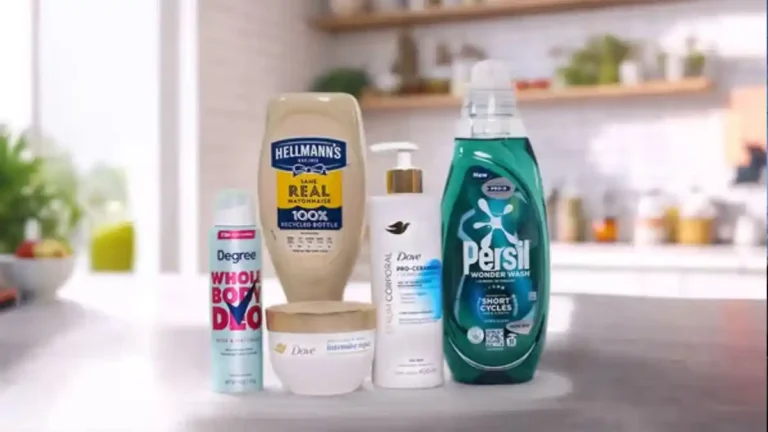
Across categories, Home Care led performance with 6.1% growth, driven almost entirely by volumes. Personal Care and Beauty & Wellbeing both posted mid-single-digit growth, supported by strong brand performance. Foods grew more modestly at 2.2%, with stable demand but weaker developed market conditions.
Turnover reached €12.6 billion, down 3.3% due to currency impacts, despite underlying growth. The company also confirmed a €1.5 billion share buyback programme and increased its quarterly dividend by 3%.
A key strategic move remains the planned combination of Unilever’s Foods business with McCormick & Company. The deal is expected to create a large global flavour platform, with projected cost synergies of around $600 million and completion targeted by mid-2027.
Portfolio reshaping also continued during the quarter, with multiple disposals and targeted acquisitions aimed at focusing on fewer, larger brands.
Why it matters
For supermarkets and suppliers, the shift back to volume-led growth signals a change in market dynamics. Retail performance is no longer relying mainly on price increases, but on actual product demand and shelf movement.
The combination of Unilever’s Foods business with McCormick could also reshape supply chains in sauces, condiments, and cooking ingredients. Larger, more integrated suppliers may gain stronger negotiating power with retailers.
At the same time, emerging markets are becoming more central to growth, which could influence sourcing strategies and long-term supply planning across global retail networks, especially within the broader UK FMCG landscape.
Unilever maintained its full-year outlook, expecting sales growth at the lower end of its 4% to 6% guidance range, with at least 2% volume growth. The next quarters will show whether this volume recovery can be sustained across both emerging and developed markets.
Editor’s Note: This article is based on Unilever’s official Q1 2026 financial results statement.