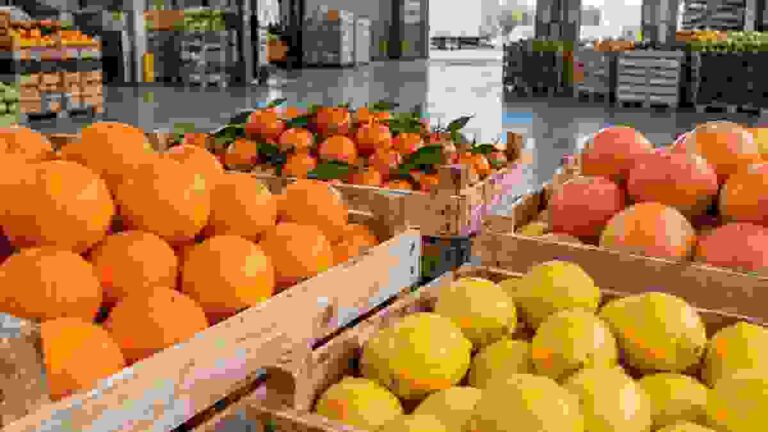

European supermarket buyers sourcing oranges, mandarins, lemons, limes and grapefruit can consider major citrus suppliers and importers including AMFRESH, Citri&Co, SanLucar, Greenyard, Omer-Decugis & Cie, KÖLLA, Bollo Natural Fruit, Jaguar The Fresh Company, Olympic Fruit and Eosta. The strongest partner is the one that can bridge European and Southern Hemisphere seasons while maintaining size, juice content, appearance, residue, packaging and service specifications.
Citrus is a year-round supermarket category built on seasonal handovers. Spain and other Mediterranean origins dominate important parts of the European season, while South Africa, Egypt, Morocco, Latin America and other origins help maintain continuity. That makes import planning and source diversification central to category performance.
This guide focuses on companies with clear citrus, fresh-produce and European retail relevance. Some are vertically integrated growers and packers; others are importers, marketers or broad produce service providers.
European citrus suppliers at a glance
| Company | Main European base | Strength | Buyer fit |
|---|---|---|---|
| AMFRESH | Spain / UK / Europe | Integrated citrus sourcing, breeding and retail programmes | Large supermarket groups |
| Citri&Co | Spain | Large-scale citrus growing and packing | High-volume European programmes |
| SanLucar | Spain / Germany | Premium branded fruit and sourcing | Retailers seeking differentiated quality |
| Greenyard | Belgium / pan-Europe | Integrated fresh-produce service | Multi-category retailer supply |
| Omer-Decugis & Cie | France | Import and distribution of exotic/fresh fruit | France and continental Europe |
| KÖLLA | Germany / Europe | International fruit sourcing and trade | Cross-border produce programmes |
| Bollo Natural Fruit | Spain | Citrus production and consumer brands | Spanish-origin and premium programmes |
| Jaguar The Fresh Company | Netherlands | Import, ripening and distribution | Benelux and European logistics |
| Olympic Fruit | Netherlands | Citrus import and distribution | European wholesale and retail |
| Eosta | Netherlands | Organic produce sourcing | Organic and sustainability-led citrus |
1. AMFRESH
AMFRESH is one of the most significant fresh-produce groups serving European retail and has deep citrus expertise. Its model combines production, sourcing, varietal development, packing and retailer programmes.
For supermarket buyers, that breadth can support long-term category planning rather than spot purchasing. The key tender questions are origin calendar, packing sites, exclusivity around varieties and how quality is managed during seasonal transitions.
2. Citri&Co
Spain-based Citri&Co is a major vertically integrated citrus platform with production and packing capability across key growing areas. It is highly relevant to retailers seeking large-volume oranges, mandarins, lemons and related citrus products.
Scale can improve continuity, but buyers should still inspect farm and pack-house diversification. Weather events can affect several farms in the same region at once.
3. SanLucar
SanLucar operates a consumer-facing premium fruit model across European markets. Citrus is part of a wider portfolio sold through supermarket partnerships.
The company is particularly relevant where retailers want category differentiation, stronger presentation and branded fruit rather than only commodity procurement.
4. Greenyard
Greenyard’s advantage is its broad relationship with supermarket fresh-produce departments. Citrus can be managed alongside other fruit and vegetable categories through a large sourcing and logistics network.
That can reduce supplier fragmentation, but buyers should compare citrus-specialist KPIs such as juice percentage, peel quality, sizing consistency and seasonal origin management.
5. Omer-Decugis & Cie
Omer-Decugis is a French fresh and exotic fruit importer and distributor with strong relevance to the French market. Its sourcing and distribution infrastructure can support citrus and broader tropical/fresh programmes.
6. KÖLLA
KÖLLA is an international fruit and vegetable trading group with European offices and a broad sourcing network. For citrus, the value lies in access to multiple origins and the ability to manage supply across different destination markets.
7. Bollo Natural Fruit
Bollo Natural Fruit has deep Spanish citrus roots and a strong consumer-facing fruit proposition. It is relevant to buyers looking for Spanish origin, premium positioning and consistent retail presentation.
8. Jaguar The Fresh Company
Netherlands-based Jaguar The Fresh Company operates in fresh produce import, handling and distribution. Its position in the Dutch logistics ecosystem gives it access to one of Europe’s most important entry points for imported fruit.
9. Olympic Fruit
Olympic Fruit is a Dutch fresh-produce company with citrus import and distribution experience. It is relevant to buyers and wholesalers using the Netherlands as a European consolidation hub.
10. Eosta
Eosta specialises in organic fruit and vegetables. For retailers building organic citrus ranges, its certified sourcing and sustainability communication can add value beyond the basic import function.
How supermarket citrus sourcing works
A year-round programme normally moves between several origins as seasons overlap. The retailer defines specifications for variety, count/size, class, colour, juice, brix or eating quality where relevant, residue requirements, packaging and delivery. The importer or service provider then manages growers, packing, shipping, inspections and final distribution.
What buyers should include in a citrus specification
- Approved origins and varieties.
- Size/count tolerances.
- Minimum juice or maturity requirements where appropriate.
- External colour and defect tolerance.
- Pesticide-residue and retailer-specific protocols.
- Waxing and post-harvest treatment requirements.
- Packaging, net weight and labelling.
- Temperature and transport conditions.
- Quality-claim and rejection procedure.
- Contingency origin for weather or logistics disruption.
What makes citrus sourcing difficult?
Citrus looks relatively robust compared with berries or salads, but the category is exposed to weather, water availability, plant disease, shipping delays, size-profile shifts and quality changes during storage. A season can produce enough tonnes overall while still creating a shortage in the sizes a supermarket actually sells.
Water availability and shipping pressures in 2026
Water risk needs to be assessed at orchard and irrigation-system level. Southern Spain should not be treated as one uniformly drought-restricted supply area: on 13 April 2026, the Guadalquivir river-basin authority announced approval of 1,200 million cubic metres of releases for the irrigation campaign. That basin-level allocation is not a guarantee of the water available to every citrus grower or a forecast of marketable fruit volumes.
For buyers, the practical check is the supplier’s water source, confirmed seasonal allocation and contingency plan. Where water stress occurs, it can affect production and fruit calibre as well as total yield. Ask for updated size forecasts by variety and farm, especially before committing to promotions requiring a narrow size band. A backup grower using the same constrained irrigation system may offer little additional protection.
Shipping conditions also remain route-specific. Maersk’s European market update of 9 September 2026 reported congestion at key North European and Mediterranean gateways. It also described the return of its AE19 and AE15 services to Suez as a limited change rather than a network-wide return, with routing decisions still dependent on security conditions.
That does not mean every Egyptian citrus shipment to Europe crosses the Red Sea. A direct sailing from Egypt’s Mediterranean coast to a European Mediterranean port does not need to pass through the Red Sea or Suez Canal. Buyers should therefore ask for the actual loading port, service, transshipment points and confirmed route before accepting a disruption surcharge or revised lead time.
For a citrus tender, convert these risks into delivery requirements: a realistic arrival window, confirmed refrigerated-container space, temperature records, an agreed minimum remaining shelf life and responsibility for delays or additional storage charges. Any extra transit allowance should be checked against fruit condition and saleable life rather than met simply by holding more stock.
- Water: identify the irrigation system, current allocation and alternative sources of supply.
- Calibres: obtain weekly size-distribution forecasts and agree acceptable substitutions before a shortage.
- Routing: confirm the loading port, carrier service, transshipment and contingency route.
- Arrival quality: set temperature-monitoring, inspection and remaining-shelf-life requirements.
- Commercial exposure: specify who pays additional freight, demurrage, storage and rejected-load costs.
Frequently asked questions
Which country is Europe’s main citrus supplier?
Spain is the most important EU citrus producer and a major source for European supermarkets. Imported fruit from countries including South Africa, Egypt, Morocco and other origins extends supply beyond the European season.
Why do supermarkets use citrus importers instead of buying directly?
Importers can consolidate origins, manage shipping and customs, perform quality control, re-pack fruit and provide local distribution. Large retailers may maintain direct grower relationships while still using service providers for these functions.
What is the difference between a citrus grower and an importer?
A grower produces fruit. An importer brings fruit into a market and may also pack, store, market or distribute it. Vertically integrated groups can do both.
How can retailers reduce citrus supply risk?
Use several origins, approve backup pack-houses, monitor crop and size forecasts early and avoid writing specifications so narrowly that commercially good fruit cannot be used when a season changes.
European citrus buying is a 12-month origin programme
No single origin covers every supermarket requirement all year. Spain dominates much of the European season, while South Africa, Egypt, Morocco, Türkiye and Southern Hemisphere suppliers fill different windows. The importer’s value is in managing those transitions without changing eating quality, size profile or residue specification every few weeks.
What citrus buyers should compare
| Area | Buyer requirement |
|---|---|
| Origins | Month-by-month supply calendar and backup countries |
| Packing | Loose, net, flowpack, punnet and private-label capability |
| Quality | Brix/acid, juice content, size, skin and defect tolerances |
| Residues | Retailer-specific MRL and pesticide protocols |
| Cold chain | Temperature management and claims process |
| Promotion | Ability to secure extra volume without weakening specification |
Why packhouse control matters
Citrus programmes can fail after good fruit has been grown. Grading, waxing where used, fungicide treatment, packing, temperature and transport determine how much product reaches the shelf saleable. Buyers should therefore audit the packhouse and service model, not only the orchard or headline origin.
Sources and verification
Company activities were checked against current public information from AMFRESH, SanLucar, Greenyard, Omer-Decugis, KÖLLA and other suppliers listed. Origin calendars and crop availability change each season and should be verified at tender stage.
Supply-chain context was checked on 15 September 2026 against the Guadalquivir river-basin authority’s irrigation announcement of 13 April 2026, Andalusian agricultural guidance on water stress in citrus, and Maersk’s European market update of 9 September 2026. Operational conditions should be reconfirmed for each growing area and booked sailing.