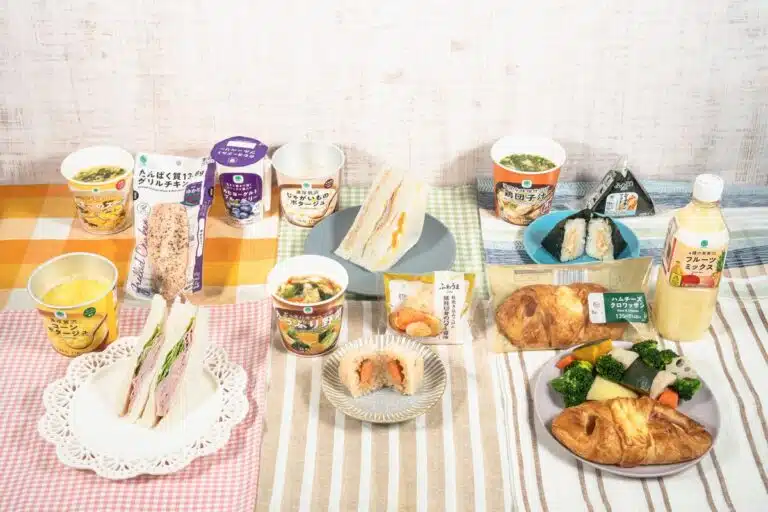

FamilyMart’s breakfast range, pictured in April 2026. The new meal deal covers selected products only. Image: FamilyMart.
FamilyMart will launch a ¥250 breakfast deal at about 16,100 Japanese stores on 15 September, pairing selected rice balls or bakery items with tea or coffee between 5am and 11am local time.
Announced on 14 September, the tax-inclusive offer covers 13 food lines and nine drinks, giving 117 combinations. It excludes Okinawa and some other areas; certain combinations in parts of Kagoshima cost ¥265.
A hand-wrapped salmon rice ball and 600ml green tea normally total ¥364 at the listed prices. The ¥250 bundle saves ¥114, or 31.3%, based on GTN’s calculation. Savings vary by selection, and other discounts cannot be combined with the offer.
The promotion changes how FamilyMart sells its morning meal. During a week-long campaign in May, customers had to buy two rice balls and an eligible tea to receive a ¥118 discount, effectively making the drink free. The new format reduces the food requirement to one item and brings bakery products and coffee into the same fixed-price proposition.
That distinction matters commercially. Rather than asking shoppers to build a larger basket before receiving a saving, FamilyMart is giving them a clearly priced two-item breakfast. The question for stores is whether the offer brings in additional morning visits or discounts purchases that customers would have made anyway.
The launch follows another value announcement from the retailer. On 2 September, FamilyMart said four rice-ball lines with seaweed wrapped directly around the rice would become ¥11 cheaper from 22 September. It attributed the reductions to lower rice market prices and a review of raw-material costs, while keeping fillings and product specifications unchanged.
Three further rice-ball products priced at ¥158 including tax are due on 29 September. Those changes form a separate programme from the breakfast bundle: the lower everyday prices and the morning-only offer should not be treated as the same discount.
FamilyMart has also been building breakfast occasions around its own-label range. In April, it promoted combinations of rice balls, sandwiches and soups from Famimaru, which then covered more than 1,000 products across its ranges. The new offer adds a fixed-price purchasing incentive to that Japanese private-label proposition.
For buyers and suppliers serving Japan’s grocery retailers, the operational test is availability. If a preferred food item sells out before the morning window closes, the apparent choice in a meal deal shrinks. Store ordering therefore needs to track the combinations actually purchased, not just the total number of discounted baskets.
FamilyMart has set no end date. It will assess customer use and announce separately when the promotion will finish.