
dsm-firmenich has expanded its Karawang ingredient factory in Indonesia and opened food-development facilities in Jakarta, adding capabilities for manufacturers supplying supermarket dairy, bakery and savoury ranges.
In its 16 September announcement, the company said Karawang now has additional drying technology for reaction and top-note products, including high-fat and high-protein formulations, plus culinary blending capabilities.
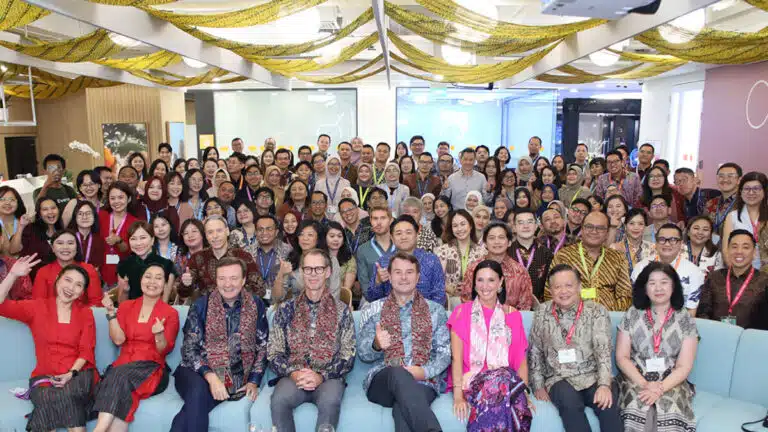
The Jakarta operation adds a baked-goods application laboratory and an ultra-high-temperature dairy pilot plant. It brings the group’s three business units together with customer development spaces. The factory inauguration took place on 14 September and the office opening on 15 September.
The commercial distinction is between developing a formulation and producing it consistently at scale. A pilot plant can help a manufacturer assess how a recipe behaves during processing; it does not remove the need to validate that recipe on the customer’s own equipment.
For dairy and beverage buyers, useful questions include whether heating changes flavour, texture or stability, and whether the finished product retains its required performance throughout shelf life. Bakery and savoury manufacturers will need equivalent trials against their own processing conditions and ingredient specifications.
The company did not disclose investment value, added tonnage or customer lead-time commitments. Buyers should therefore seek product-specific capacity, minimum order quantities and delivery terms before treating the expansion as a confirmed supply improvement.
dsm-firmenich is already included in GTN’s overview of major Dutch FMCG companies, reflecting its upstream role in formulation rather than a portfolio of finished supermarket brands. For procurement teams, that means the immediate opportunity sits with ingredient sourcing and product development, not a new retail listing.
The expansion also comes amid competing investment in Indonesian flavour production. Givaudan opened a CHF50 million facility in Cikarang on 3 July 2026, with 24,000 square metres of production space for savoury, sweet and snack flavour powders.
Those investments give manufacturers more local capabilities to evaluate, but they do not establish that two suppliers offer interchangeable ingredients. Sensory performance, manufacturing tolerances, documentation and the cost of reformulation remain central to a meaningful comparison.
The company also reported site-level energy improvements. Buyers will still need product-specific emissions evidence for any sourcing claim.
For the food and consumer-goods manufacturers operating across Asia, the next test will be whether the new facilities translate into repeatable formulations, dependable commercial volumes and shorter development cycles. Retail buyers should look for those results in supplier proposals, alongside the technical evidence needed to support a product launch.