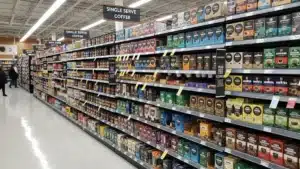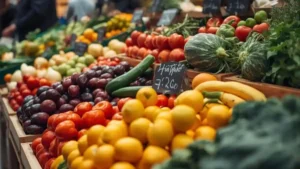

Grocery retailers evaluating AI demand forecasting platforms should consider RELEX Solutions, Blue Yonder, o9 Solutions, ToolsGroup, SymphonyAI, Oracle Retail, SAP and Manhattan Associates. The strongest system is not the one with the most AI features on a demo. It is the platform that can forecast at the retailer’s real level of detail, handle promotions and fresh-food volatility, integrate with replenishment and produce measurable availability, waste and inventory improvements.
Demand forecasting in grocery is difficult because sales are affected by weather, promotions, holidays, local events, substitutions, new product launches and short shelf life. A model that performs well on ambient grocery can still fail badly in produce, bakery or chilled categories if it does not understand perishability and store-level variation.
This guide compares platforms with clear retail planning capability. It is designed for supermarket technology, supply-chain and commercial teams building a shortlist, not as a generic ranking of enterprise software companies.
AI grocery forecasting platforms at a glance
| Platform | Core strength | Grocery relevance | Best fit |
|---|---|---|---|
| RELEX Solutions | Forecasting, replenishment and fresh optimisation | Very high | Food retailers needing integrated planning |
| Blue Yonder | Large-scale supply-chain planning | Very high | Complex multinational retail networks |
| o9 Solutions | Enterprise planning and scenario modelling | High | Retailers connecting commercial and supply planning |
| ToolsGroup | Demand and inventory optimisation | High | Retailers and distributors seeking inventory control |
| SymphonyAI | Grocery-specific AI and category intelligence | High | Food retailers linking forecasting with commercial data |
| Oracle Retail | Enterprise merchandising and planning ecosystem | High | Existing Oracle retail estates |
| SAP | Enterprise planning and supply-chain integration | High | Large SAP-based retail organisations |
| Manhattan Associates | Supply-chain and inventory orchestration | Medium-high | Retailers linking forecasting with fulfilment |
1. RELEX Solutions
RELEX has built a strong reputation in grocery because its planning platform is designed around the operational realities of food retail. It covers demand forecasting, replenishment, fresh-food optimisation, promotion planning, space and wider supply-chain processes.
For supermarkets, fresh-food functionality is particularly important. Forecast accuracy alone is not enough if the system cannot translate the forecast into sensible order quantities around shelf life, presentation stock and delivery schedules.
2. Blue Yonder
Blue Yonder operates at large enterprise scale across supply-chain planning, warehouse, fulfilment and retail operations. Its planning tools are relevant to supermarket groups with complex networks and high SKU counts.
Buyers should define implementation scope carefully. Broad platforms can create value across several functions, but large programmes also carry integration and change-management risk if the retailer tries to transform everything at once.
3. o9 Solutions
o9 positions its platform around integrated planning, scenario analysis and AI-supported decision making. Retailers can use it to connect demand signals with supply, inventory and commercial planning.
Its value is strongest where a grocer wants senior teams to work from one planning model rather than separate forecasts in merchandising, supply chain and finance.
4. ToolsGroup
ToolsGroup focuses on demand planning, inventory optimisation and service-level management. It can be relevant to grocery distributors and retailers trying to reduce excess stock without sacrificing availability.
Buyers should test long-tail SKU performance, intermittent demand and the system’s ability to manage different service targets by category.
5. SymphonyAI
SymphonyAI has a long history in grocery and consumer-goods analytics. Its retail products combine AI with category, assortment and supply-chain intelligence.
This grocery-specific context can be valuable because forecasting decisions are closely connected with promotions, assortment and shopper behaviour rather than existing as an isolated statistical process.
6. Oracle Retail
Oracle Retail provides merchandising, planning, pricing and inventory systems used by large retailers. For an existing Oracle estate, using the same ecosystem can reduce some integration complexity.
However, supermarkets should compare outcomes, not vendor familiarity. A tender should test forecast performance on the retailer’s own historical data and operational exceptions.
7. SAP
SAP supports demand and supply planning through its wider enterprise software environment. Large grocery groups already running SAP may value the connection between planning, finance, procurement and supply-chain data.
The key question is how much configuration is required to match grocery-specific processes. Retail teams should insist on references from comparable food-retail operations.
8. Manhattan Associates
Manhattan Associates is particularly strong in supply-chain execution and inventory orchestration. Its relevance grows when forecasting is part of a broader goal to improve store, warehouse and ecommerce fulfilment.
What should a grocery forecasting system actually improve?
- On-shelf availability.
- Fresh-food waste.
- Inventory days.
- Promotion availability and residual stock.
- Supplier order stability.
- Planner workload and exception volume.
- Store-to-store forecast accuracy.
How to run a supermarket forecasting software tender
1. Use your own data. Ask shortlisted vendors to model several categories using real historical demand.
2. Include difficult weeks. Test Christmas, Easter, heatwaves, promotions and supply disruption rather than only stable periods.
3. Separate forecast from execution. A good forecast does not guarantee good replenishment. Measure both.
4. Test fresh food independently. Produce and bakery should not be treated as ambient grocery with shorter lead times.
5. Count exceptions. A platform that generates thousands of manual interventions may shift work rather than remove it.
6. Model total cost. Include implementation, integration, licences, data work, support and internal resource.
What data does AI demand forecasting use?
Most modern platforms start with historical sales but can incorporate price, promotion, calendar, weather, product attributes, store clusters, availability and other demand signals. More data does not automatically improve the model. The inputs need to be clean, timely and relevant.
Frequently asked questions
Which forecasting software is best for grocery retailers?
RELEX, Blue Yonder, o9 and other leading platforms can all be strong candidates. The best choice depends on retailer size, fresh-food complexity, existing systems, fulfilment model and whether the goal is standalone forecasting or wider planning transformation.
Can AI reduce supermarket food waste?
Yes, if better forecasts are connected to shelf-life-aware ordering and store execution. AI alone does not reduce waste; the operational decision generated from the forecast does.
How accurate should a grocery forecast be?
There is no meaningful single target across all categories. High-volume staples behave differently from seasonal produce or promotional items. Retailers should measure accuracy by category, store and horizon while also tracking availability and waste.
Should retailers replace planners with AI?
No. The strongest model is usually exception-based planning, where automation handles routine decisions and people focus on events, new products, supplier issues and commercial judgement.
What grocery retailers should measure before buying AI forecasting
Forecast accuracy alone is not enough. A grocery system has to translate the forecast into better orders. Buyers should measure availability, waste, stock days, emergency transfers, manual overrides and planner workload before and after implementation. Fresh food needs separate KPIs because a small forecasting error can become waste within days.
Fresh food is the real test
Ambient grocery can tolerate more safety stock. Produce, bakery, meat and chilled categories cannot. The strongest grocery forecasting platforms therefore combine demand signals with shelf life, delivery calendars, promotions, weather, local events and store-level constraints. A platform that performs well on canned goods may still fail a retailer if it cannot manage short-life inventory.
AI forecasting procurement checklist
| Area | Question |
|---|---|
| Data | How much history and which external signals are required? |
| Fresh | Does the system optimise waste and availability together? |
| Promotions | How are cannibalisation and uplift modelled? |
| Integration | Can it connect to ERP, ordering, WMS and store systems? |
| Explainability | Can planners understand and challenge recommendations? |
| Rollout | What measurable pilot KPIs trigger wider deployment? |
Sources and verification
Platform capabilities were checked against current official information from RELEX Solutions, Blue Yonder, o9 Solutions, ToolsGroup and SymphonyAI, alongside current enterprise retail product information from the other vendors listed. Product modules change frequently, so retailers should verify current functionality during procurement.