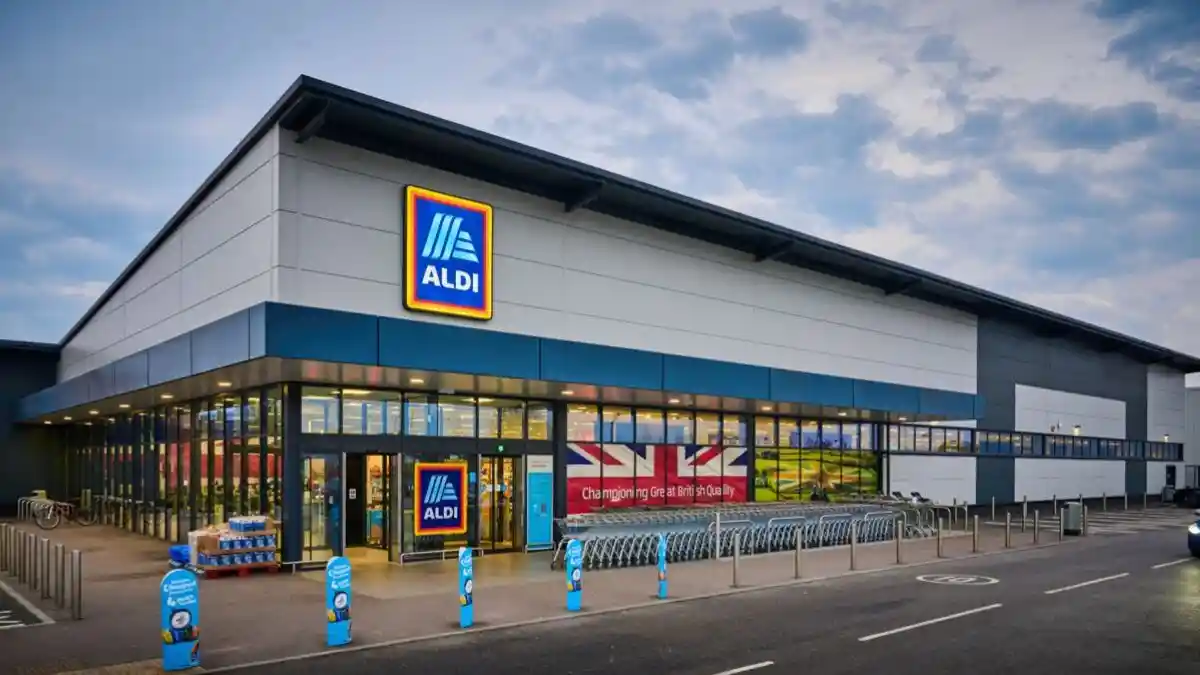

Aldi will invest more than £370 million in 2026 to open around 40 new stores across the UK, accelerating its national rollout as the discounter moves closer to its long-term target of operating 1,500 British locations.
The new investment programme includes confirmed developments in Southam (Warwickshire), Hastings (East Sussex) and Amersham (Buckinghamshire), with dozens of additional sites expected to be announced during the year.
This rollout forms part of Aldi’s wider £1.6 billion two-year expansion plan launched in 2025. The retailer is building on last year’s heavy store opening schedule, which added locations from Kirkintilloch in Scotland to Eastbourne in southern England, as well as high-footfall urban sites such as Fulham Broadway in London.
For Aldi UK supermarket , this expansion is not only about footprint growth. It is about strengthening coverage in underserved catchment areas where access to discount supermarket formats remains limited. Company data shows households in more than 200 UK towns continue to pay higher grocery bills due to the absence of an Aldi store nearby.
The expanding store pipeline also strengthens Aldi’s buying leverage with suppliers. Each new outlet increases volume throughput, improves distribution efficiency and supports tighter everyday pricing — a core pillar of Aldi’s UK operating model.
Labour investment is moving in parallel with physical expansion. Aldi recently confirmed further pay increases for store colleagues, with national hourly rates rising to £13.35 from March 2026 and higher rates inside the M25. This reflects ongoing competition for retail labour as supermarket groups scale operations while protecting staffing stability.
Aldi’s 2026 store programme arrives at a critical moment in the UK grocery market. Store density is increasingly becoming a competitive advantage as price-led retailers compete for local convenience share, not just weekly big-basket shopping trips.
The scale of Aldi’s rollout also raises pressure on mid-sized regional chains and older-format supermarkets, particularly in suburban and commuter locations. As Aldi fills geographic gaps, rivals may be forced to accelerate refurbishments, intensify local price-matching strategies or upgrade private label ranges to protect footfall.
For suppliers, the expansion creates new volume opportunities — but also tighter commercial expectations. New stores typically mean broader national listings and more centralised buying power, increasing both scale potential and negotiation pressure.
What happens next
Aldi’s 2026 rollout now moves into a site-by-site approval and construction phase. Local councils are expected to assess planning applications across multiple regions during the first half of the year, with phased store openings following as approvals are granted.
The retailer continues to prioritise high-growth residential areas, commuter towns and locations with limited discount supermarket coverage. This points to further site selection outside major city centres, where demand for value-led neighbourhood formats remains strong.
At the same time, Aldi is expected to progress land acquisitions and long-term lease agreements to secure pipeline locations beyond 2026. Maintaining a steady development pipeline is essential to sustaining momentum toward its 1,500-store target.
For suppliers and logistics partners, preparation will begin months before each opening. This includes range allocation planning, regional distribution capacity adjustments and recruitment ramp-ups, signalling that operational scaling is already underway behind the scenes.
Editor’s note: Information is based on official Aldi UK announcements and publicly available retail investment data.