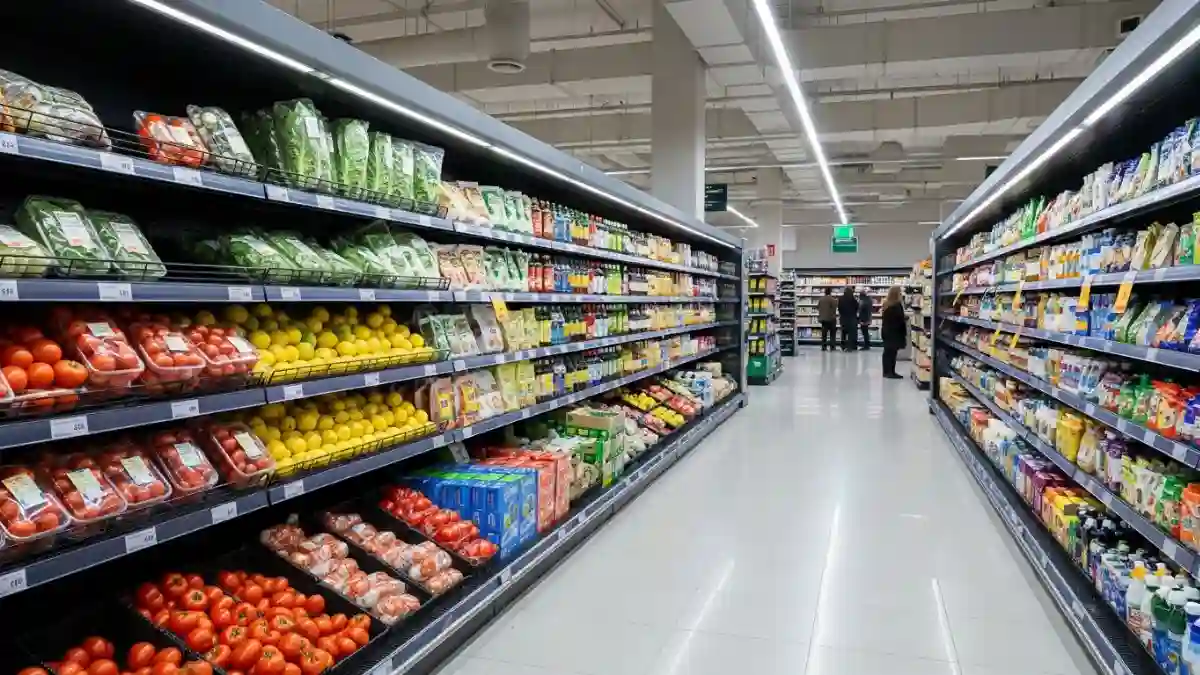

In 2025, the best grocery stores are not the biggest chains or the ones with the flashiest stores. They are the retailers that combine low prices, consistent fresh quality, strong private label, and a smoother shopping experience than their rivals. Rankings vary by country, but Aldi, Lidl, Costco, Kroger, Trader Joe’s and several regional leaders keep appearing in 2025 consumer surveys. Across markets, the best grocery stores are the ones that deliver real value, not just low prices.
How Rankings Are Decided
Every country uses different surveys, but the factors are remarkably similar. Shoppers want high-quality fresh foods, fair prices, and an easy trip through the store. They want ready-meal options that taste good at home. And they expect private label ranges that match or beat national brands.
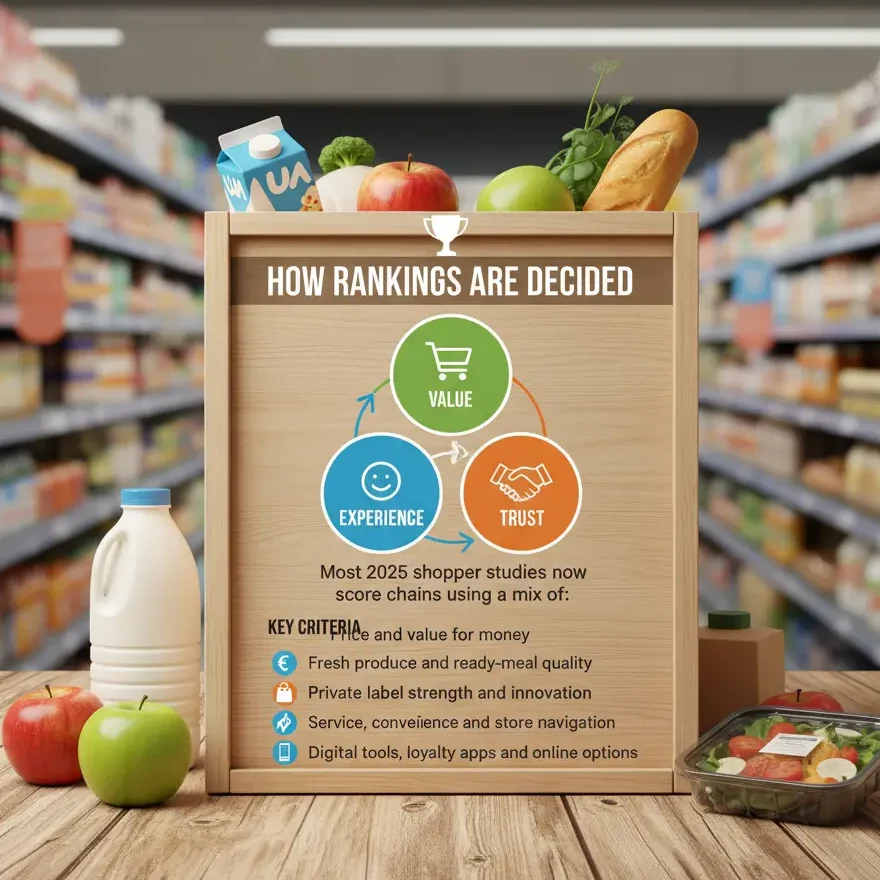
Price still matters, but cheap alone no longer earns a top ranking. A store with low prices but poor produce can’t win. A retailer that is strong on quality but weak on digital convenience also falls behind. Most 2025 shopper studies now score chains using a mix of value, experience and trust.
Key criteria common across surveys:
-
Price and value for money
-
Fresh produce and ready-meal quality
-
Private label strength and innovation
-
Service, convenience and store navigation
-
Digital tools, loyalty apps and online options
These criteria shape how shoppers judge the best grocery stores 2025, and they also explain why different chains win in different regions.
Discount Champions: Aldi, Lidl And The Hard-Discounters
Hard-discount retailers continue to lead global value rankings in 2025. Aldi and Lidl remain the reference point for “price-to-quality ratio,” especially in Europe, where both chains have spent years building strong private label and modern store formats. Their assortments are tight, but the quality is reliable. This clarity helps them top many value-focused rankings.
In the US, Aldi has grown quickly by expanding fresh food, bakery and seasonal ranges. The chain is now competitive on ready meals, which boosts its overall quality perception. Lidl’s US presence is smaller but maintains strong quality scores where it operates.
Hard-discounters offer speed and predictability. You go in, you shop quickly, you pay less. They are rarely the leader in full-service experience, but in the conversation about what grocery stores are best, they dominate whenever value is the top factor.
Big-box And Warehouse leaders: Costco, Sam’s Club And Others
Costco continues to earn some of the highest customer-satisfaction scores in North America. Its value story is different from discounters. Rather than low unit prices alone, Costco delivers bulk value, premium meat quality, strong bakery and deli, and prepared foods that regularly outperform full-service supermarkets.
Membership fees create a committed shopper base, and the quality of private label — especially through Kirkland — is one of the biggest reasons Costco appears in nearly every “best grocery stores 2025” ranking.
The trade-offs are clear: larger pack sizes, limited SKUs and bigger baskets. Not every household wants bulk shopping, and this keeps Costco from topping “convenience” rankings. But when surveys ask about trust, quality and perceived value, Costco consistently places near the top.
Sam’s Club, part of the same format family, also benefits from strong produce and competitive pricing. But in consumer-led rankings, Costco typically makes a stronger quality impression.
Full-line supermarkets: Kroger, Regional leaders And Others
Unlike warehouse clubs or discounters, full-line supermarkets win on range, convenience and fresh quality. Kroger continues to appear in 2025 rankings for shoppers who want both good pricing and a broad assortment. Its prepared food ranges, fresh produce upgrades and loyalty app innovations help lift its value perception.
Several regional chains in the US — such as H-E-B, Publix and Wegmans — often rank even higher than national players. These chains excel in fresh, bakery, deli and customer service. They also invest heavily in ready-meal quality, which has become a top scoring metric in 2025.
In Europe, full-service chains in Italy and France remain strong in bakery, produce, fresh fish and prepared foods. When discussing “supermarkets in Italy and France,” the winners often combine heritage fresh counters with modern private label ranges. These formats rarely beat discounters on price, but they win when shoppers care about service and full assortment.
In Canada, the “top grocery stores in Canada” discussion usually includes Loblaws, Costco, and regional banners such as Metro and Sobeys. These chains focus on fresh quality and private label depth, and they rank well in 2025 category-specific customer studies.
Across all these markets, full-line supermarkets maintain a clear role: they are the middle ground between discount minimalism and warehouse bulk. They win when shoppers prefer variety, strong counter services and ready-to-eat convenience.
Emerging Hybrid Formats Reshaping Grocery Shopping
A new pattern is appearing in 2025 that doesn’t fully fit the old supermarket–discount–warehouse categories. Several markets are seeing the rise of hybrid formats that mix fresh counters, convenience layouts and strong private-label offers. These stores are smaller than full supermarkets but deliver higher quality than typical convenience chains, and they appeal to shoppers who want speed without sacrificing choice.
In the US, this includes compact neighbourhood formats that focus on produce, bakery, ready meals and grab-and-go items. In Europe, chains are experimenting with local-market concepts that keep the core private-label range but add more fresh preparation on site. These formats often perform well in customer surveys because they reduce the time spent navigating large aisles.
Another shift shaping the 2025 landscape is the growing use of mission-based shopping. Many shoppers now split their spend across different formats: Aldi or Lidl for the weekly basics, Costco for bulk value, and a full-line supermarket for fresh meats or prepared meals. Because of this, the idea of a single “best” store is becoming more fluid. What wins on value may not win on convenience, and what wins on fresh quality may not win on price.
For retailers, the challenge is to stay relevant across more than one mission. The chains that rank highly in 2025 are the ones adapting their formats, modernising their fresh ranges and investing in quicker, more intuitive store layouts.
What “Best” Means For Shoppers
For shoppers, “best” is personal. Some people want the lowest prices possible. Others want the highest quality fresh produce.
Many want a balance between both. In 2025, surveys show three themes:
Value without compromise: Shoppers want quality private label at prices they can trust. They also want fresh departments that don’t feel risky.
Convenience and speed: A “best” store helps shoppers finish a trip faster: wide aisles, self-checkout, fast deli pick-up, and clear promo signage.
Trust and predictability: Shoppers return to stores where they don’t have to inspect every item. The top chains in the best grocery stores 2025 lists score high on trust.
What “Best” Means For Suppliers And brands
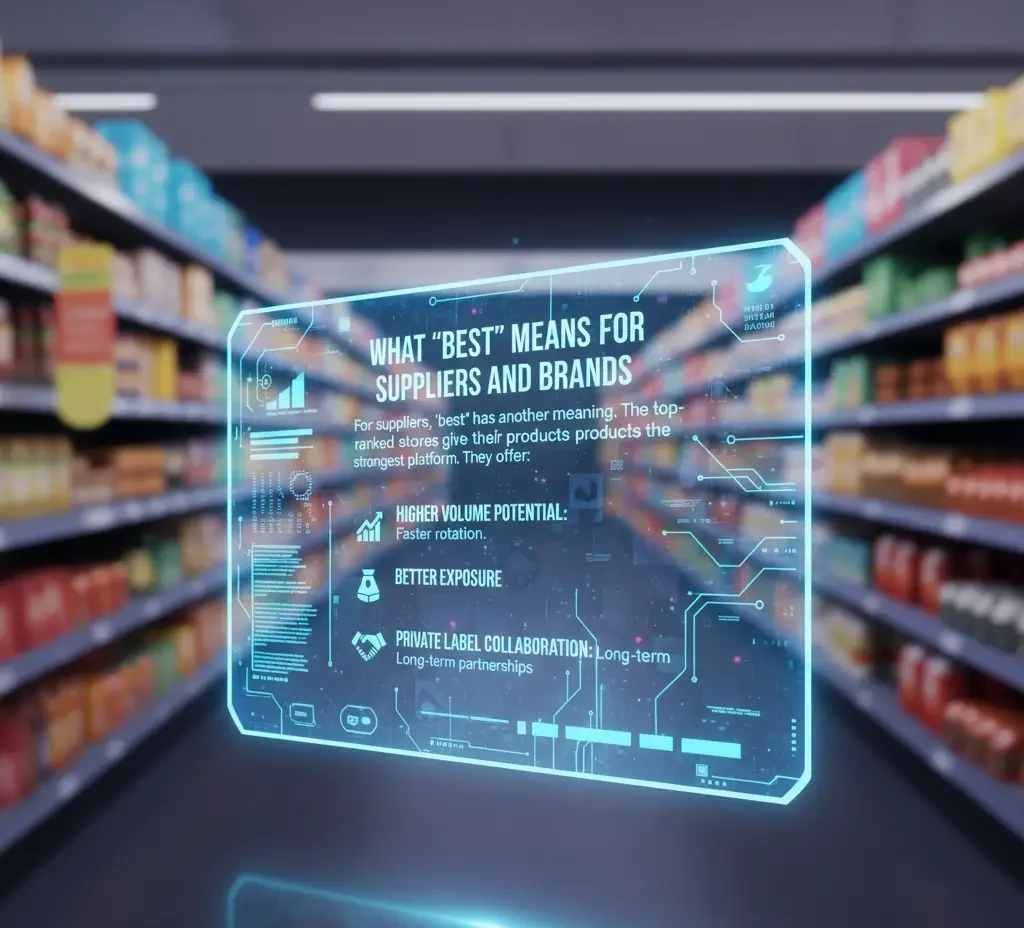
For suppliers, “best” has another meaning. The top-ranked stores give their products the strongest platform. They offer:
Higher volume potential: High-trust chains drive faster rotation for national brands and private label manufacturers.
Better exposure: Retailers ranked as the best grocery stores 2025 often allocate more space to premium fresh and ready-meal categories.
Private label collaboration: These chains often invite suppliers into long-term partnerships, whether in fresh, bakery, snacks or household categories.
More predictable demand: The more loyal the shopper base, the easier the forecasting and seasonal planning for suppliers.
Conclusion
There is no single global winner in the best grocery stores 2025 conversation. Aldi and Lidl continue to lead value rankings. Costco dominates quality-value perception. Kroger, regional US chains and full-line European supermarkets maintain strong standings in fresh, ready meals and convenience. What they all share is a consistent ability to deliver value, trust and a smoother shopping trip.
As 2026 approaches, the patterns are becoming clearer: more private label expansion, more digital navigation inside stores, more focus on fresh prepared foods, and more pressure on price fairness. The best grocery stores are the ones preparing for this shift now — and the ones that will keep shaping shopper expectations next year.
FAQ — Best Grocery Stores in 2025
1. Which grocery store has the best value in 2025?
In most 2025 consumer surveys, Aldi and Lidl lead on value thanks to consistent private label quality, predictable pricing and simple store layouts. Costco also performs strongly on perceived value because of its bulk pricing and high-quality fresh ranges.
2. Which grocery stores have the best fresh produce in 2025?
Regional US chains such as H-E-B, Publix and Wegmans often score highest for fresh produce, bakery and deli. In Europe, Italy and France continue to perform strongly thanks to their heritage fresh counters and premium assortment.
3. Which grocery stores offer the strongest private label ranges in 2025?
Aldi, Lidl and Costco remain the top performers for private label quality and innovation. Kroger and several European full-line supermarkets are also expanding premium private label tiers, which helps them score well in 2025 shopper studies.
4. What grocery store ranks highest for overall quality in 2025?
Quality rankings vary by country, but Costco consistently appears near the top due to its meat quality, prepared foods and strong private label. Regional US supermarkets and full-line stores in Italy and France also perform well in quality-focused studies.
5. Do grocery store rankings differ by country in 2025?
Yes. Value-focused markets give the top spot to Aldi or Lidl, while countries with strong service culture — such as the US, Italy and France — often see regional supermarkets lead. Bulk-focused households in North America rank Costco highly for quality and trust.
6. What “best grocery store” means for shoppers in 2025?
Shoppers are choosing stores that balance price, fresh quality and speed. The top chains score well on trust, private label reliability, ready-meal quality and overall convenience.
7. What do suppliers gain by working with the best-rated grocery stores?
High-ranking retailers offer stronger shelf exposure, more predictable demand, higher rotation and deeper long-term partnerships in private label, bakery, snacks, produce and household categories.