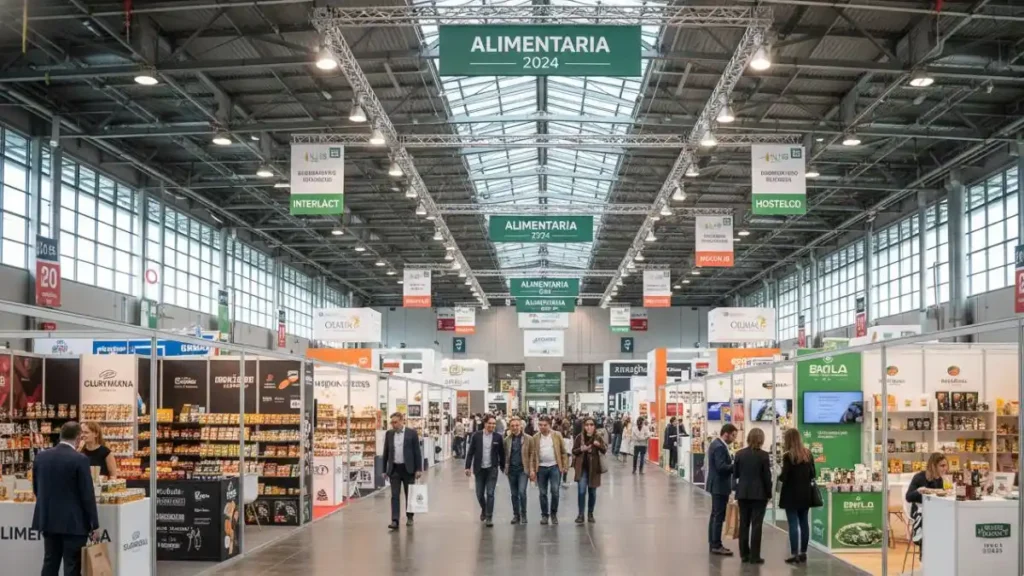
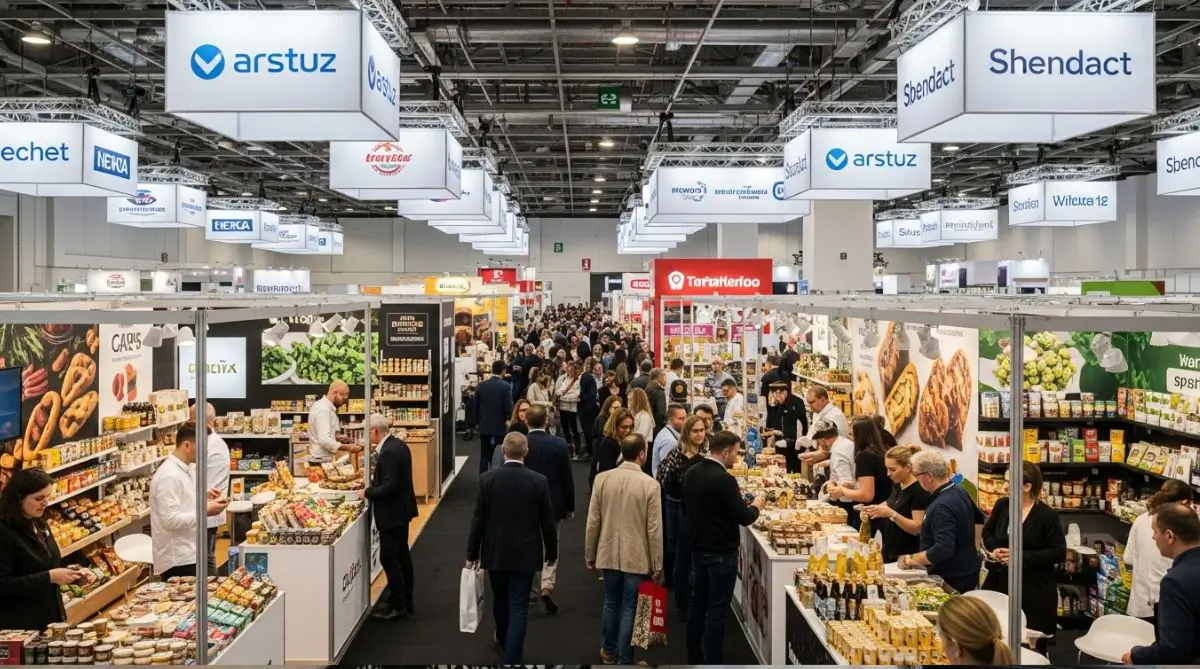

Australia hosts some of the most commercially useful trade shows in the Asia-Pacific region, especially for supermarkets, FMCG suppliers, produce exporters, private-label manufacturers and food-tech partners. These events are not just exhibitions — they are live marketplaces where retailers scout new ranges, distributors negotiate territory rights, and manufacturers test the next phase of their growth strategies.
In 2025, this matters even more. Australia is a major sourcing hub for fresh produce, health foods, dairy, meat, and alternative protein innovation. It also exports a large share of its agricultural production, making the country a serious destination for global buyers looking for quality, clean-label, and premium-tier supply.
Against this backdrop, understanding food trade shows in Australia 2025 becomes essential for both retailers and suppliers planning their year.
Why Australia’s Trade Shows Matter for Global Grocery & FMCG
Australia supplies a mix of premium fresh produce, health-driven packaged foods, and advanced manufacturing capabilities. That combination draws international retailers and regional distributors to its trade events each year.
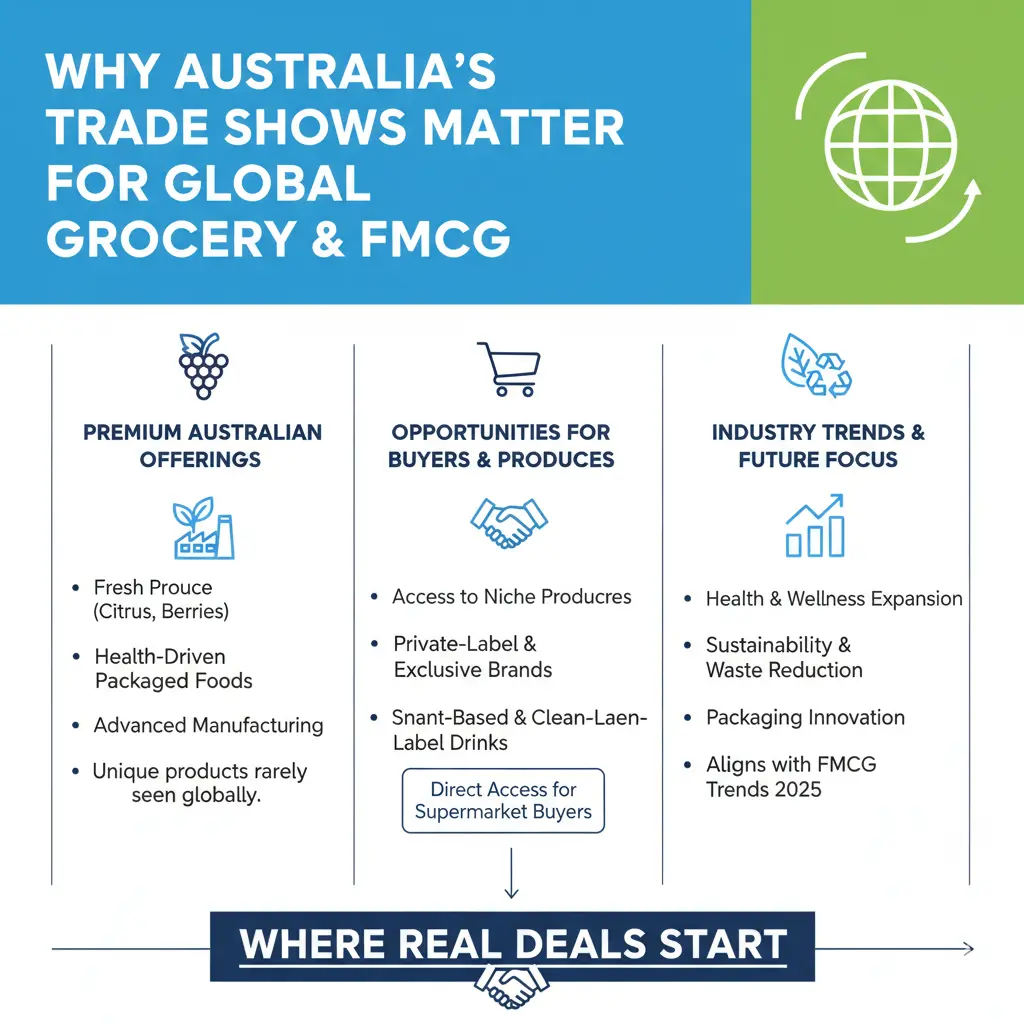
Supermarket buyers can see products that normally don’t appear on global stages — Australian citrus, premium berries, plant-based innovation, dairy formats, snacking ranges, and clean-label beverages. Shows also give visibility to niche producers that may not export yet but are ready for private-label or exclusive-brand partnerships.
The trade-show calendar also reflects broader industry shifts. Health-focused aisles continue to expand, which aligns with the direction seen in Australia FMCG Trends 2025. Sustainability, waste reduction, and packaging innovation also play a larger role in sourcing decisions.
Put simply: these shows are where real deals start.
Fine Food Australia 2025
Location: Sydney
Dates: 8–11 September 2025
Audience: Supermarkets, distributors, wholesalers, foodservice buyers, convenience retail, importers, exporters, private-label manufacturers.
Fine Food Australia remains the country’s biggest B2B food industry event. What sets it apart is the mix: retail grocery teams walk the same aisles as foodservice chefs, hotel groups, importers, and category scouts. For supermarket buyers, this is where new bakery formats, deli lines, ready-meals, snacks, beverages, and private-label ideas are discovered long before they hit mainstream distribution.
Best Use-Cases for Supermarket Buyers
-
Benchmarking category trends before peak seasons.
-
Finding packaging, bakery, confectionery, and snacking suppliers.
-
Meeting regional distributors with strong logistics coverage.
-
Identifying new clean-label and allergen-friendly products.
-
Sourcing small brands before they scale.
Best Use-Cases for Suppliers
-
Securing retail distribution.
-
Testing new product formats with buyers.
-
Meeting export facilitators and import brokers.
-
Exploring private-label agreements.
Fine Food Australia works best for businesses that want a broad reach: retail, foodservice, hospitality, and export all overlap here.
Naturally Good Expo 2025
Location: Sydney
Dates: 26–27 May 2025
Audience: Natural, organic, wellness, health-food retailers; pharmacy chains; supermarket health aisles; distributors.
Naturally Good Expo has become Australia’s most important marketplace for natural and better-for-you products. Buyers come specifically for organic snacks, functional beverages, vitamins, supplements, plant-based products, and wellness-driven FMCG.
In 2025, it remains in Sydney, but the 2026 edition will not return to the city — making this the last Sydney-based edition for now and likely increasing attendance.
Best Use-Cases for Retail Buyers
-
Sourcing early-stage brands before competitors find them.
-
Scanning trends in natural, organic, and clean-label categories.
-
Finding suppliers that can convert into exclusive supermarket programs.
-
Evaluating plant-based ranges and functional beverages.
Best Use-Cases for Suppliers
-
Penetrating wellness aisles in major retailers.
-
Meeting pharmacy buyers who influence supplement sales.
-
Building relationships with export agents specialising in natural products.
This show attracts a very targeted audience, making it high-value for buyers shaping health-focused categories.
Other Relevant Australian Events in 2025
The Australian trade-show landscape is broader than most international buyers expect. Several highly relevant B2B events offer deep category value.
Hort Connections 2025
Location: Brisbane
Dates: 4–6 June 2025
Audience: Growers, packers, supermarkets, wholesalers, fresh-produce suppliers, ag-tech companies, packaging innovators.
Hort Connections is the largest horticulture-focused event in the region. Fresh produce buyers attend to meet growers, evaluate supply partnerships, and track innovation in field technology, robotics, sustainable packaging, and climate-resilient crops.
It is also the best place to understand shifts in Fresh Produce – Australia, from berries and avocados to citrus and greenhouse-grown vegetables.
Why It Matters
-
Produce category managers can assess supply reliability.
-
Retailers can compare post-harvest and packaging technologies.
-
Exporters can meet overseas buyers consolidating for Asia and the Middle East.
-
Ag-tech companies demonstrate automation that reduces labor and waste.
Foodservice Australia 2025
Location: Melbourne
Dates: 18–20 May 2025
Audience: Supermarkets (meal solutions, bakery, deli), hospitality, wholesalers, café groups, foodservice distributors.
Although positioned for the hospitality sector, this event is extremely useful for supermarkets with growing deli, bakery, and meal-solution categories. Ready-meals, pastry equipment, bakery mixes, meat products, and cooking technologies appear here before scaling up.
Why It Matters
-
Retailers can track food-to-go trends.
-
Suppliers can meet chef-driven brands that later transition to retail.
-
Innovation in bakery and hot food can inform supermarket remodel programs.
This is also where private-label bakery and meal-solution partnerships quietly begin.
FoodTech Qld 2025
Location: Gold Coast
Dates: 19–20 June 2025
Audience: Processing plants, manufacturers, packaging companies, logistics operators, supermarket supply teams, QA professionals.
FoodTech Qld focuses on the manufacturing and technology side of food production, making it ideal for suppliers and supermarket technical teams.
Why It Matters
-
Packaging and processing upgrades can be sourced in one place.
-
Retailers assess supplier capabilities before awarding long-term contracts.
-
Co-packers looking to scale find machinery and automation partners.
-
Exporters explore equipment for shelf-life optimisation and compliance.
This is one of the most useful events for long-term capacity planning.
How Retail Buyers Should Use These Shows
Trade shows are only valuable when buyers arrive with a plan. The most effective supermarket teams typically follow five steps:
1. Pre-Book Meetings
The strongest suppliers’ calendars fill early. Buyers should reach out weeks ahead to secure time with:
-
private-label manufacturers
-
packaging and technology exhibitors
-
regional distributors
-
category-specific exhibitors linked to growth areas
2. Map Category Gaps
Retailers often enter shows with category issues already identified — bakery underperformance, missing plant-based segments, produce wastage, or lack of premium snacking. Trade shows help fill these gaps faster than remote sourcing.
3. Use Events to Validate Trends
Health ingredients, premium deli, plant-based proteins, and sustainability claims can be checked practically. Many retailers compare these findings against broader signals coming from Supermarkets – Australia, especially around pricing, packaging and shopper expectations.
4. Look for PL (Private-Label) Opportunities
Many Australian suppliers can scale into private-label production, especially in:
-
snacks
-
bakery
-
beverages
-
sauces
-
health & wellness
5. Build Regional Partnerships
Some international retailers use these events to secure Asia-Pacific regional supply, not just Australia-specific distribution.
How Exporters and FMCG Brands Should Approach These Shows
Suppliers benefit equally when they prepare properly. These events attract serious buyers, and their expectations are higher each year.
1. Stand Design With Purpose
Buyers respond better to stands showing:
-
clear packaging
-
front-facing product ranges
-
quick sampling stations
-
export or private-label capabilities
2. Bring Retail-Ready Formats
Cartons, tray packs, shelf-ready units, and EDI/GS1 readiness increase confidence.
3. Present Capabilities, Not Just Products
Retailers want to know:
-
minimum order quantities
-
lead times
-
certifications
-
production capacity
-
sustainability credentials
4. Follow Up Within 72 Hours
Momentum dies quickly. The most successful exporters follow up while conversations are still fresh.
5. Target the Right Show
Not every event fits every producer:
-
Fine Food → broadest exposure
-
Naturally Good → health & wellness
-
Hort Connections → fresh produce & ag-tech
-
Foodservice Australia → bakery, deli, food-to-go
-
FoodTech Qld → processing & packaging
Strategic placement matters more than attending every show.
Key Australian Food & Retail Trade Shows 2025 — Summary Table
| Event | City | Dates (2025) | Main Focus | Who Should Attend |
|---|---|---|---|---|
| Fine Food Australia | Sydney | 8–11 Sept | Largest national food industry event; retail + foodservice | Supermarket buyers, distributors, suppliers, exporters |
| Naturally Good Expo | Sydney | 26–27 May | Natural, organic, health & wellness products | Health-category buyers, wellness brands, exporters |
| Hort Connections | Brisbane | 4–6 June | Fresh produce, ag-tech, horticulture | Produce teams, growers, packers, wholesalers |
| Foodservice Australia | Melbourne | 18–20 May | Food-to-go, bakery, deli, hospitality | Supermarkets (meal solutions), wholesalers |
| FoodTech Qld | Gold Coast | 19–20 June | Manufacturing, processing, packaging technology | Manufacturers, supermarket technical teams, co-packers |
Conclusion
Australia’s 2025 trade-show calendar is one of the strongest in the region. Each event plays a different role — from large-scale sourcing at Fine Food Australia to targeted natural-product discovery at Naturally Good, and deeper supply-chain partnerships at Hort Connections and FoodTech Qld.
For any business looking to source products, secure regional partners, scan emerging categories, or understand innovation, the food trade shows in Australia 2025 offer a clear competitive advantage. These are not promotional showcases — they are real business platforms where new retail ranges and supply partnerships begin.