
Switzerland’s fresh produce market is built on high expectations. Local farms supply much of the country’s apples, salads and staple vegetables during the main season, while imports fill the gaps through winter. Retailers use produce as a quality benchmark, and consumers continue to prioritise origin, freshness and certification above almost everything else.
Switzerland’s Produce Landscape
Fresh produce Switzerland follows a simple pattern: strong domestic farming when the season allows, and disciplined importing when it does not. The country’s geography gives it clean water, fertile valleys and microclimates that support fruit, vegetables, herbs and berries. But the short season limits how much can be grown year-round.
Swiss farms are significant producers of apples, pears, berries, potatoes, onions, carrots, and greenhouse tomatoes. These products dominate store shelves in late spring, summer and early autumn, when origin messaging is most visible. Once temperatures drop, retailers depend heavily on nearby markets such as Italy, France and Spain to keep shelves consistent.
Consumers trust local produce because they know the strict Swiss standards. Farms operate under tight controls for pesticides, traceability and environmental impact. The same is expected from foreign suppliers, which is why approvals, certifications and residue limits often exceed EU requirements.
Key Fruit Categories
Fruit is a strong part of the Swiss diet. Apples lead the category, with domestic volumes supporting most of the annual demand. Pears and soft fruits follow a similar pattern, with Swiss berries available only during the short summer window.
Berries are the most import-dependent line. Demand peaks almost all year, but the Swiss season is short. Winter berries largely come from Spain and Italy. This is where understanding wider sourcing markets matters, linked to broader European supply movements such as Spain’s fresh-produce trends, which influence availability and pricing through the colder months.
Stone fruit — apricots, peaches, nectarines — are a mix of Swiss and imported supply. Valais apricots are iconic in summer and have a strong cultural association with local agriculture. Citrus is almost fully imported, with Spain dominating the category.
Key Vegetable Categories
Vegetables show a clearer split between local and imported supply. Potatoes, carrots, onions and root vegetables remain domestic for a significant part of the year.
Tomatoes, cucumbers and peppers are produced in greenhouses, but imported volumes are still large during winter. Switzerland’s climate limits deep winter production, and quality is critical. Any defects or bruising can lead to rejection, which is why logistics and temperature control remain essential for exporters.
Leafy greens — particularly lettuce — form a major retail line. Swiss growers support much of the late spring to early autumn period, but retailers shift quickly to Italy and Spain during winter to maintain consistency. This seasonal rhythm shapes promotional calendars and category planning in all major chains.
Organics and Bio Suisse
One of the strongest features of the Swiss market is the size of its organic sector. Switzerland consistently ranks among the highest organic spend per capita in the world.
The Bio Suisse label is central to this. It sets strict rules for production, biodiversity, chemical use and traceability. Retailers treat it as a trust marker, and shoppers recognise it instantly. Organic fresh produce performs strongly in Switzerland because consumers are willing to pay for it, especially in fruit, vegetables and salads.
Demand for organic berries, salads and herbs is particularly strong. Exporters hoping to target the organic segment must understand Bio Suisse rules — they differ from standard EU organic certification and often require additional controls.
Regional Specialties
Switzerland values regional identity. Produce is no exception.
Local specialties include:
-
Valais apricots
-
Alpine potatoes
-
Swiss apples
-
Mountain herbs
-
Small summer berry ranges
These products carry strong storytelling power. Retailers highlight region, altitude, and farm names, especially during the peak season. This strategy helps differentiate Swiss produce from imported lines and reinforces a sense of national food culture.
Retail Strategy in Swiss Supermarkets
Fresh produce sits at the entrance of almost every Swiss supermarket. Coop, Migros, Denner, Aldi and Lidl treat the category as a signal of store quality. Shoppers make early judgements about freshness, cleanliness and trust as they enter.
Promotions in fruit and vegetables are controlled. Swiss retailers rarely run deep discounts in fresh produce compared to processed goods. Instead, they rely on stable pricing, consistent grading and strong origin signage.
Private-label plays a central role, supported by seasonal lines, regional programmes and premium organic labels. The broader European shift toward retailer-owned brands also matters here, connected to private-label trends across Europe, which give useful context for understanding how Swiss retailers position their produce ranges.
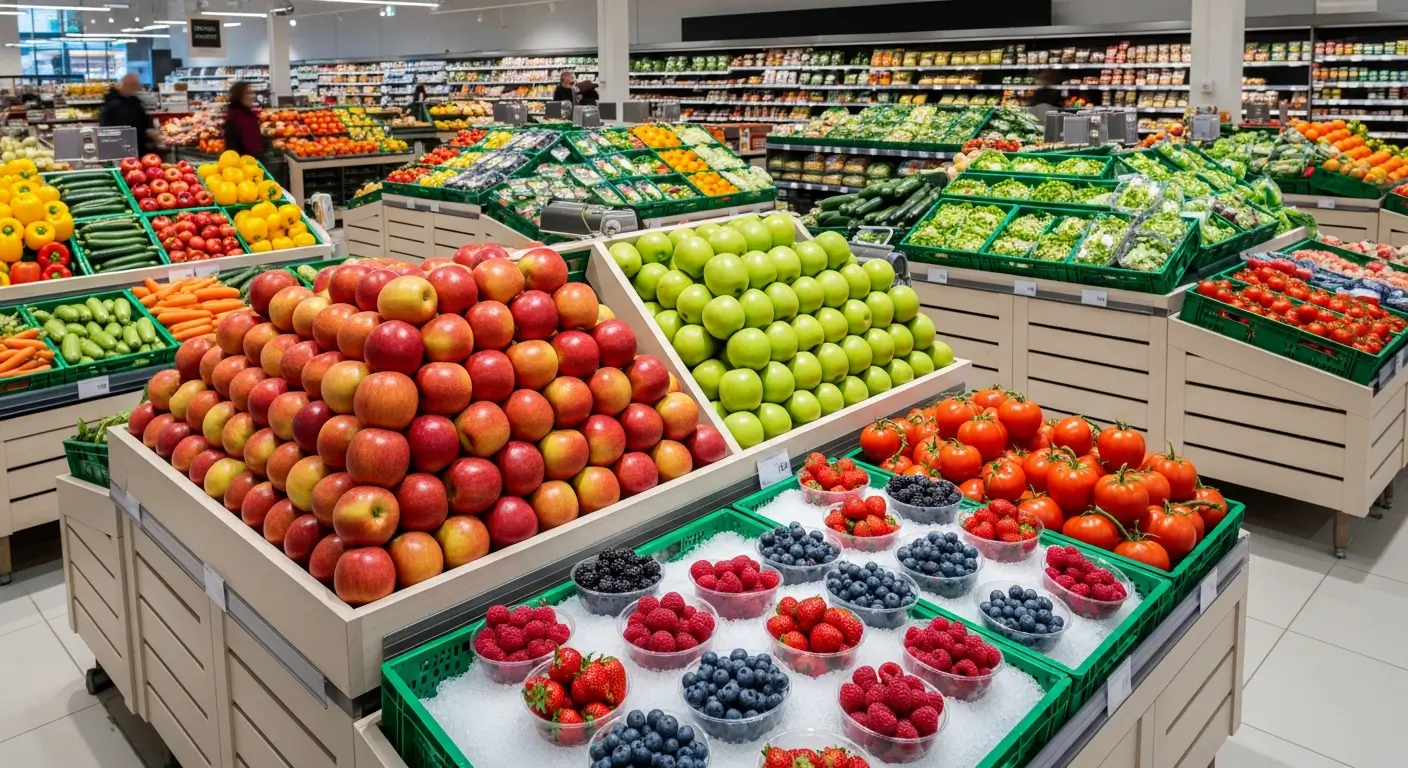
Swiss displays favour open crates, clean colour blocking and minimal plastic. Retailers are steadily increasing cardboard, paper and returnable formats. Shelf-edge messaging focuses on variety, origin and usage rather than heavy price-led communication.
Farm Shops and Local Markets
Farm shops — known locally as Hofläden — are an important part of Swiss food culture. Many farms operate their own self-service shops, offering fresh vegetables, eggs, berries, and small-batch products such as jam or honey.
Weekly markets are equally popular, especially in cities like Zurich, Basel, Bern and Lausanne. These markets highlight seasonal changes and bring producers into direct contact with customers.
One of the most famous events is Zibelemärit, the Bern Onion Market. Held each November, it celebrates the end of the onion season. Farmers present ornate onion braids, baked goods and winter specialties. This event illustrates the cultural connection between Swiss consumers and fresh produce.
Import Dynamics and Seasonality
Switzerland cannot rely on domestic supply alone. Seasonality drives import needs throughout winter and early spring.
Key categories include:
-
Berries
-
Leafy salads
-
Tomatoes
-
Cucumbers
-
Peppers
-
Citrus
-
Stone fruit
Italy, Spain, France and the Netherlands are the primary partners. Spain plays a particularly important role in winter vegetables, citrus and salads. This creates a predictable pattern for retailers planning weekly assortments.
Import processes in Switzerland are stricter than most European markets. Customs checks, residue testing and paperwork must be exact. Cold-chain failures are not tolerated, and retailers often apply stricter shelf-life requirements than their EU neighbours.
What Exporters Need to Know
Exporters targeting Switzerland must understand the country’s expectations. Quality is non-negotiable. Even small cosmetic issues can lead to rejection. Punctuality also matters — late deliveries disrupt store flow, and Swiss retailers operate tight logistics windows.
Key requirements include:
1. Strong grading and consistency
Swiss buyers expect uniform sizing, colour, firmness and overall appearance.
2. Cold-chain discipline
Temperature issues cause immediate losses. Exporters must maintain stable transit conditions.
3. Certification readiness
Organic exporters must meet Bio Suisse requirements. Standard exporters should be prepared with GlobalG.A.P. and residue testing documentation.
4. Seasonality awareness
Understanding Swiss seasonal gaps creates selling opportunities. For example, berries, tomatoes and salads move into heavy import reliance during winter.
5. Packaging expectations
Retailers seek functional, sustainable packaging. Clear labelling and traceability are standard.
6. Communication and forecasting
Swiss buyers prefer transparent volume planning and accurate forecasting to maintain consistent shelf conditions.
Looking Ahead
Switzerland’s fresh produce market will continue to rely on a careful balance of domestic production and controlled imports. Consumer expectations for clean, high-quality fruit and vegetables will remain strong. Retailers will keep investing in origin storytelling, organic expansion and sustainable packaging. Seasonal discipline and quality management will define the year ahead for suppliers.
Fresh produce Switzerland remains a high-trust, high-standard market — one that rewards precision and consistent performance from growers and exporters.