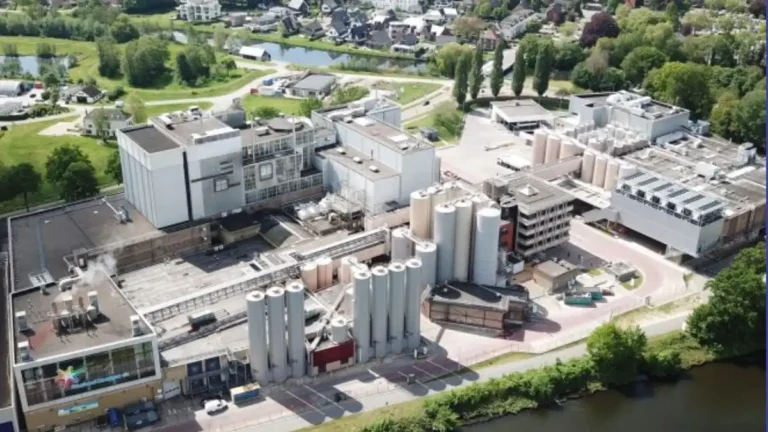

FrieslandCampina has expanded butter production capacity at its factory in Lochem, the Netherlands, with the new installation officially commissioned on 18 June 2026. The investment is designed to meet growing demand for butter products across consumer and professional markets while improving production efficiency and reducing energy, gas and water consumption.
The expansion strengthens Lochem’s role within FrieslandCampina’s manufacturing network following the company’s decision to centralise butter production at the site. The project also supports the production of retail butter brands and foodservice products supplied to domestic and international customers.
What Is FrieslandCampina’s Lochem Butter Capacity Expansion?
FrieslandCampina’s Lochem butter capacity expansion is an investment in additional butter manufacturing infrastructure aimed at increasing output and improving sustainability performance.
The facility produces butter for consumer brands and professional foodservice customers, while also handling butter oil, milk powder and filtration products for business-to-business markets.
At a Glance
- FrieslandCampina commissioned new butter production capacity in Lochem on 18 June 2026.
- The expansion supports growing demand from retail and professional customers.
- Butter products include Debic, Campina Botergoud, Frico and Frau Antje brands.
- The project follows the centralisation of butter production in Lochem.
- FrieslandCampina closed its Den Bosch butter factory in June 2025.
- Annual savings are expected to reach 700,000 kWh of electricity.
- The expansion is also projected to reduce gas and water consumption.
Why Is FrieslandCampina Increasing Butter Production Capacity?
FrieslandCampina said the investment responds to increasing demand for butter products across both foodservice and retail channels.
The factory produces butter for professional customers under the Debic brand as well as consumer butter products sold under brands including Campina Botergoud, Frico and Frau Antje. Additional production capacity is intended to support future market demand while improving manufacturing efficiency.
How Does the Expansion Improve Sustainability?
The new production installation is expected to reduce resource consumption across the site.
According to FrieslandCampina, the project should deliver annual savings of approximately 700,000 kWh of electricity, 95,000 cubic metres of gas and 50,000 cubic metres of water. These reductions support wider efforts across the dairy industry to improve production efficiency and lower environmental impact.
What Role Does Lochem Play in FrieslandCampina’s Production Network?
Lochem has become a key production hub within FrieslandCampina following the consolidation of butter manufacturing activities.
In June 2025, the company closed its butter factory in Den Bosch and transferred production to Lochem. The site now serves as the group’s primary butter production location while also manufacturing butter oil, milk powder and filtration products for business customers and export markets.
Why Does This Matter for the Dairy Industry?
The expansion reflects broader trends across the global dairy sector, where processors are investing in larger and more efficient production facilities to meet demand while controlling costs and improving sustainability performance.
Demand for dairy ingredients and branded butter products remains important across supermarket, foodservice and international export channels. Investments in capacity and efficiency can help manufacturers improve supply reliability while supporting long-term growth.
What Happens Next?
With the new production capacity now operational, FrieslandCampina is expected to continue strengthening Lochem’s role as a major dairy manufacturing site within its network.
The additional capacity will support butter production for consumer and professional markets while helping the company achieve operational and sustainability objectives.
The development also reflects wider trends across the Netherlands FMCG sector, where manufacturers are investing in more efficient and sustainable production facilities to support retail, foodservice and export demand.
As demand for dairy products evolves, efficient and centralised production facilities are likely to play an increasingly important role across the global dairy supply chain.
Editor’s Note: This article is based on information published by FrieslandCampina regarding the commissioning of new butter production capacity at its Lochem facility in the Netherlands. The announcement includes details on production expansion, sustainability improvements, and the site’s growing role within the company’s dairy manufacturing network. Additional industry context has been added by Global Supermarket News to explain the significance of the investment for the dairy and FMCG sectors.