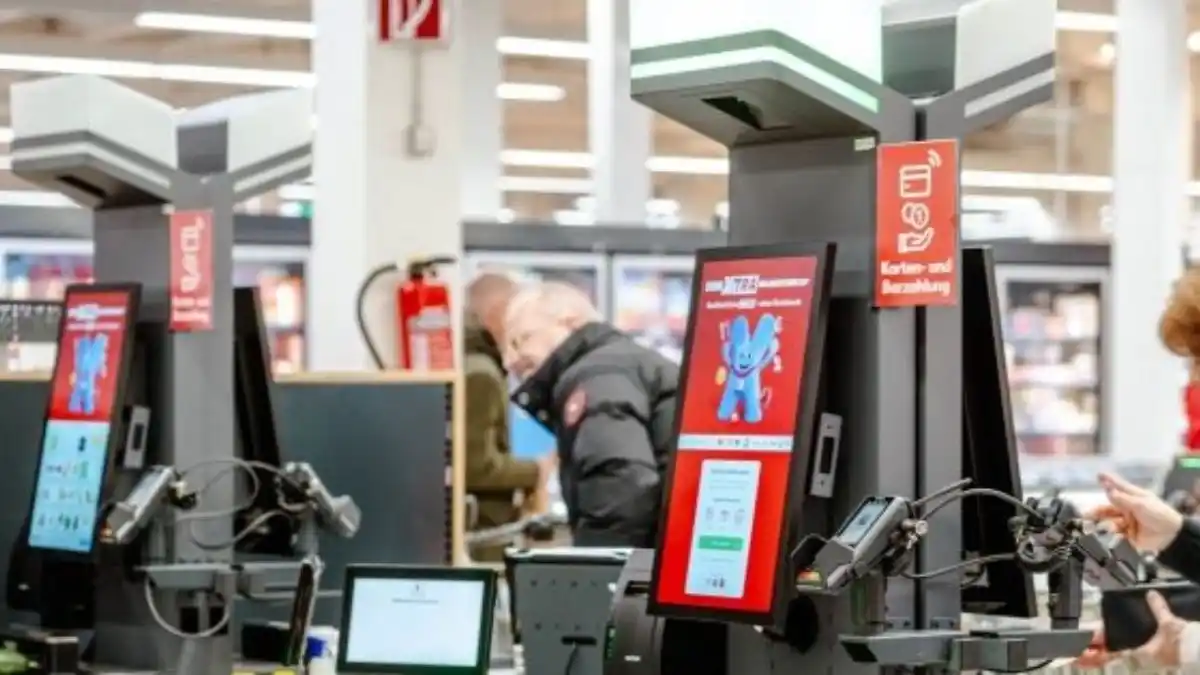

Kaufland announced on March 24, 2026, that it will install self-checkout lanes and K-Scan technology in all its stores across Germany, as part of a nationwide store digitalisation programme. The retailer plans to equip 220 additional stores this year, bringing the total to more than 8,000 self-checkout lanes once the rollout is completed.
Self-checkout systems allow customers to scan and pay for items without cashier assistance, while scan-as-you-shop systems like K-Scan allow customers to scan products while shopping and pay at the end, helping supermarkets reduce queues, improve store efficiency, and manage labour costs.
At a glance
- Kaufland rolling out self-checkout to all Germany stores
- 220 additional stores to be equipped in 2026
- Over 8,000 self-checkout lanes planned
- Around 40% of customers already use self-checkout in some stores
- K-Scan scan-as-you-shop expanding nationwide
- Customers scan items before reaching checkout
- Traditional staffed checkouts will remain in all stores
Why is Kaufland expanding self-checkout?
Kaufland said self-checkouts have become a standard part of the shopping experience, especially for smaller purchases where customers want faster payment options. The company is expanding the technology to all stores to improve checkout speed, reduce queues, and offer customers more payment flexibility.
What is K-Scan and how does it work?
K-Scan is Kaufland’s scan-as-you-shop system linked to the Kaufland Card loyalty programme. Customers scan items using a handheld scanner or smartphone while shopping, then pay at a self-checkout by scanning a QR code, without unloading and rescanning all items at the checkout.
What does this mean for supermarkets?
The rollout shows how large supermarket chains in Europe are investing in automation and digital store systems. Self-checkout and scan-as-you-shop technology can reduce labour pressure, improve store traffic flow, and allow retailers to redeploy staff to other areas such as fresh food, online orders, and customer service.
Across Europe, major supermarket groups including Lidl, Aldi, Tesco, and Carrefour are expanding self-checkout and mobile scanning systems as part of wider store digitalisation strategies.
Why it matters
For supermarket operators, self-checkout and scan-as-you-shop systems are becoming operational tools rather than customer extras. They help manage labour shortages, improve checkout capacity without expanding store space, and support loyalty programmes and digital payments.
Scan-as-you-shop systems are also linked to higher basket sizes in many markets because customers can pack items directly into bags while shopping, making larger purchases easier and faster.
What happens next?
Kaufland’s rollout will continue through 2026, with installations planned at a pace of around four stores per week. The expansion reflects a wider shift in the European supermarket sector toward automation, digital payments, and integrated loyalty-based shopping systems, a trend that is becoming increasingly important across Germany retail technology as major chains invest in store digitalisation and faster checkout systems.