
Migros Basel is expanding its artisan production capacity as it moves to strengthen control over fresh food supply across its retail and foodservice network.
The retailer is extending production space for its Cuisine artisanale and Pâtisserie artisanale operations at its Basel site, responding to sustained demand for freshly prepared, hand-made products that has pushed existing capacity to its limits.
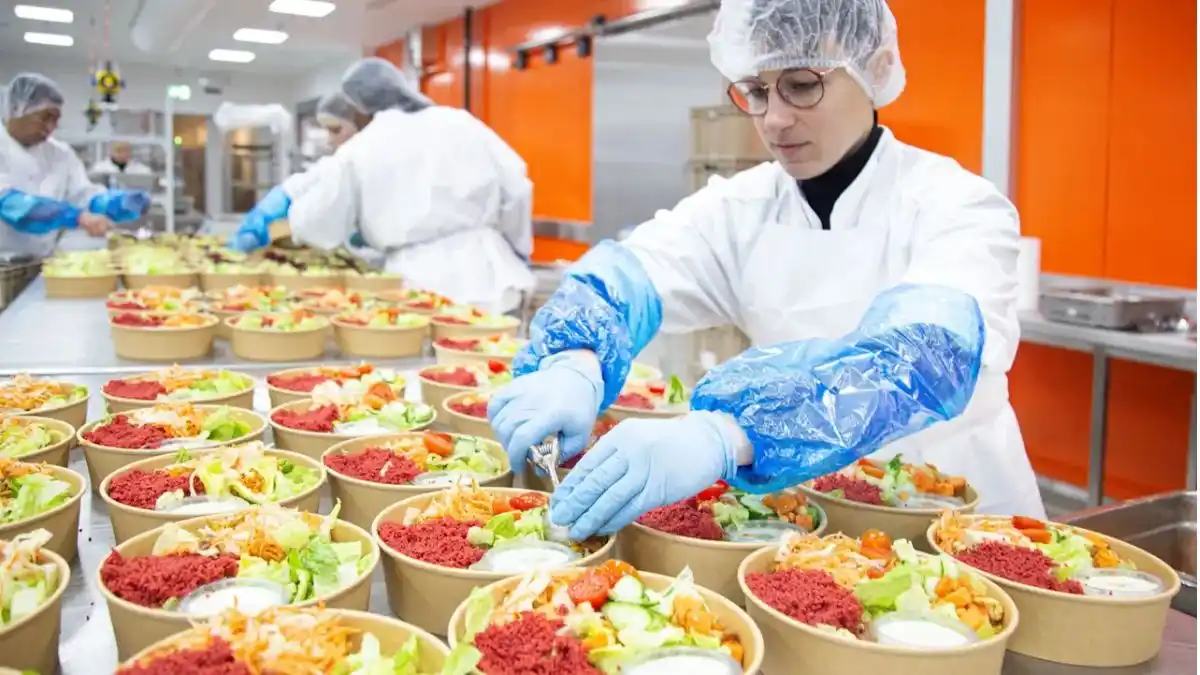
Around 125 employees are currently producing fresh items daily, supplying stores, restaurants, takeaway outlets and catering services. The expansion is designed to increase output while streamlining production flows inside the facility.
Volumes are already operating at scale. Up to one tonne of fresh vegetables is processed by hand each day, alongside roughly 1,200 prepared meat items. Production is set to grow further, with regional products such as Basler Spätzli moving into larger-scale output from March.
The bakery unit remains central to the model, with overnight production ensuring fresh delivery into stores each morning. Seasonal peaks, particularly during the Christmas period, continue to drive additional volume across traditional product lines.
The move reflects a broader strategic shift. By scaling in-house production, Migros Basel is tightening control over quality, consistency and sourcing, while reducing reliance on external suppliers. That shift also supports stronger margin management and faster turnaround from production to shelf.
New infrastructure at the site is expected to reduce operational friction and improve efficiency across preparation and assembly lines, allowing higher throughput without duplicating workflows.
The expansion will also support workforce growth, with around 60 new roles expected to be created as capacity increases over the coming years.
Across Europe, major grocery operators including Migros are investing more heavily in vertically integrated fresh food production, as competition intensifies with convenience chains and foodservice providers.
Why This Matters
For Switzerland’s supermarket sector, this move signals a growing focus on premium, locally produced fresh food. Vertical integration allows retailers like Migros to respond faster to consumer trends, maintain product quality, and compete effectively with convenience stores and foodservice chains. The expansion also reflects a broader European trend toward in-house production, which can influence pricing, sustainability practices, and regional supply chains.
As the upgraded facilities ramp up, Migros Basel is positioning itself to capture further growth in premium fresh and ready-to-eat categories, where demand continues to shift toward quality, speed and locally produced food.
Editor’s Note: This article covers Migros Basel’s expansion of its in-house artisan food production. The story highlights operational growth, workforce impact, and broader trends in Swiss and European supermarket fresh food strategies.