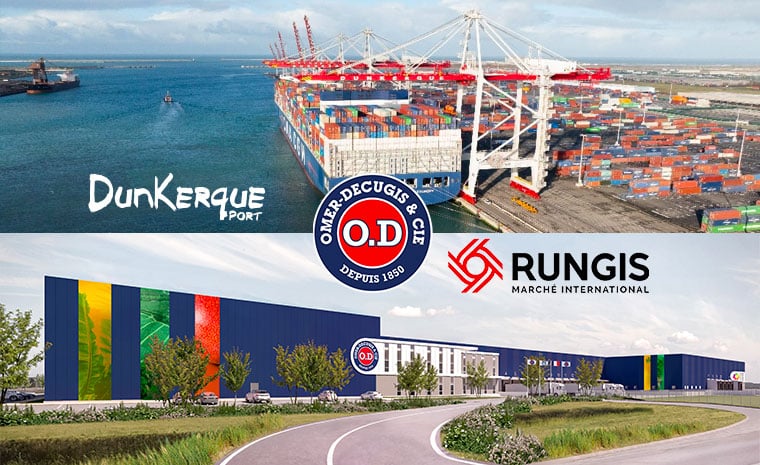

Omer-Decugis & Cie and SEMMARIS have agreed to develop a fruit logistics platform at Dunkirk, combining €37m of property investment with €10m–€12m of equipment spending. The project would expand French ripening capacity and add fresh-cut production for supermarket supply.
The company announced the partnership on 26 October 2026. SEMMARIS will fund the property through a wholly owned subsidiary; Omer-Decugis will lease and operate the site, financing its equipment from its own resources and a syndicated loan agreed in July.
The 25,000 sq m facility is expected to open at the end of 2027. Plans include 55 ripening rooms, cold storage for 4,000 pallets, customer packing and a 6,000 sq m fresh-cut plant developed through its PrepWorld partnership.
Omer-Decugis puts future annual ripening capacity at 324,000 tonnes, against 174,000 tonnes currently. Although its release describes a doubling, those figures represent an increase of 150,000 tonnes, or approximately 86%. They describe planned capacity, rather than contracted sales.
The distinction matters for buyers assessing French fresh produce suppliers. Additional ripening rooms can support larger programmes, but the commercial benefit depends on fruit arrivals, ripening consistency, pack specifications and onward delivery performance.
For avocado importers and ripeners, locating several operations together could reduce transfers between separate facilities. Buyers would still need to establish which origins, varieties and maturity specifications can move through the new site, and how programmes will be supported during commissioning.
Fresh-cut supply introduces a separate set of requirements. A retailer considering prepared-fruit listings needs validated shelf life, hygiene controls, yield assumptions and a clear approach to rejected or surplus fruit. Ripening capacity alone cannot establish the economics of a chilled prepared-fruit range.
The investment split also separates two delivery responsibilities: the building and the operating equipment. Procurement teams should therefore ask when each element will be ready, how trials will be sequenced and what contingency arrangements apply if construction or commissioning moves.
GTN’s analysis is that the hub could broaden sourcing options for French and northern European programmes, while its practical value will emerge through operating results and customer commitments. Buyers planning beyond 2027 will need confirmed commissioning dates before treating the additional capacity as available supply.
Editor’s note: Based on Omer-Decugis & Cie’s company announcement and accompanying release dated 26 October 2026. GTN added the capacity calculation and independent analysis of procurement, commissioning and fresh-cut supply considerations.