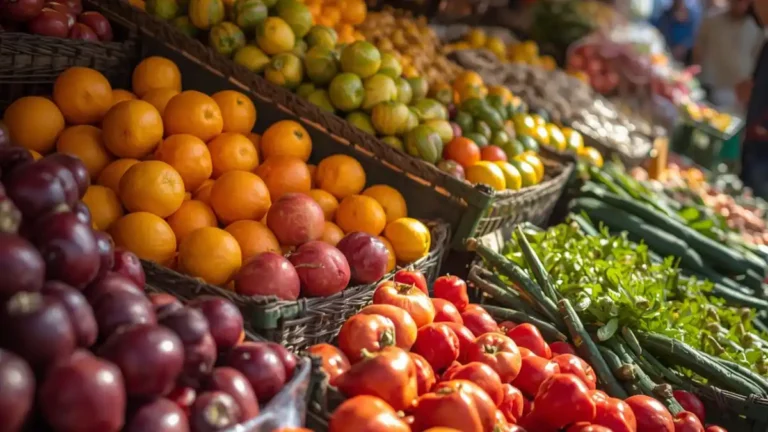

France’s fresh produce sector is changing fast in 2026. The market is no longer dominated only by growers with the biggest harvest volumes.
Supermarkets are increasingly prioritising companies that can manage the entire supply chain. This covers:
- farming and greenhouse production
- fresh-cut packaging
- cold-chain logistics
- private-label retail supply
That shift has become especially visible after Bonduelle scaled back parts of its packaged salad operations in Western Europe.
This opened more space for vertically integrated groups like Agrial. Its Florette and Priméale businesses have strengthened their position in supermarket fresh aisles.
At the same time, other types of company are becoming more important across the French grocery market. These include companies focused on premium tomatoes, exotic fruits, greenhouse production and retailer-ready convenience produce.
Here are the 10 companies shaping the future of France fresh produce in 2026.
| Rank | Company | Main Strength | 2026 Position |
|---|---|---|---|
| 1 | Agrial (Florette/Priméale) | Fresh-cut & vegetables | Fresh produce leader |
| 2 | Bonduelle | Prepared vegetables | Major global powerhouse |
| 3 | Pomona | Produce distribution | Foodservice backbone |
| 4 | Prince de Bretagne | Breton vegetables | Export cooperative |
| 5 | Savéol | Tomatoes | Premium greenhouse leader |
| 6 | Blue Whale | Apples | Fruit export specialist |
| 7 | Omer-Decugis & Cie | Exotic fruits | Fast-growth supplier |
| 8 | Les Crudettes | Bagged salads | Private-label specialist |
| 9 | Demain la Terre | Sustainability | ESG retail influence |
| 10 | Azura Group | Tomato supply | Winter sourcing partner |
1. Agrial
Founded: 2000
Headquarters: Caen, France
Agrial has become the strongest force in French fresh produce retail supply in 2026.
Through its Florette and Priméale businesses, the cooperative controls both bulk vegetable production and ready-to-eat fresh-cut categories across supermarkets.
Why vertical integration matters
The company’s biggest advantage is vertical integration. Agrial connects the following inside one system:
- farmer-members
- greenhouse production
- washing facilities
- cold-chain logistics
- retail packaging
That structure has become increasingly valuable. French retailers are focusing on stable year-round sourcing and private-label fresh food programmes.
Key brands
Florette remains one of the most recognised salad brands in Europe.
Priméale continues to hold strong positions in potatoes, carrots, onions and prepared vegetables.
In 2026, Agrial is widely viewed as the dominant player in France’s prepared fresh produce market.
Agrial appointed Marie-Laure Pomerol to lead its fresh produce division on 21 September 2026. She is responsible for the business behind Florette and Priméale.
2. Bonduelle
Founded: 1853
Headquarters: Villeneuve-d’Ascq, France
Bonduelle remains one of the largest vegetable companies in Europe. This is despite its strategic restructuring in fresh-cut salads.
What it supplies
The company still holds major influence across:
- prepared vegetables
- deli-style convenience products
- canned vegetables
- frozen foods
- long-life fresh categories
Bonduelle’s scale gives it enormous purchasing and sourcing power across European agriculture.
The company reduced exposure to lower-margin salad operations. Even so, it continues to invest heavily in convenience-focused fresh meals and prepared vegetable formats that fit changing consumer habits.
For supermarkets, Bonduelle remains an essential supplier across multiple produce categories.
3. Pomona
Founded: 1912
Headquarters: Antony, France
Pomona is not a traditional farming cooperative. However, its influence across France fresh produce is massive.
What it supplies
Through its TerreAzur business, Pomona supplies fruits and vegetables across the country to:
- restaurants
- hospitals
- schools
- foodservice operators
The company operates one of France’s largest fresh distribution networks.
Why it matters
Its scale inside wholesale produce makes Pomona critical to the national food supply chain. This is especially true in urban markets, where logistics speed and cold-chain management are essential.
Inflation and sourcing pressure continue to affect hospitality buyers. As a result, Pomona’s role in produce distribution has become even more important in 2026.
4. Prince de Bretagne
Founded: 1970
Headquarters: Saint-Pol-de-Léon, France
Prince de Bretagne is one of the most important vegetable cooperatives in France.
What it supplies
The group is especially known for these products, exported across Europe:
- cauliflower
- tomatoes
- artichokes
- shallots
- Breton-grown vegetables
Why it matters to supermarket buyers
Its influence goes beyond farming volume. Prince de Bretagne helps retailers manage seasonal supply, category planning and product standards inside supermarket produce aisles.
The cooperative has also expanded sustainability programmes and lower-pesticide farming systems. This comes as French retailers increase ESG requirements.
In 2026, Prince de Bretagne remains one of the strongest export-oriented fresh produce organisations in Europe.
5. Savéol
Founded: 1981
Headquarters: Plougastel-Daoulas, France
Savéol has built one of the strongest premium tomato brands in the French grocery market.
What it supplies
The cooperative specialises in greenhouse-grown tomatoes aimed at higher-margin retail segments, including:
- cherry tomatoes
- cocktail tomatoes
- snacking varieties
Why it matters to supermarket buyers
French supermarkets increasingly rely on branded greenhouse suppliers to secure consistency, quality and year-round availability.
Weather volatility is affecting open-field agriculture across Europe. This has made Savéol’s greenhouse expertise especially valuable.
The company also benefits from growing consumer demand for traceable and locally produced vegetables.
6. Blue Whale
Founded: 1952
Headquarters: Montauban, France
Blue Whale is one of France’s largest apple producers and exporters.
The cooperative supplies apples across Europe, the Middle East and Asia. This gives France a major position in global fruit exports.
Key strengths
Blue Whale focuses heavily on:
- premium fruit quality
- export packaging
- supermarket-ready supply programmes
The company has also invested in sustainable orchard management and reduced-chemical production systems. These align with retailer expectations.
In 2026, export resilience remains a major advantage for Blue Whale as international fruit demand keeps growing.
7. Omer-Decugis & Cie
Founded: 1850
Headquarters: Rungis, France
Omer-Decugis & Cie has emerged as one of the fastest-growing produce companies in France.
What it supplies
The company specialises in tropical fruits, including:
- bananas
- avocados
- mangoes
- pineapples
It has strong expertise in ripening, logistics and supermarket packaging.
Why it matters to supermarket buyers
Its operations at Rungis, Europe’s largest wholesale food market, give the group a strategic position inside French produce distribution.
The company is also expanding into fresh-cut fruit through new partnerships and processing investments.
That shift places Omer-Decugis directly inside one of the fastest-growing areas of supermarket convenience produce.
8. Les Crudettes
Founded: 1984
Headquarters: Châteauneuf-sur-Loire, France
Les Crudettes remains one of France’s strongest private-label salad suppliers.
What it supplies
Owned by LSDH Group, the company produces the following for major retailers:
- bagged salads
- prepared vegetables
- ready-to-use fresh products
Why it matters to supermarket buyers
Private-label fresh produce has become increasingly important. French consumers keep looking for lower-cost grocery alternatives during inflation pressure.
That trend has strengthened the role of suppliers like Les Crudettes inside supermarket sourcing strategies.
The company competes directly with Florette in several prepared salad categories.
9. Demain la Terre
Headquarters: France
Demain la Terre is not a single produce company. However, its influence across French retail sourcing is becoming increasingly important.
The organisation brings together growers and producers focused on sustainability, biodiversity and reduced-pesticide farming.
Why it matters to supermarket buyers
Large French retailers now place greater pressure on suppliers to meet environmental standards and traceability requirements.
That makes sustainability labels and certified sourcing systems more commercially valuable inside produce aisles.
In 2026, Demain la Terre represents the growing shift towards ESG-driven agriculture in France.
10. Azura Group
Founded: 1988
Headquarters: Agadir, Morocco
Azura Group plays a major role in the French produce market through tomato and fresh vegetable exports from Morocco.
Why it matters to supermarket buyers
The company has become strategically important for winter supply continuity. This is especially true when European greenhouse production slows.
French supermarkets increasingly rely on cross-border sourcing partnerships. These help maintain stable pricing and year-round availability.
Azura’s tomato and berry operations therefore remain closely tied to French supermarket supply chains in 2026.
Frequently Asked Questions
Which company leads France’s fresh produce market in 2026?
Agrial is widely viewed as the dominant player in France’s prepared fresh produce market. It operates through its Florette and Priméale businesses.
Why did Bonduelle’s position change?
Bonduelle scaled back parts of its packaged salad operations in Western Europe. It remains one of Europe’s largest vegetable companies and continues to invest in convenience-focused fresh meals and prepared vegetables.
Which non-French company is important to French supermarkets?
Azura Group, headquartered in Agadir, Morocco, supplies tomatoes and fresh vegetables. It is strategically important for winter supply when European greenhouse production slows.
Why it matters
The French produce sector is entering a new phase where supply-chain control matters as much as farming scale.
Retailers now want suppliers that can manage:
- greenhouse production
- cold-chain logistics
- private-label packaging
- traceability
- year-round imports
- prepared convenience formats
That is changing the balance of power across France fresh produce.
Cooperatives like Agrial and Prince de Bretagne are gaining influence. They combine farming networks with retail-ready infrastructure.
At the same time, specialist suppliers are growing faster than many traditional commodity producers. These specialists work in greenhouse vegetables, tropical fruits and fresh-cut produce.
For supermarkets, the focus in 2026 is increasingly on reliability, convenience and sourcing flexibility.
France’s produce market is therefore becoming more integrated with broader trends across France private label, France FMCG, and the wider France supermarket supply chain.
Editor’s Note: This article was prepared using company reports, cooperative information, wholesale market data, retail supply-chain analysis, and publicly available industry sources related to the French fresh produce sector.