
Online grocery shopping in Canada has moved from a niche convenience to a mainstream part of how households buy food. The shift began gradually over the last decade, but accelerated strongly from 2020 onward. Today, it is a core sales channel for every major supermarket, discount chain, and independent retailer. At the same time, new players—from delivery platforms to dark-store operators—have entered the market, reshaping competition.
This is a look at what is driving growth, how Canadian retailers are responding, and the challenges and opportunities that lie ahead.
Why Online Grocery Has Grown So Quickly
One of the biggest reasons for growth is changing consumer behavior. Many Canadians now do more of their shopping online. Food is no longer an exception.
Convenience is key—families with busy schedules like being able to order groceries in minutes from a phone. Delivery time options have also expanded. Same-day and even two-hour delivery is now available in many urban and suburban areas.
Another factor is trust. Canadian consumers increasingly trust that groceries ordered online will arrive fresh, correct, and at a fair price. Early hesitation about quality—especially for produce—has decreased as technology and processes have improved.
Lastly, loyalty programs and personalized coupons have moved online. This helps reinforce shopping habits because customers feel they are getting better value digitally than in-store.
The Role Of Major Retailers
Canada’s major grocery players—Loblaw, Sobeys, Metro, Walmart Canada, and Costco—have all invested heavily in their online grocery platforms.
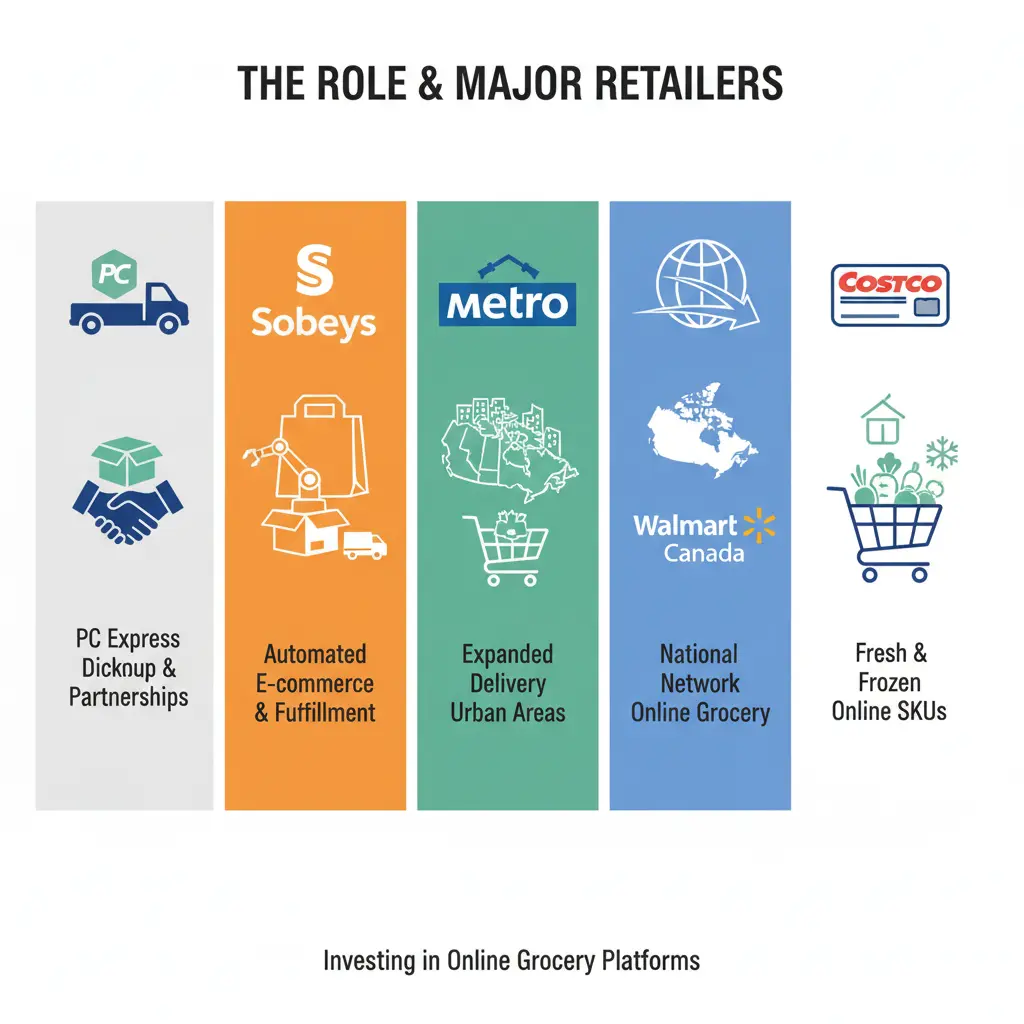
- Loblaw expanded PC Express pickup points and partnered with delivery platforms to extend reach.
- Sobeys built a strong e-commerce platform supported by automated fulfillment centers.
- Metro increased delivery capability in Ontario and Quebec, especially in dense neighborhoods.
- Walmart Canada used its national network to scale online grocery quickly across provinces.
- Costco added more fresh and frozen SKUs to online ordering to complement its in-store value model.
Most chains now operate hybrid models where customers can choose between home delivery, curbside pickup, or in-store collection. This flexibility is now seen as standard.
The Rise Of Delivery Platforms
The growth of online grocery shopping in Canada is also tied to the expansion of delivery platforms like Instacart, DoorDash, and Uber Eats.
Instacart was first to scale grocery delivery across major Canadian regions by partnering with multiple chains. This allowed customers in small towns and large cities to use the same app for different stores. It also allowed retailers to add e-commerce quickly without building all the technology themselves.
More recently, DoorDash and Uber Eats have expanded into grocery by partnering with national and local retailers. Their strength is logistics and rapid delivery. For retailers, these partnerships help increase reach and visibility.
However, the trade-off for grocers can be margin pressure. Delivery platform fees reduce profit per order, which is why many retailers still encourage curbside pickup or their own branded delivery systems.
Urban vs Rural Differences
Growth has been strongest in large cities like Toronto, Vancouver, Montreal, Calgary, and Ottawa. These cities have dense delivery networks, strong broadband, and more consumers comfortable with digital tools.
Rural areas are growing more slowly. Delivery distances are longer, which raises cost. Pickup points are more important in these regions. Some retailers are testing mobile pickup vans, temperature-controlled lockers, and store-to-community drop points to improve access.
Over time, the gap is expected to narrow as logistics models become more efficient and as more rural households adopt hybrid shopping patterns—ordering heavy staples online while buying fresh produce locally.
How Consumer Expectations Are Changing
Canadians expect online grocery services to be:
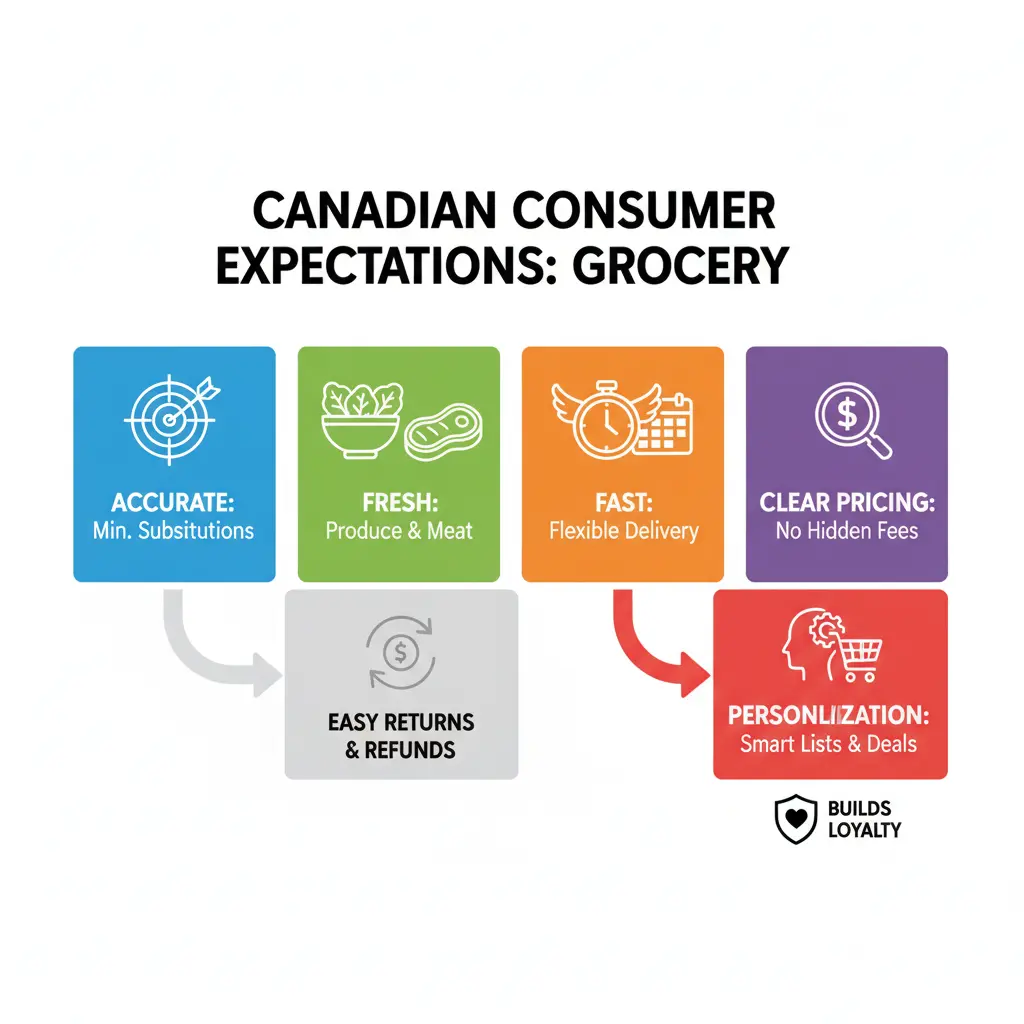
- Accurate — minimal substitutions
- Fresh — especially for produce and meat
- Fast — flexibility in delivery windows
- Clear in pricing — no hidden fees or unclear service charges.
They also want easy returns and refunds when something is wrong.
Personalization is becoming more critical, too. Many grocery apps now use past purchase data to suggest items, create auto-filled shopping lists, and recommend weekly deals. This builds loyalty and makes online grocery shopping feel easier than in-store shopping.
Challenges For Retailers
Running an online grocery store is not easy to do profitably. Traditional stores were designed for customers to pick items themselves. Fulfilling online orders requires labor, time, and space.
Key challenges include:
- Picking costs: Staff must walk the aisles, select items, and pack orders.
- Delivery costs: Fuel, vehicles, drivers, and routes all add expenses.
- Cold chain management: Fresh and frozen items require reliable temperature control.
- Returns handling: Mistakes in produce or substitutions must be corrected quickly.
- Inventory precision: Online systems must match real in-store availability.
Many retailers are responding by introducing micro-fulfillment centers. These are small automated warehouses placed near or inside stores. Robots pick popular SKUs while staff handle complex items like produce. This balances speed and accuracy.
Growth In Private Label Online
Private label is a significant part of online grocery shopping in Canada. Retailers now promote their store brands more strongly online than before.
Why?
- Higher margin for retailers.
- Strong brand familiarity for consumers.
- Ability to position private label as quality + value.
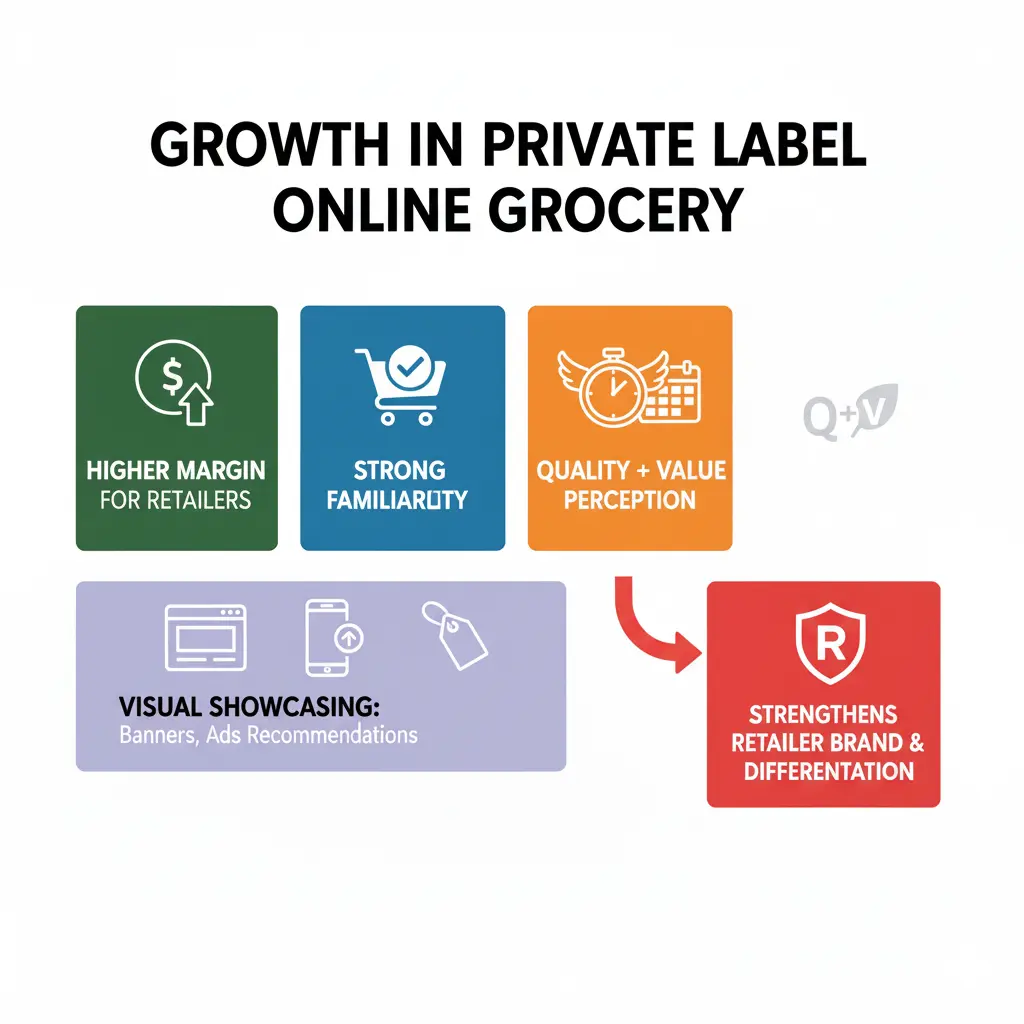
Online grocery offers an opportunity to showcase these products visually through featured recommendations, banners, and digital ads. This strengthens retailer brand identity and helps differentiate from competitors.
Future Outlook
The growth of online grocery shopping in Canada is expected to continue steadily over the next five years. It may not grow at the rapid pace seen in 2020–2021, but it will remain a primary channel for many households.
Three trends to watch:
- Faster fulfillment — more localized micro-warehouses and dark stores.
- Better delivery networks — including electric vans and bike couriers in cities.
- More personalized shopping — AI-driven recommendations and meal planning.
For retailers, the goal will be balancing convenience, cost control, and brand loyalty.
For consumers, the result will likely be more choice, more flexibility, and a smoother online grocery experience across Canada.