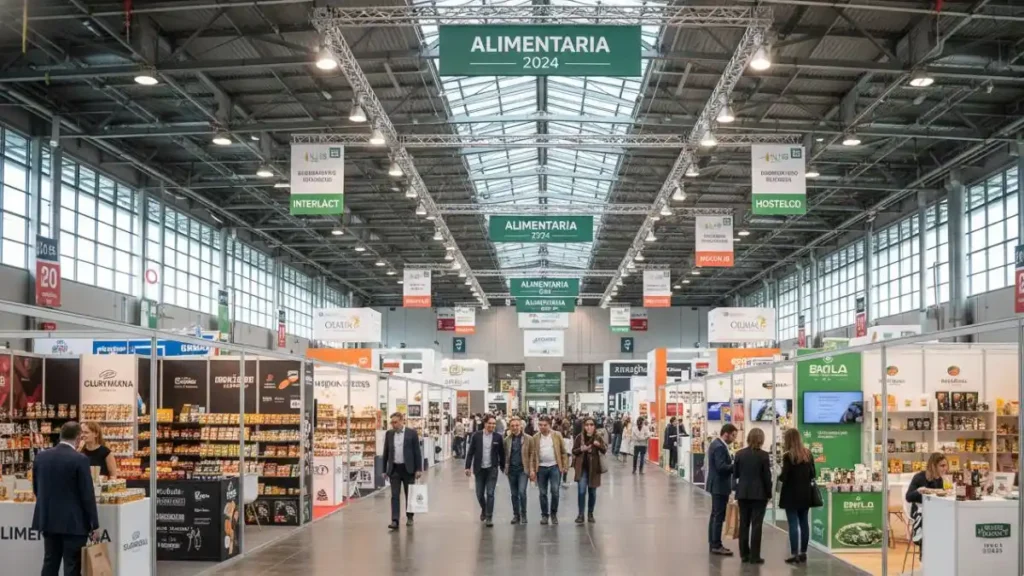


Portugal remains competitive in export markets because of a combination of structural advantages that few producing countries can match. Climate diversity allows growers to extend production windows across different regions, while geographic proximity to Western Europe enables short delivery lead times for retail and wholesale buyers.
Strong port infrastructure in Lisbon, Setúbal and Sines continues to support efficient export logistics, especially for high-volume fruit shipments.
At the same time, European retailers increasingly use Portugal as a secondary sourcing base alongside Spain, helping stabilise supply and reduce seasonal risk. Together, these factors continue to strengthen Portugal’s role within European produce supply chains.
Portugal Fresh Produce Export Influence Ranking (2026)
| Rank | Company | Influence Level | Main Products | Core Markets |
|---|---|---|---|---|
| 1 | Luís Vicente Group (Maria Vitória) | Very High | Pears, apples, stone fruit | UK, France, Spain, Germany |
| 2 | Campotec Group | High | Apples, pears, citrus | UK, France, Spain, Netherlands |
| 3 | Kiwi Portugal | High | Kiwifruit | France, Spain, Germany, Italy |
| 4 | Vale da Rosa | High | Table grapes | UK, Scandinavia, Germany |
| 5 | Vitacress Portugal | Medium-High | Leafy greens, salads | UK, France, Spain |
| 6 | Frutas Patrícia Pilar | Medium-High | Berries, citrus | UK, France, Germany |
| 7 | Lusomorango | Medium | Strawberries, berries | Spain, France, UK |
| 8 | Cooperfrutas CRL (Alcobaça) | Medium | Rocha pears, apples | UK, France, Middle East |
| 9 | Algarve Citrus Cooperatives (CACIAL & regional groups) | Medium | Oranges, lemons, mandarins | Spain, France, Eastern Europe |
| 10 | Granfer Group | Medium | Vegetables, salads | Iberia, Western Europe |
How This Ranking Was Built
Portugal’s export market is highly fragmented.
There is no single dominant exporter. Instead, influence comes from:
- Production scale
- Retail program coverage
- Cold-chain control
- Export logistics integration
- Category leadership
This ranking combines cooperative shipment data, company disclosures, port export flows and retail sourcing patterns to reflect real export positioning heading into 2026.
Company Profiles
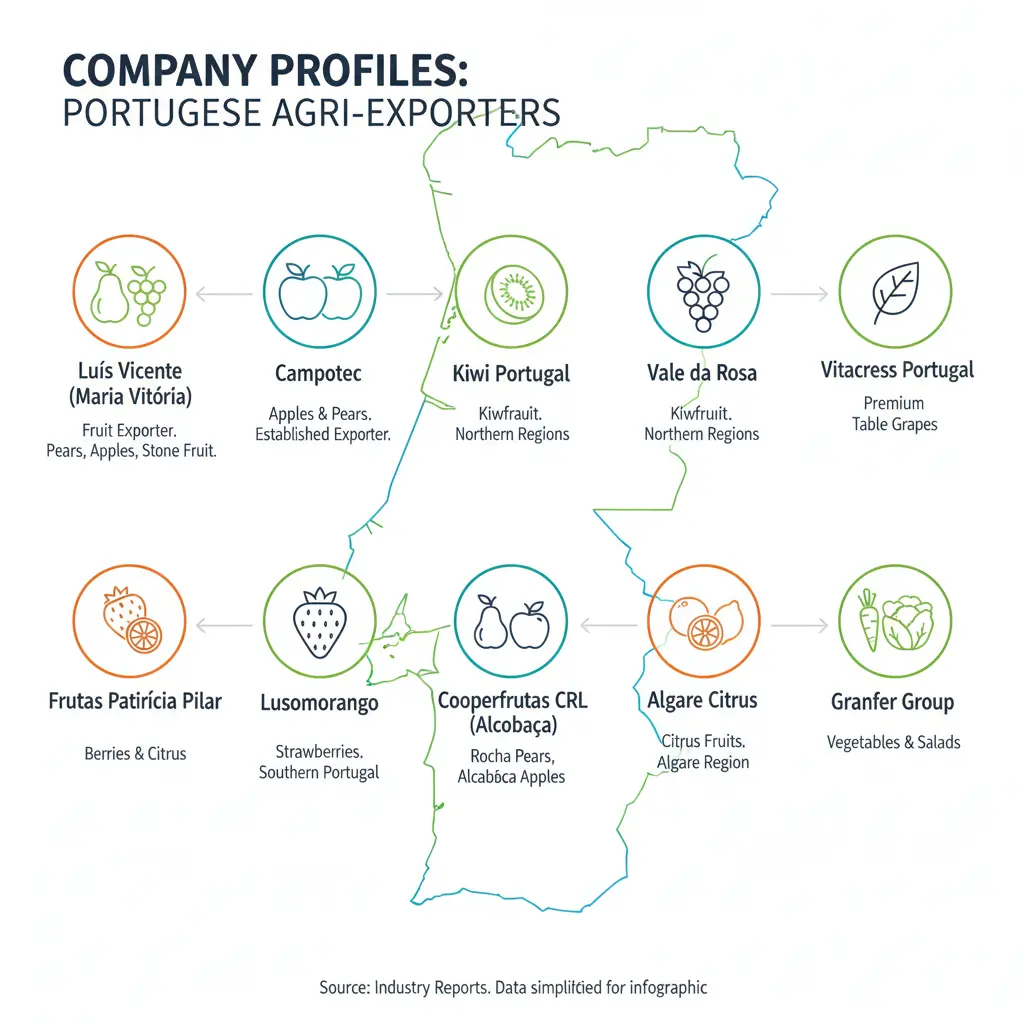
1. Luís Vicente Group (Maria Vitória)
Luís Vicente Group is widely considered Portuguese largest integrated fruit exporter.
Operating under the Maria Vitória brand, the group controls orchards, packing facilities and export logistics across multiple regions. It plays a central role in Rocha pear exports and maintains strong positions in apples and stone fruit.
The company’s export strength comes from:
- Direct supermarket contracts
- Centralised cold storage
- High-volume packing operations
- Integrated production management
Its scale and retail relationships give it unmatched export reach within Portuguese fresh fruit sector.
2. Campotec Group
Campotec is one of Portuguese most established export-focused fruit companies.
The group specialises in apples and pears, supported by controlled atmosphere storage and long-term orchard partnerships. It supplies major European retail chains and wholesale networks.
Key strengths include:
- Stable seasonal supply
- Multi-country export routes
- Retail compliance infrastructure
Campotec remains a core pillar of Portuguese pome fruit export system.
3. Kiwi Portugal
Kiwi Portugal has become the central export platform for Portuguese kiwifruit.
The cooperative coordinates production, packing and export sales across northern growing regions. It supplies several European markets and continues to expand category presence.
Its influence comes from:
- Category specialisation
- Production coordination
- Export program scale
- Strong positioning in France and Germany
Portuguese kiwifruit exports are now structurally tied to this organisation.
4. Vale da Rosa
Vale da Rosa dominates Portuguese premium table grape segment.
The company operates a vertically integrated model combining production, branding and direct retail supply. It has successfully positioned Portuguese grapes as a premium category in Northern European markets.
Export leadership is built on:
- High-quality varietal programs
- Retail-focused packaging formats
- Brand recognition abroad
Vale da Rosa remains the country’s reference exporter for table grapes.
5. Vitacress Portugal
Vitacress Portugal is one of the country’s leading leafy greens and fresh salad exporters.
The company supplies washed salads and fresh-cut vegetables to major retail customers in the UK, France and Iberia.
Its export competitiveness comes from:
- Processing infrastructure
- Cold-chain logistics
- Food safety compliance
- Cross-border production integration
Vitacress operates as part of a wider European fresh produce network.
6. Frutas Patrícia Pilar
Frutas Patrícia Pilar has built strong export programs around berries and citrus.
The company focuses on retail-aligned production rather than open wholesale markets. It works with contract growers and operates integrated packing facilities.
Export growth is supported by:
- Premium category focus
- Retail specification compliance
- Efficient export logistics
Its influence is strongest in berry and specialty fruit programs.
7. Lusomorango
Lusomorango plays a major role in Portuguese strawberry export expansion.
The company coordinates production across southern growing regions and supplies both retail and wholesale buyers in Iberia and Northern Europe.
Key advantages include:
- Seasonal production scale
- Fast logistics routes into Spain and France
- High-volume berry handling
Strawberries remain one of Portuguese fastest-growing export categories.
8. Cooperfrutas CRL (Alcobaça)
Cooperfrutas is based in Alcobaça, in central Portugal.
It is internationally recognised for Rocha pears and Alcobaça apples. The cooperative represents hundreds of growers and operates centralised export packing facilities.
Its export model is built on:
- Grower aggregation
- Quality standardisation
- Cold storage management
- Export-grade sorting systems
Cooperfrutas remains a cornerstone of Portuguese traditional fruit export structure.
9. Algarve Citrus Cooperatives (CACIAL and Regional Groups)
Algarve citrus exports are concentrated across both sides of the region.
Sotavento (Eastern Algarve) and Barlavento (Western Algarve) form the core citrus production zones. CACIAL and associated cooperative structures coordinate packing, quality control and export programs for growers across these areas.
Their role includes:
- Production coordination
- Export program aggregation
- Seasonal volume stability
- Market access support
Citrus remains a key export category from southern Portugal.
10. Granfer Group
Granfer focuses on vegetables and salad crops.
The company supplies retail and foodservice export markets across Iberia and Western Europe. It operates greenhouse production and contract farming programs.
Export growth is supported by:
- Controlled production systems
- Year-round supply planning
- Multi-channel distribution
Vegetable exports continue to expand steadily.
Retailer-Controlled Sourcing Is Reshaping Exports
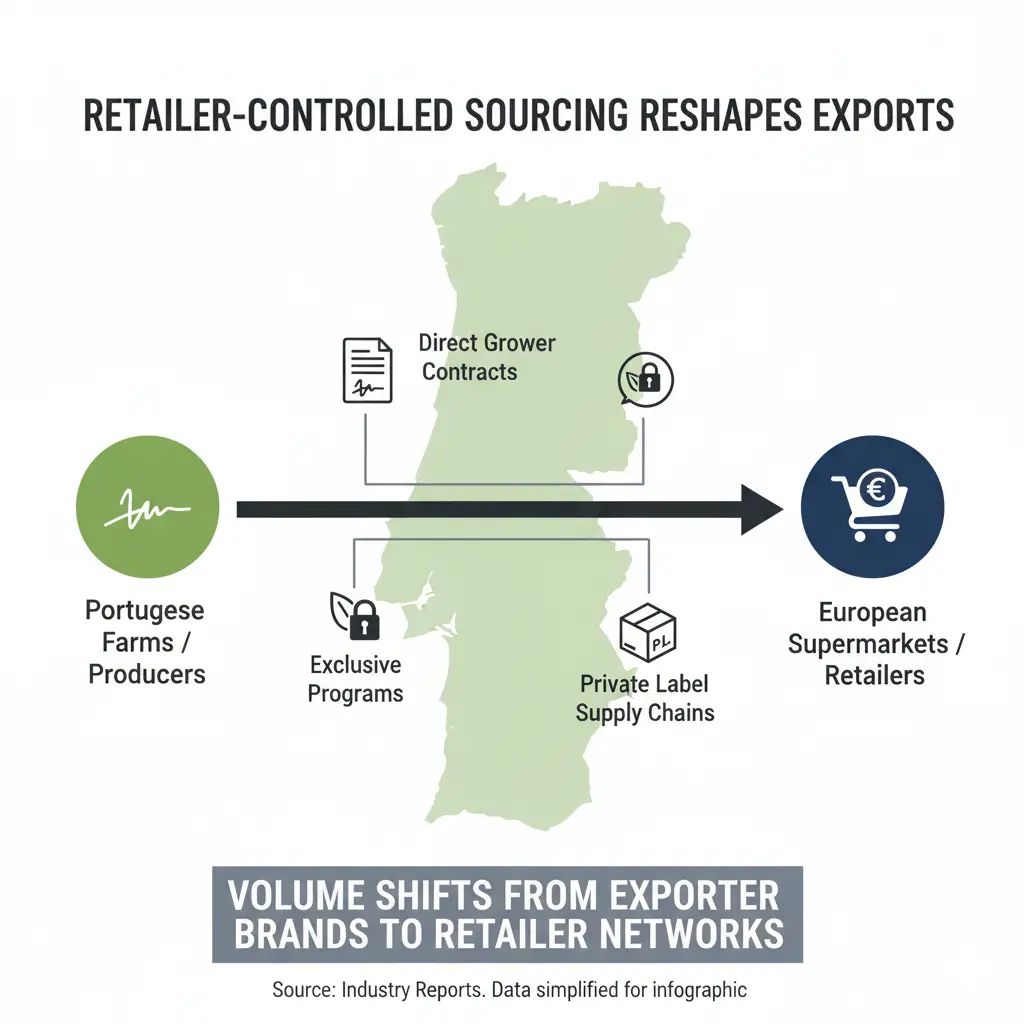
One of the biggest structural changes in Portugal’s export market is retailer-linked sourcing.
European supermarket groups increasingly bypass traditional trading channels by:
- Signing direct grower contracts
- Running exclusive production programs
- Integrating Portuguese farms into private label supply chains
These volumes often do not appear under exporter brand names.
As a result, a growing share of Portugal’s export influence now sits inside retailer procurement networks rather than independent trading companies.
Portugal Fresh Produce Exports by Category
| Product Category | Leading Export Groups | Main Markets |
|---|---|---|
| Pears & Apples | Luís Vicente, Campotec, Cooperfrutas | UK, France, Germany, Middle East |
| Berries | Lusomorango, Patrícia Pilar, Driscoll’s-linked Zambujeira growers | UK, Netherlands, Germany |
| Table Grapes | Vale da Rosa | UK, Scandinavia, Germany |
| Leafy Greens | Vitacress, Granfer | UK, France, Iberia |
| Citrus Fruit | Algarve Cooperatives | Spain, France, Eastern Europe |
| Kiwifruit | Kiwi Portugal | France, Germany, Italy |
Why Portugal Remains Competitive in Export Markets
Water, Infrastructure and Cost Pressure
What Buyers Should Watch in 2026
Retail and wholesale buyers sourcing from Portugal should monitor:
- Production concentration trends
- Climate-driven yield volatility
- Certification upgrades
- Cold-chain investment levels
- Desalination and irrigation infrastructure progress
- Transport capacity during peak seasons
Suppliers offering stable volume, compliance and logistics integration will attract long-term contracts.
Portugal’s Export Market Is Becoming More Professional
Portugal’s fresh produce sector is moving away from fragmented spot trading.
It is shifting toward:
- Contract-based production
- Retail-aligned growing programs
- Centralised packing hubs
- Export planning cycles
This professionalisation is reshaping how Portuguese produce competes across Europe.
Conclusion
Editor’s Note: Export influence levels are based on industry estimates, historical shipment volumes, cooperative export data and projected 2026 market positioning. Figures reflect market impact rather than audited revenue.